
Useful quilted table linens begin with the furniture they will live on. A narrow runner can organize a centerpiece without taking over dinner, while a wider version makes more sense on a sideboard.
Placemats offer a different kind of small project: you can practice a construction method repeatedly and finish with something the household actually uses. This selection includes both individual runners and coordinated sets.
These free pattern sources vary in format. Some offer a downloadable document; others teach directly through photographs and written steps on a blog. One runner builds on a separately linked block pattern, so gather all the instructions before cutting.
Optional printable upgrades, membership downloads, and fabric purchases are distinct from the freely available web lessons. You do not need to reproduce an older fabric collection to use its construction idea.
Choose your first project by shape, technique, and maintenance, not only by its styled photograph. A tiny pieced unit can demand more accuracy than a large plain panel, even when the finished runner is short.
Consider whether you want a decorative seasonal piece or linens that will meet spills every week. The practical finishing decisions below help turn attractive patchwork into a durable, comfortable table accessory.
Quick picks at a glance
| # | Resource | License | Best for |
|---|---|---|---|
| 1 | Simple and Elegant Quilted Table Runner | Free instructions; no commercial-use permission stated on the project page | Custom dimensions and understated fabrics |
| 2 | Limonella Table Runner | Free instructions; no commercial-use permission stated on the project page | A wide runner with three feature blocks |
| 3 | Farmhouse Christmas Table Runner | Free instructions; no commercial-use permission stated on the project page | Rustic holiday table styling |
| 4 | Tis the Season Runner and Placemats | Free instructions; no commercial-use permission stated on the project page | A coordinated runner and place-setting set |
| 5 | SewCanShe Patchwork Placemats | Free instructions; no commercial-use permission stated on the project page | Practicing several patchwork units in one useful project |
| 6 | Square Scramble Table Set | Free instructions; no commercial-use permission stated on the project page | Matching rectangular linens from shared patchwork blocks |
| 7 | Oasis Table Runner | Free instructions; no commercial-use permission stated on the project page | A medium-length batik runner |
| 8 | Polka Dot Chair Skinny Fat Quarter Runner | Free instructions; no redistribution or commercial-use license stated on the project page | Fitting an unusually long dining table |
| 9 | Diary of a Quilter Quilt As You Go Runner | Free instructions; no redistribution or commercial-use license stated on the project page | Combining strip piecing and quilting |
| 10 | Christmas on the Farm Runner | Free instructions; no redistribution or commercial-use license stated on the project page | Combining house and star blocks for Christmas |
Simple and Elegant Quilted Table Runner
Table linen tutorial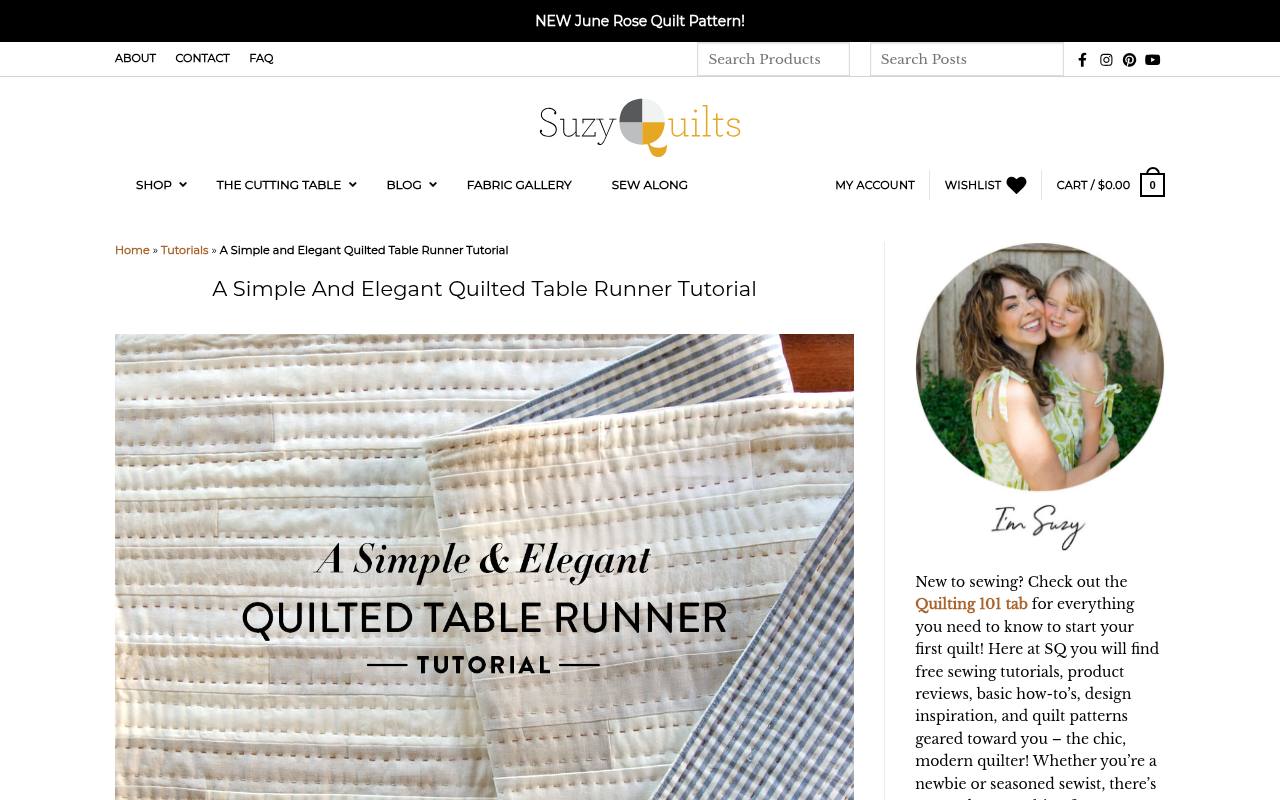
Suzy Williams walks through a picture-based runner tutorial rather than prescribing one fixed patchwork layout. The examples include low-volume linen and a second version made with lightweight denim and an IKEA duvet backing. Her supply discussion specifically recommends low-loft batting so the runner lies relatively flat.
Fabric quantities depend on the size you choose, making this useful for an awkward console or unusually long table. Read the free online instructions before cutting; this is a flexible construction lesson, not a standardized multi-size PDF pattern.
- Type
- Table linen tutorial
- Best for
- Custom dimensions and understated fabrics
- License
- Free instructions; no commercial-use permission stated on the project page
- Price
- Free
Limonella Table Runner
Table linen tutorial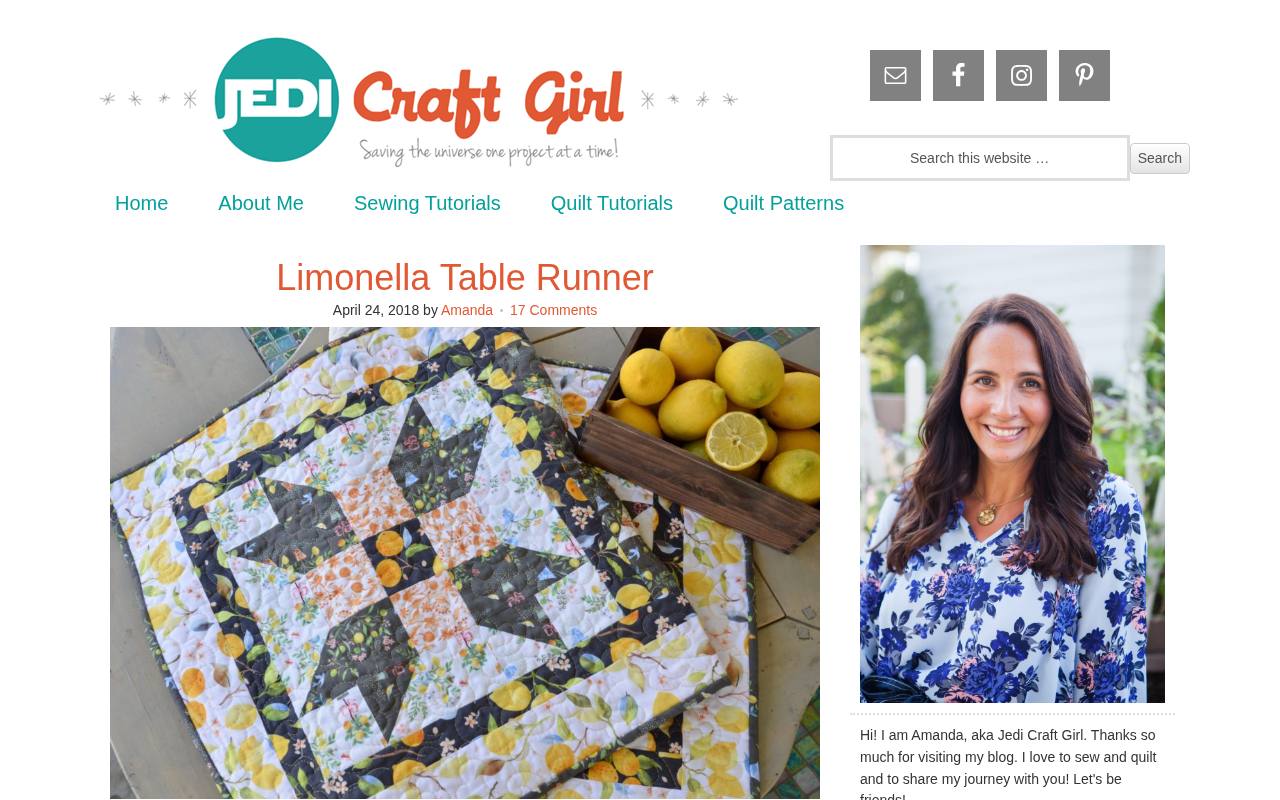
Amanda’s Limonella runner finishes at fifty-seven by twenty-four inches, a generous width that deserves a table measurement before you start. The page directs you to make three blocks from her separate Fresh Eggs free quilt pattern, then supplies the runner’s sashing and border measurements.
That linked-block arrangement matters: the runner post is not a self-contained cutting document. The original uses Limonella fabrics from Blend Fabrics and was made as a Mother’s Day gift. Follow both instruction sources rather than trying to reconstruct the blocks from the finished photograph.
- Type
- Table linen tutorial
- Best for
- A wide runner with three feature blocks
- License
- Free instructions; no commercial-use permission stated on the project page
- Price
- Free
Farmhouse Christmas Table Runner
Table linen tutorial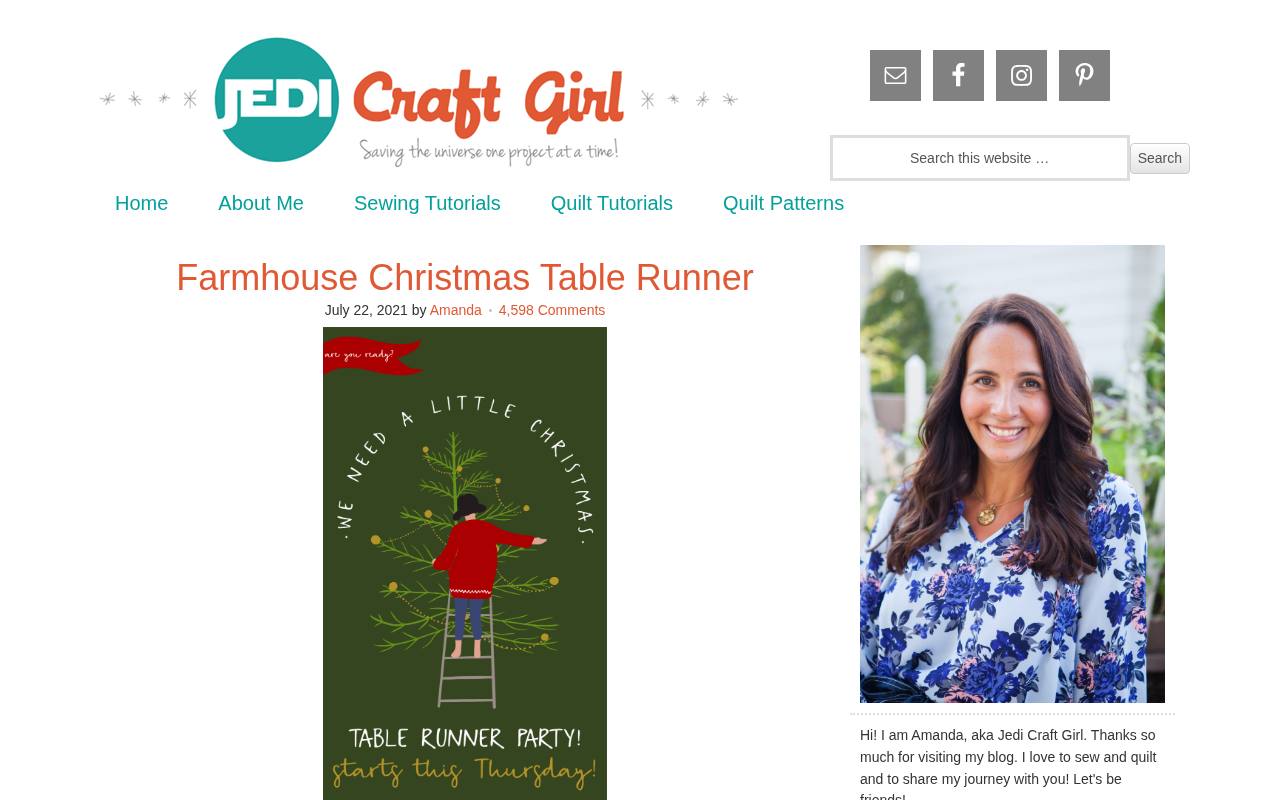
This Jedi Craft Girl project combines twelve-inch blocks into a runner finishing at forty-nine by twenty-one inches. Amanda links a free pattern download from the post and explains that adding more blocks can lengthen the runner.
Her pictured version uses Farmhouse Christmas fabrics from Riley Blake Designs, with green, neutrals, cranberry red, and a little black. The post also suggests expanding the same block-and-sashing arrangement into a quilt. Coordinating cross-stitch links are extras, not required steps for completing the quilted runner itself.
- Type
- Table linen tutorial
- Best for
- Rustic holiday table styling
- License
- Free instructions; no commercial-use permission stated on the project page
- Price
- Free
Tis the Season Runner and Placemats
Table linen tutorial
Connie Kresin Campbell gives instructions for an eighteen-by-forty-inch runner and matching twelve-by-sixteen-inch placemats. Three ten-inch blocks form the runner’s starting point, with two red-centered color arrangements and one green variation. The page provides a detailed cutting list and assembly guidance for the coordinated table set.
A printable, advertising-free PDF is offered separately; the online tutorial is the free route. Her floral backing also provides a quieter reverse side. Keep the small cream pieces organized by letter because several dimensions are close enough to confuse.
- Type
- Table linen tutorial
- Best for
- A coordinated runner and place-setting set
- License
- Free instructions; no commercial-use permission stated on the project page
- Price
- Free
SewCanShe Patchwork Placemats
Table linen tutorial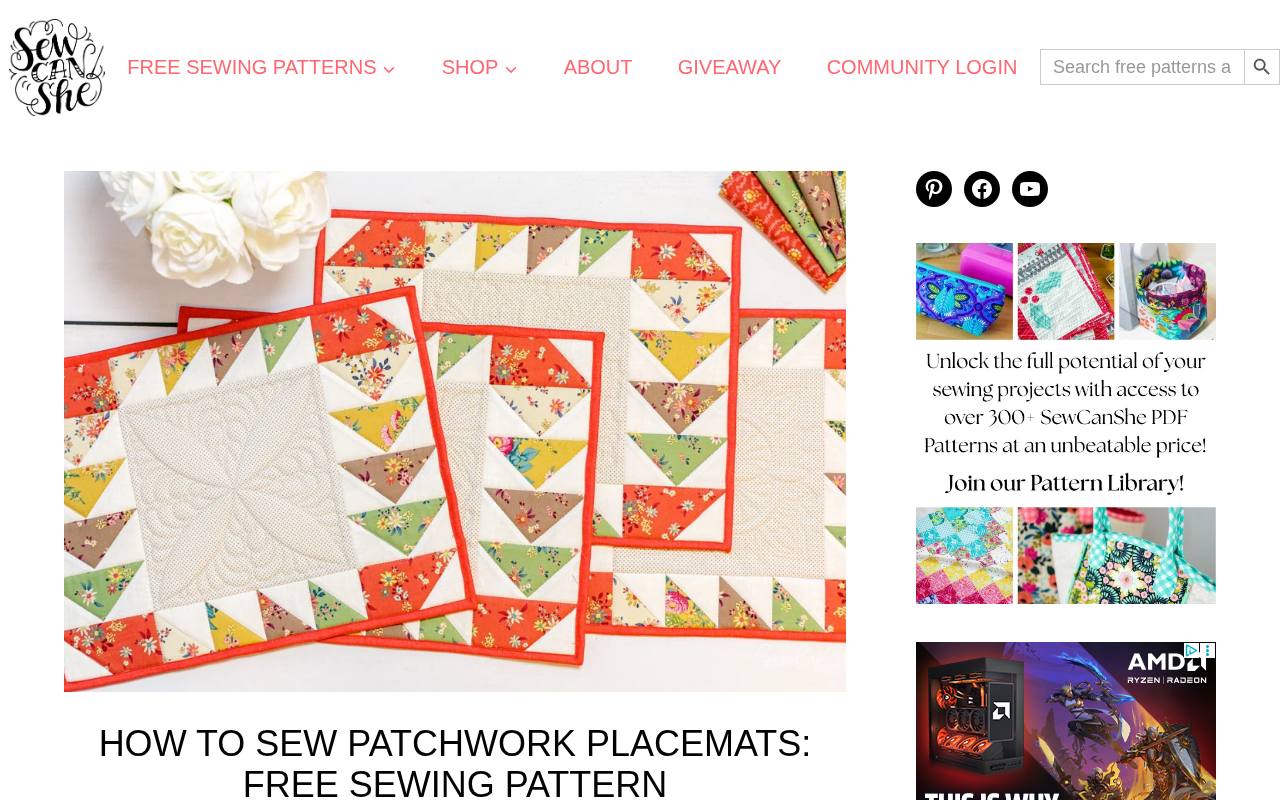
Caroline Fairbanks supplies cutting and sewing directions for four patchwork placemats, each approximately twelve by sixteen inches. The construction includes half-square triangles, flying geese, and chisel shapes around a larger center. An unusual detail is the use of flexible foam interfacing instead of conventional batting, giving the quilting pronounced definition.
The blog instructions are free to read and print through your browser. An optional downloadable PDF belongs to a separate membership offering. Decorative machine embroidery is discussed as an option, not an equipment requirement for making the basic placemats.
- Type
- Table linen tutorial
- Best for
- Practicing several patchwork units in one useful project
- License
- Free instructions; no commercial-use permission stated on the project page
- Price
- Free
Square Scramble Table Set
Table linen tutorial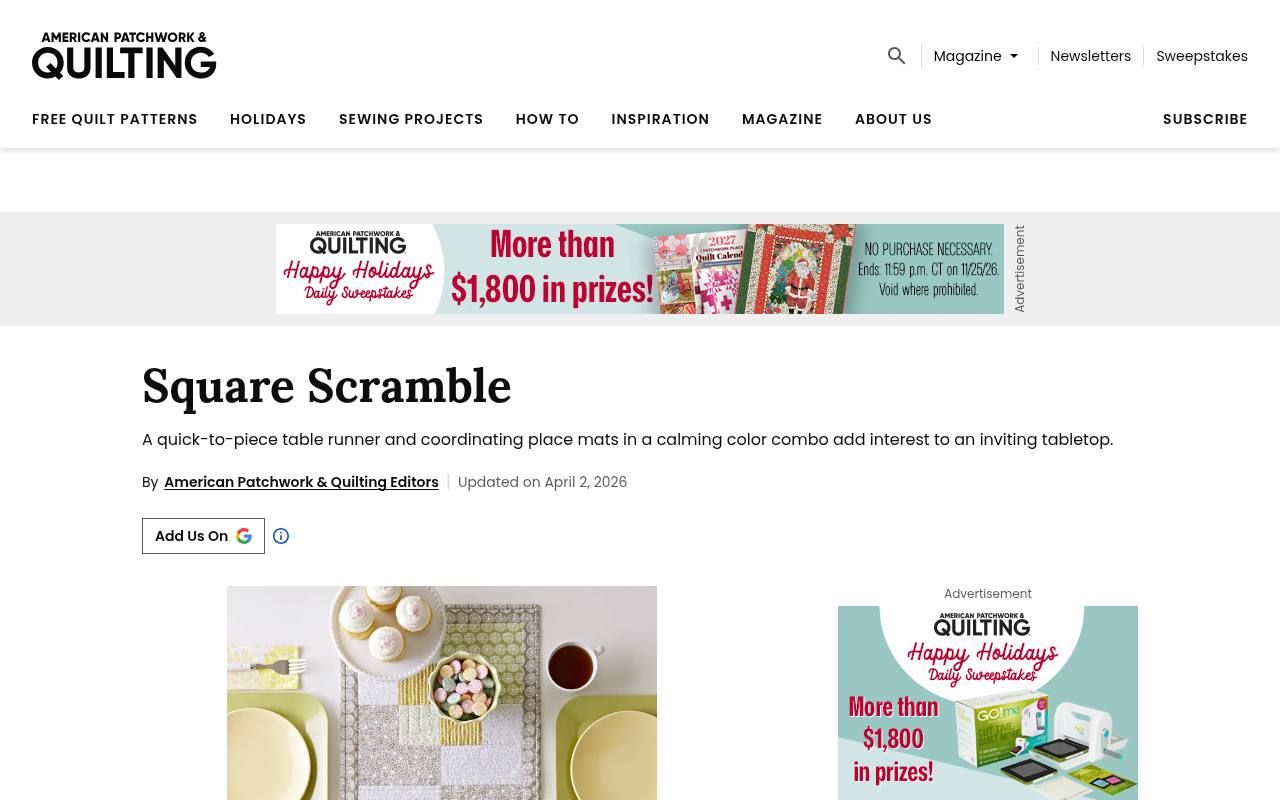
Kate Colleran’s design on AllPeopleQuilt includes two placemats and one runner, with a shared materials list and detailed cutting instructions. The runner finishes at fourteen and a half by fifty and a half inches; the placemats measure fourteen and a half by nineteen and a half inches.
Twelve-inch finished blocks provide the underlying scale. Tan, green, and gold prints establish the pictured palette without relying on a holiday motif. The page offers a project download alongside readable instructions, including seam allowances and pressing guidance for the component units.
- Type
- Table linen tutorial
- Best for
- Matching rectangular linens from shared patchwork blocks
- License
- Free instructions; no commercial-use permission stated on the project page
- Price
- Free
Oasis Table Runner
Table linen tutorial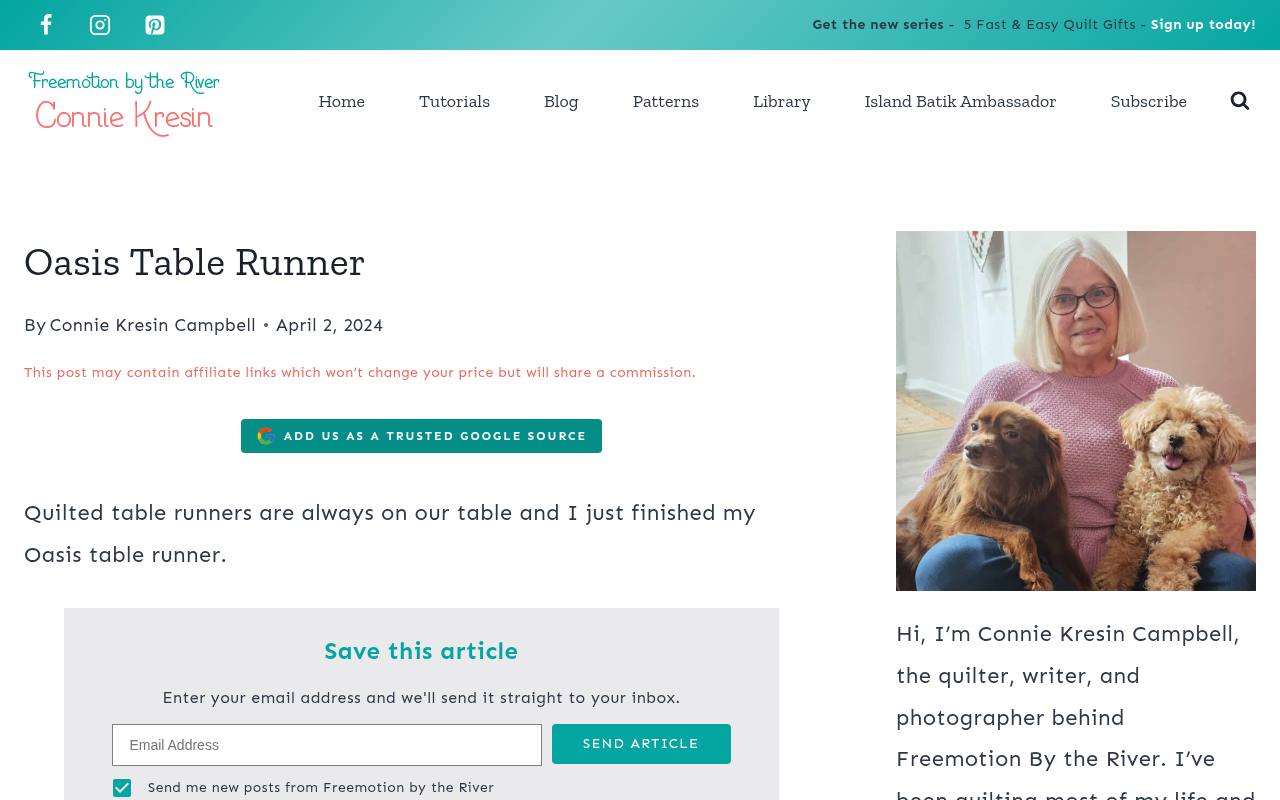
Connie’s Oasis table runner measures approximately nineteen by forty-two inches and uses fabrics from Island Batik’s Oasis collection. Walnut batik provides the sashing and borders in her example. The page discusses placement on a kitchen or dining table and explains that larger borders or another row can increase its footprint.
It also describes quilting the runner on spare backing and batting beside another longarm project. That production story is useful context, but a longarm is not a reason to overlook the small runner’s construction instructions.
- Type
- Table linen tutorial
- Best for
- A medium-length batik runner
- License
- Free instructions; no commercial-use permission stated on the project page
- Price
- Free
Polka Dot Chair Skinny Fat Quarter Runner
Quilted runner tutorial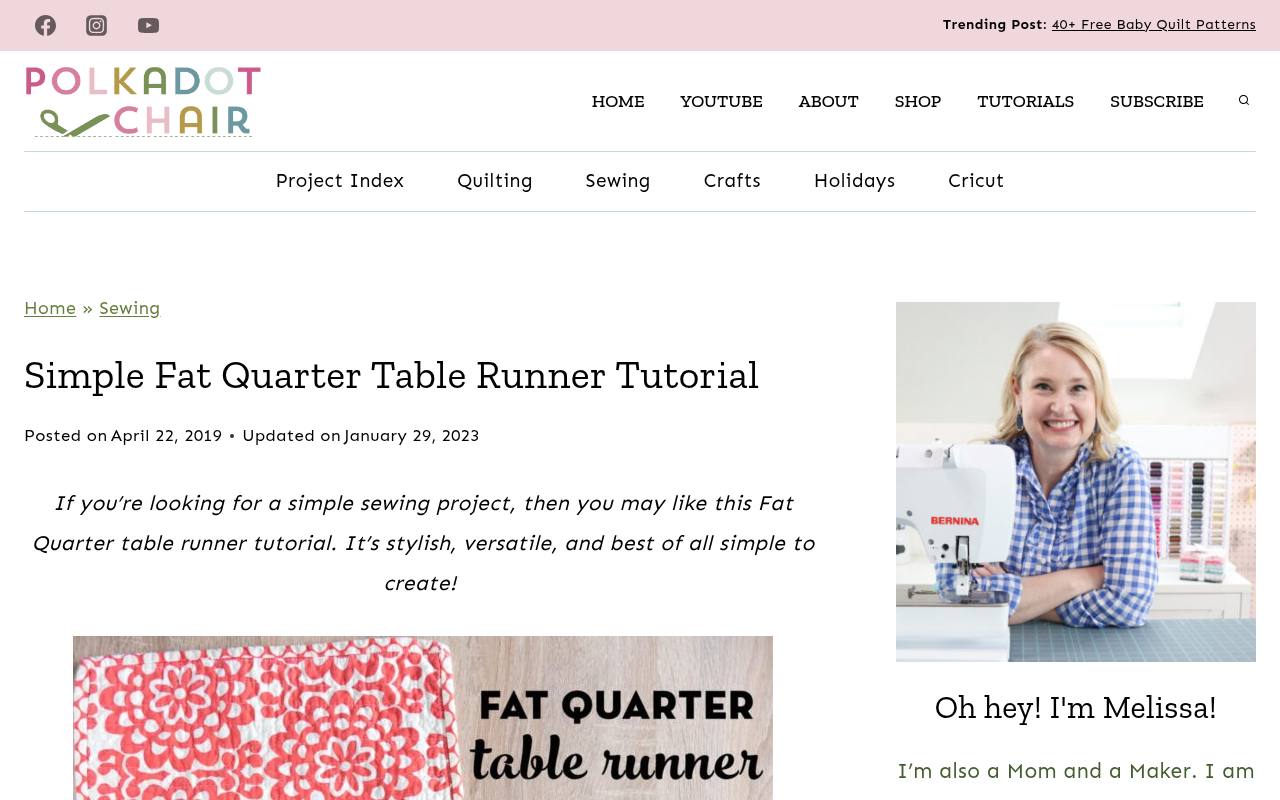
Melissa Mortenson’s skinny fat quarter runner uses large rectangles rather than intricate blocks, so there are no patchwork corners to match. Her sample finishes about fourteen inches wide and nine feet long, but the tutorial explains how to calculate a different length for your table.
Each fat quarter yields two rectangles, making a coordinated bundle or leftover collection useful here. The free web instructions are aimed at beginners and describe a flexible project that can be completed over an afternoon or two. Choose prints you enjoy seeing in larger, uninterrupted sections.
- Type
- Quilted runner tutorial
- Best for
- Fitting an unusually long dining table
- License
- Free instructions; no redistribution or commercial-use license stated on the project page
- Price
- Free
Diary of a Quilter Quilt As You Go Runner
Quilt-as-you-go tutorial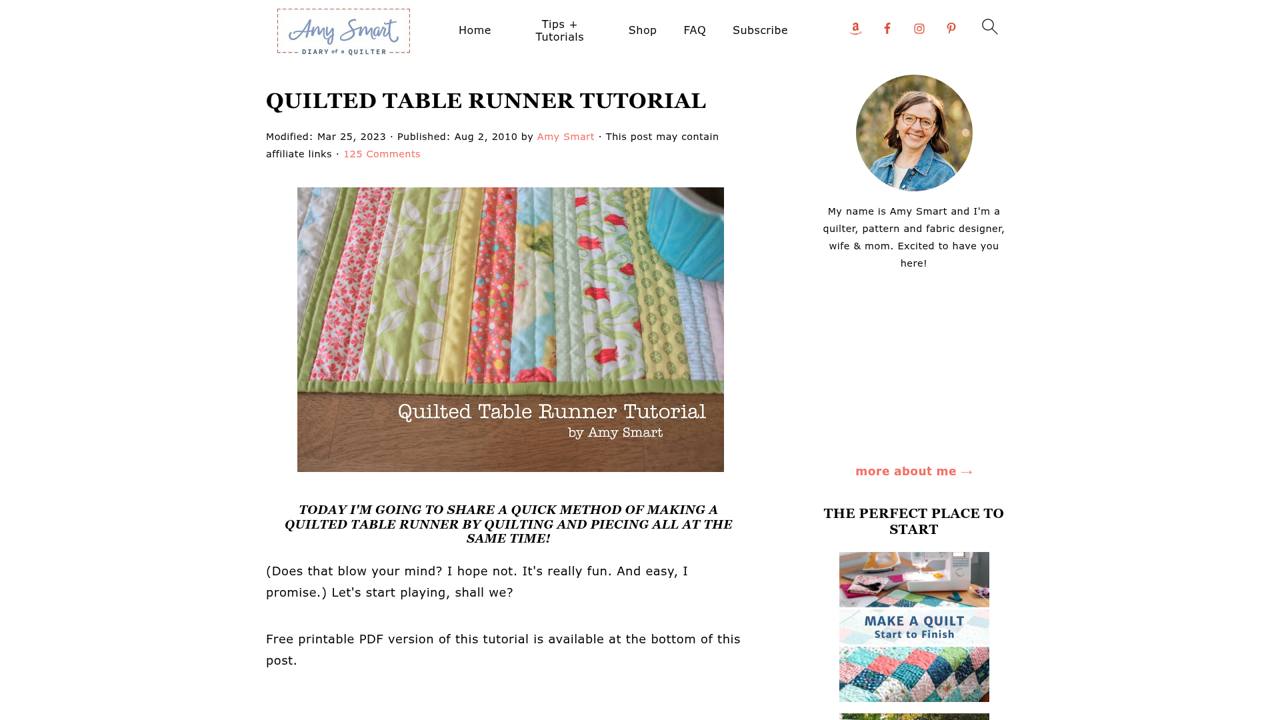
Amy Smart’s runner teaches piecing and quilting simultaneously, stitching fabric strips through the batting and backing as the top grows. Instead of imposing a fixed finished size, she starts by measuring the batting against the actual table.
The backing is cut larger, and a pleasing reverse fabric gives you a second display option. Her photographed online lesson also links a free printable PDF at the bottom of the post. It is particularly useful for trying quilt-as-you-go construction on a manageable surface before attempting a much larger project.
- Type
- Quilt-as-you-go tutorial
- Best for
- Combining strip piecing and quilting
- License
- Free instructions; no redistribution or commercial-use license stated on the project page
- Price
- Free
Christmas on the Farm Runner
Downloadable quilted runner pattern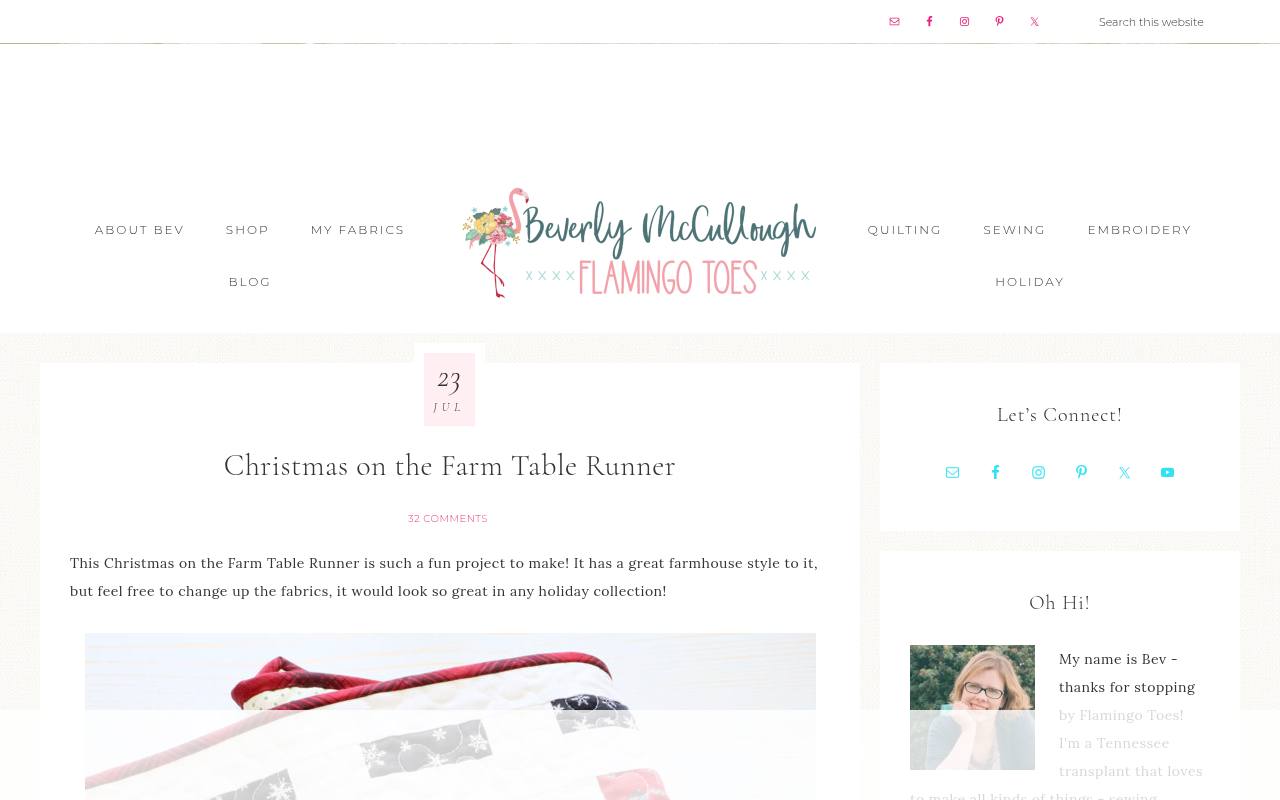
Beverly McCullough’s Christmas on the Farm runner places a little house with a Christmas tree between star blocks, then frames the arrangement with a dashed border. The blocks finish at twelve inches, giving the motifs enough room to read clearly across a dining table.
This official project page links the free runner instructions rather than sending you straight to an unexplained file. Beverly also suggests using one block for a pillow or repeating the blocks in a quilt. Her sample uses Farmhouse Christmas fabrics, but she explicitly welcomes other holiday collections.
- Type
- Downloadable quilted runner pattern
- Best for
- Combining house and star blocks for Christmas
- License
- Free instructions; no redistribution or commercial-use license stated on the project page
- Price
- Free
Size the runner around real place settings
Measure the tabletop, then arrange plates, glasses, and your usual serving dishes before choosing a finished runner width. A paper strip makes an inexpensive mock-up. Decide whether the runner should stop inside the table edges or hang over the ends.
For an overhanging style, add twice your chosen drop to the tabletop length. Keep loose ends away from small children who might pull them. Also check the runner with chairs pushed in and occupied.
A decorative drop that looks attractive on an empty table can end up in someone’s lap during dinner. For a round table, compare a centered short runner with an overhanging version before deciding which proportions feel balanced.
Change block counts before changing scale
When a runner needs adjustment, adding or removing whole block repeats is often simpler than enlarging every patch. Check how the revised length interacts with borders and sashing.
Narrower borders may preserve the motif better than shrinking the block. Recalculate backing, batting, and binding separately after settling the top dimensions. For placemats, check that an actual dinner plate leaves enough visible design to justify intricate piecing.
Choose batting for the job, not assumed protection
Low-loft batting usually makes a flatter table linen, but ordinary quilting batting does not certify a runner as a hot pad. For intended heat protection, consult the manufacturer’s instructions for a specifically heat-resistant insulating product and any required cotton layers.
Keep trivets under hot cookware regardless. Reflective insulating products may contain metal and are generally unsuitable for microwaves; never assume a decorative runner can double as a microwave mat.
Quilt for repeated washing
Frequently washed placemats benefit from secure, reasonably dense quilting that supports the layers without turning the fabric stiff. Follow the batting maker’s maximum stitching distance and test your intended spacing on a small sandwich.
Distribute stitches across the whole surface rather than concentrating them in one center block. Quilt beyond the eventual trimming line where practical, then square the piece carefully so opposite sides remain parallel after the stitching draws the layers inward.
Bind the edges without bulky corners
A runner’s long outline makes even binding particularly noticeable. Measure the quilted and trimmed perimeter, then allow additional length for corners and joining the tails. Place joins away from corners to reduce bulk.
Straight-grain binding suits rectangular linens; curved edges generally need bias binding. For machine finishing, test whether the second pass catches the folded edge consistently on the reverse rather than leaving small loose sections that will open during laundering.
Test care before making a complete set
Wash one fabric sample or a small finished test piece to assess color transfer and shrinkage, especially when dark reds meet cream backgrounds. Follow the care requirements of the least tolerant component, including foam or insulating inserts.
Give a gifted set a clear care note. Store seasonal runners clean and completely dry, preferably rolled loosely or refolded occasionally, rather than leaving food marks to become permanent during months in a drawer.