
Building a quilt one block at a time makes an unfamiliar technique feel manageable. A block library lets you compare traditional shapes, while a focused tutorial can explain the cutting and assembly in greater detail.
This collection includes both kinds of source. Some entries provide printable patterns; others teach directly on the page. Choose a block for the skill you want to practice, not simply for the most elaborate photograph.
A collection of attractive blocks does not automatically become a workable sampler quilt. Finished sizes, seam allowances, and construction methods need to agree before you join the blocks together.
Save the cutting chart with each tutorial and label the size you actually made. Where a library offers several versions, select one consistent scale. A little planning now prevents the familiar problem of ten lovely blocks that cannot share a row.
Use these resources as individual lessons and reference shelves. Libraries help identify names and variations; specific tutorials explain what happens at the sewing machine. Neither kind should be assumed to include a complete quilt layout, backing estimate, or binding plan.
Read the source’s usage notice before sharing printouts or selling a finished sampler. Free access to instructions does not replace each designer’s conditions for commercial use.
Quick picks at a glance
| # | Resource | License | Best for |
|---|---|---|---|
| 1 | Generations Quilt Patterns | Free block tutorials and printable resources; check individual entries | Comparing traditional blocks and available size variations |
| 2 | Quilter's Cache | Free block instructions; follow the site and individual pattern notices | Looking up named blocks in an established alphabetical index |
| 3 | Patchwork Square | Free quilt block patterns for personal use, as stated | Choosing downloadable blocks with explicit personal-use wording |
| 4 | Scissortail Quilting | Free block-library reference; follow linked instructions where supplied | Identifying blocks visually before investigating construction |
| 5 | Riley Blake Block Challenge | Free block PDFs published by Riley Blake Designs | Sewing a year-long block challenge at your own pace |
| 6 | Sawtooth Star by Diary of a Quilter | Free illustrated web tutorial | Learning a classic star through a focused block lesson |
| 7 | Heart Blocks by Cluck Cluck Sew | Free tutorial with a printable chart for multiple sizes | Choosing heart-block dimensions for a sampler or small project |
| 8 | Rail Fence Block by SewCanShe | Free web block tutorial with cutting instructions | Practicing strips in two finished block sizes |
| 9 | Churn Dash by WeAllSew | Free multi-part quilt-along beginning with fabric selection and cutting | Studying contrast before constructing a traditional block |
| 10 | Churn Dash by Generations Quilt Patterns | Free web tutorial with cutting and trimming charts | Comparing several sizes of a traditional nine-patch-style block |
Generations Quilt Patterns
Quilt block pattern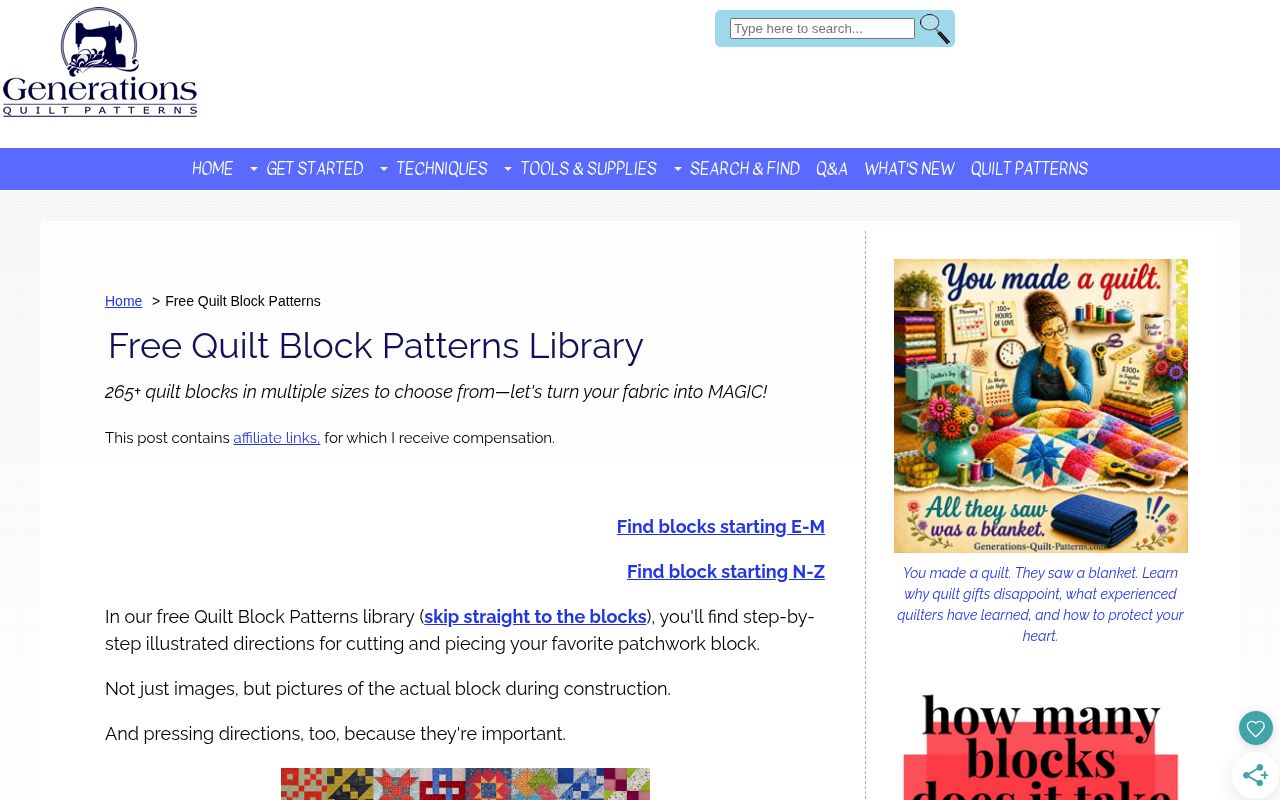
Generations Quilt Patterns organizes a substantial free quilt block index with links to individual tutorials. It is especially useful when you know a traditional block name but want to compare its construction before starting. Follow the selected entry for cutting charts and size choices, because the index is not itself a complete set of instructions.
Different blocks may use different techniques, including piecing approaches that need additional preparation. Keep the individual tutorial with your chosen dimensions so a later sampler session does not begin with uncertainty about which version you made.
- Type
- Quilt block pattern
- Best for
- Comparing traditional blocks and available size variations
- License
- Free block tutorials and printable resources; check individual entries
- Price
- Free
Quilter's Cache
Quilt block pattern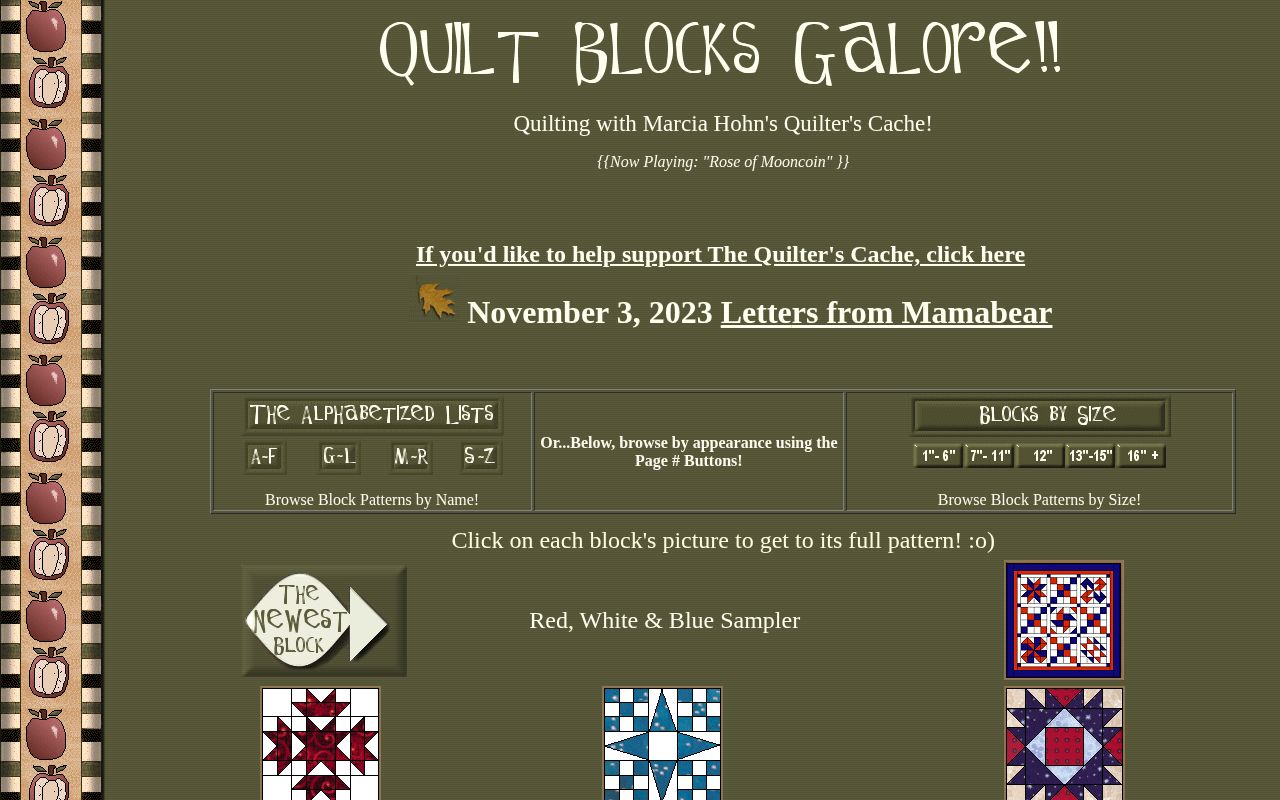
Quilter’s Cache presents Quilt Blocks Galore as a large named-block reference rather than a modern product catalog. Its index is a practical place to look up a familiar block or discover a variation you have not tried.
Open the individual instructions to inspect the construction and block size before adding it to a sampler plan. The archive’s older presentation may require more deliberate browsing than an image-led gallery. Keep designer attribution attached to your notes, and check the relevant usage notices instead of assuming the entire collection carries unrestricted reuse permission.
- Type
- Quilt block pattern
- Best for
- Looking up named blocks in an established alphabetical index
- License
- Free block instructions; follow the site and individual pattern notices
- Price
- Free
Patchwork Square
Quilt block pattern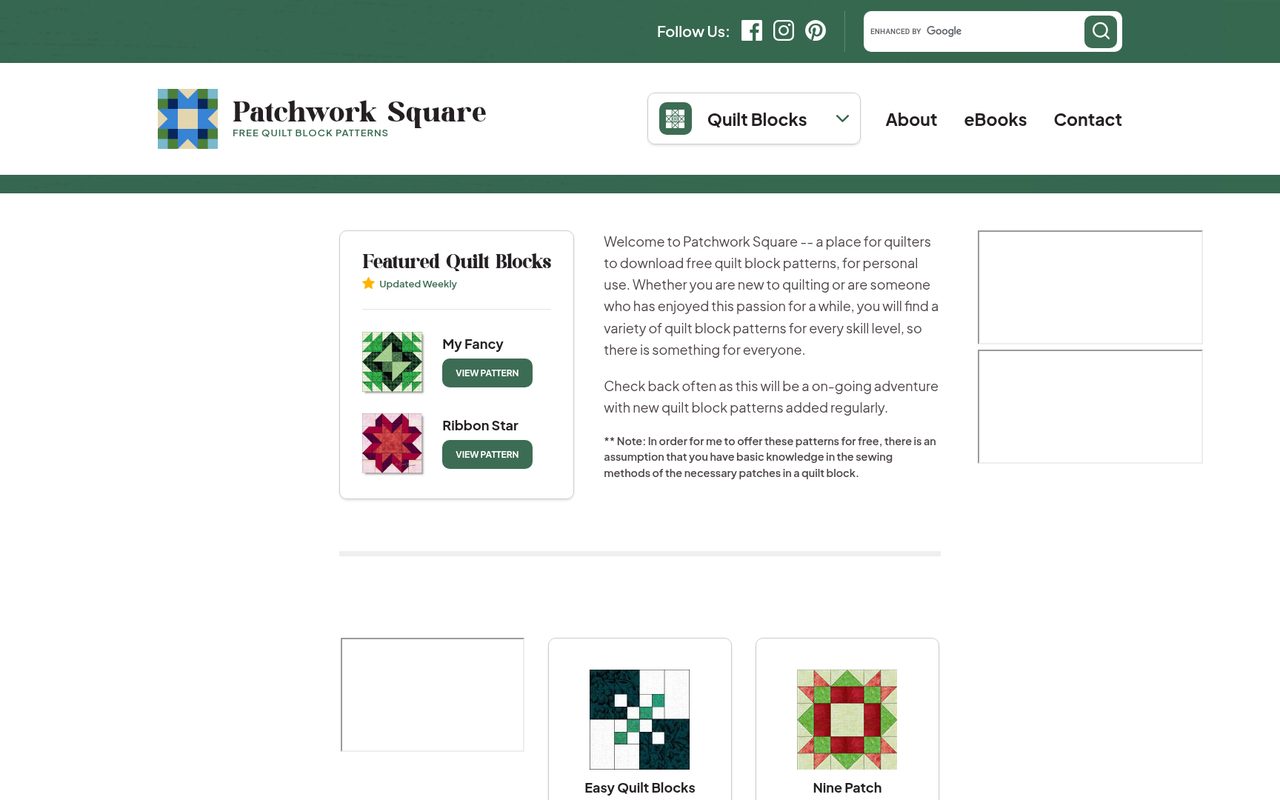
Patchwork Square explicitly offers free quilt block patterns for personal use, making its access wording clearer than a bare download button. The site welcomes different skill levels and organizes blocks as a browsable reference collection. Open the specific design to check the available pattern and size information before cutting.
This is a useful source when you want a printable block rather than a complete quilt project. Preserve the personal-use notice with your saved file, and do not translate free access into permission to distribute the PDFs or sell work without checking further terms.
- Type
- Quilt block pattern
- Best for
- Choosing downloadable blocks with explicit personal-use wording
- License
- Free quilt block patterns for personal use, as stated
- Price
- Free
Scissortail Quilting
Quilt block pattern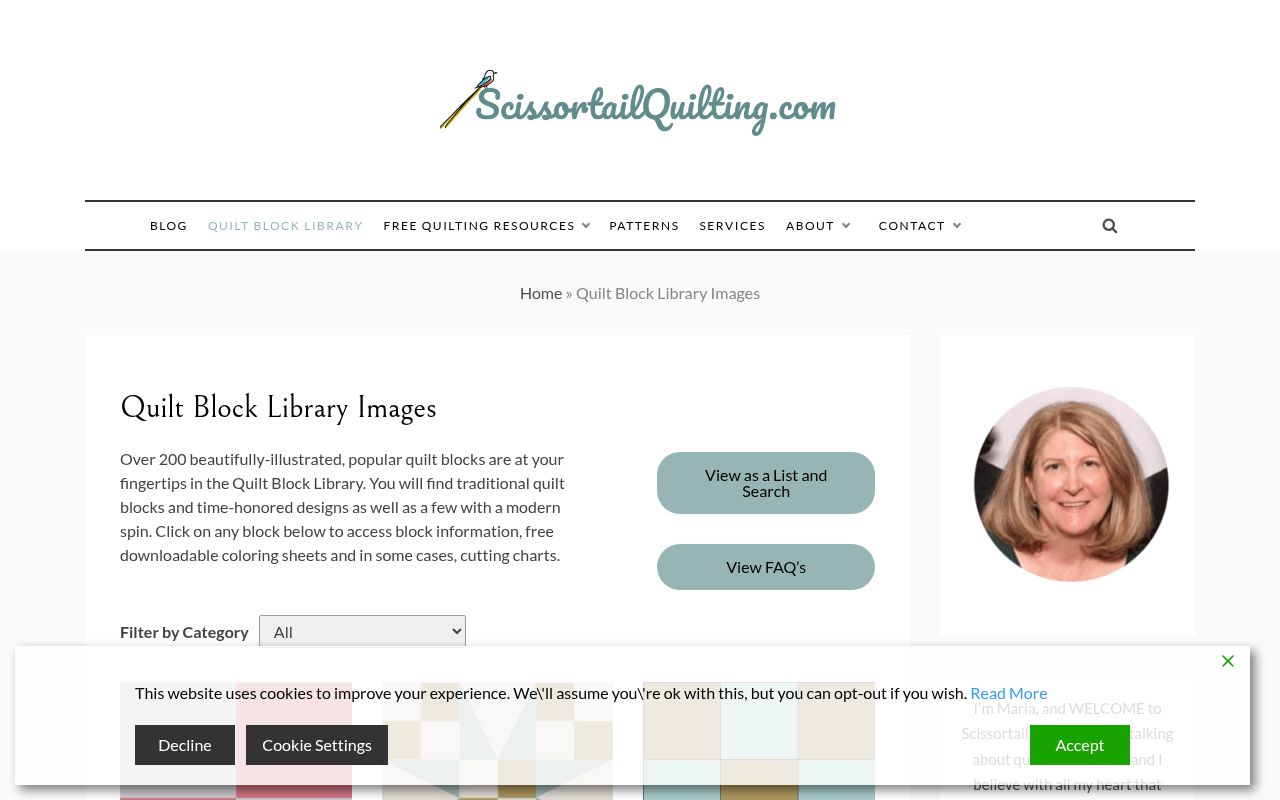
Scissortail Quilting’s image-based block library is helpful when you recognize a shape but do not know its name. The visual organization makes it easier to compare related arrangements and notice how rotating units changes a design.
Treat the library as a block reference doorway: follow the relevant entry and check what instructions or supporting information it supplies. An image alone is not a cutting chart. Before combining discoveries in a sampler, confirm each selected block’s dimensions and construction rather than estimating piece sizes from the gallery illustration.
- Type
- Quilt block pattern
- Best for
- Identifying blocks visually before investigating construction
- License
- Free block-library reference; follow linked instructions where supplied
- Price
- Free
Riley Blake Block Challenge
Block challenge pattern series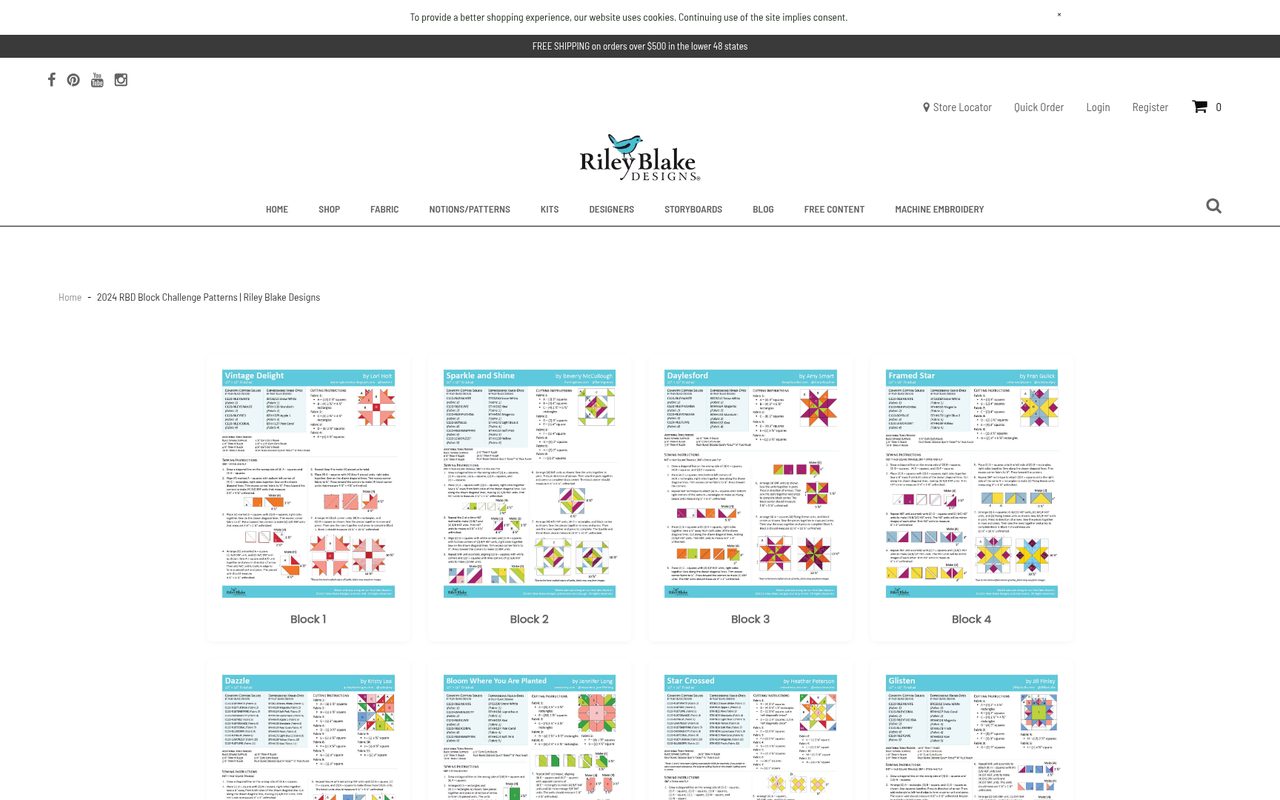
Riley Blake Designs runs an annual block challenge, and its 2024 pattern page links sixteen free block PDFs plus a finishing guide. Blocks include Vintage Delight, Framed Star, Star Crossed, Garden Patch and Inside Out Star, so the series moves through stars, frames and patchwork in steady steps.
A separate challenge page offers an invitation and a fabric requirements PDF for planning the whole quilt. Because everything stays posted, you can sew the series long after the original challenge dates instead of keeping up week by week.
- Type
- Block challenge pattern series
- Best for
- Sewing a year-long block challenge at your own pace
- License
- Free block PDFs published by Riley Blake Designs
- Price
- Free
Sawtooth Star by Diary of a Quilter
Quilt block pattern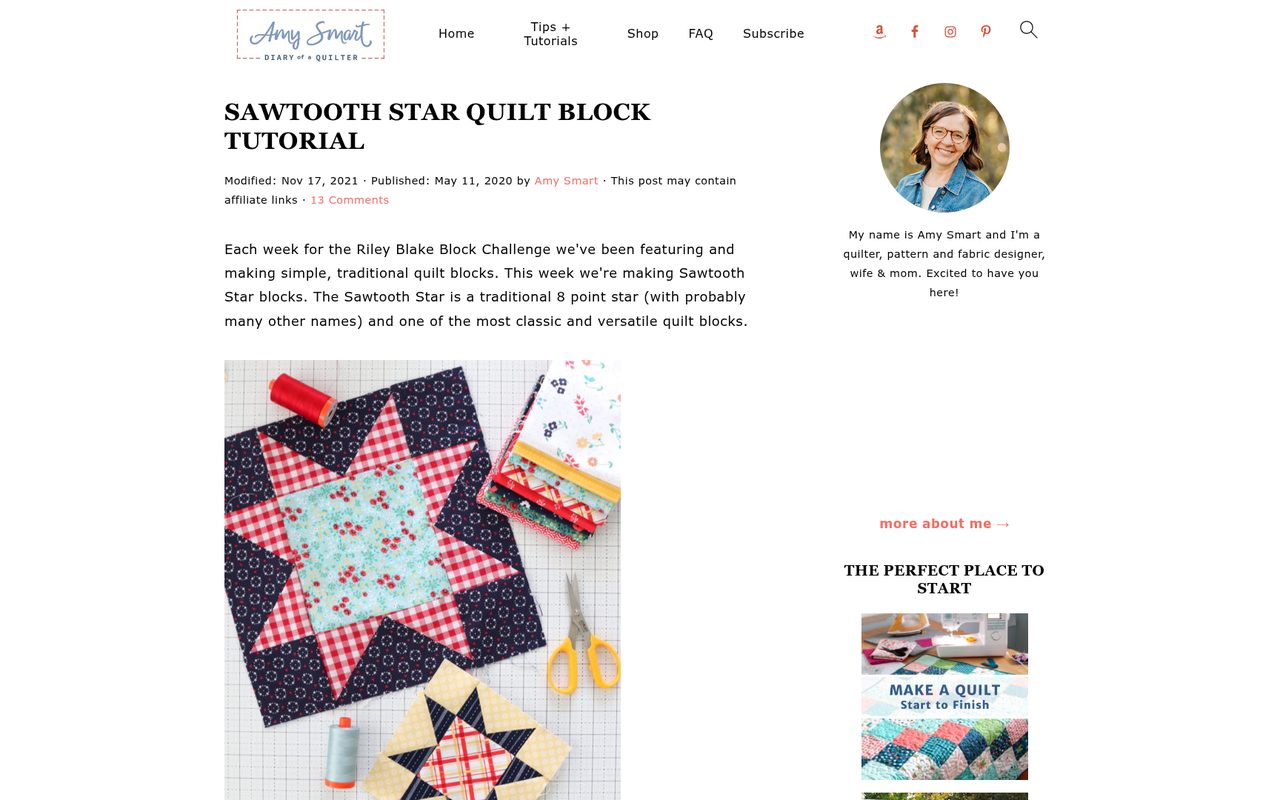
Diary of a Quilter’s Sawtooth Star tutorial focuses on a recognizable traditional star rather than an entire quilt pattern. The lesson breaks the block into manageable units, helping you see how the points surround the center. Follow the page’s cutting and assembly sequence instead of drawing triangles from the finished photograph.
This is a useful exercise in preserving points when units are joined. If you plan to repeat it across a quilt, calculate your block count and extra materials separately; the tutorial should not be mistaken for a complete yardage plan for every possible setting.
- Type
- Quilt block pattern
- Best for
- Learning a classic star through a focused block lesson
- License
- Free illustrated web tutorial
- Price
- Free
Heart Blocks by Cluck Cluck Sew
Quilt block pattern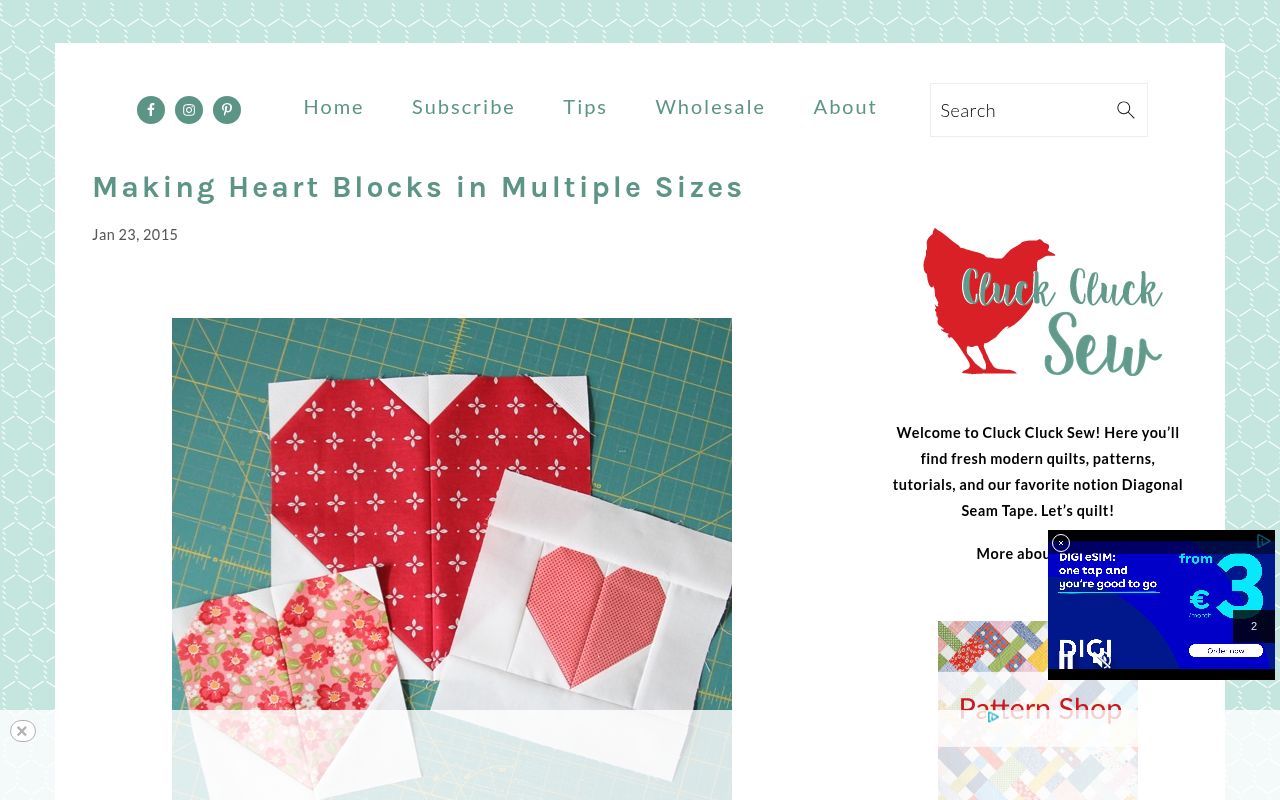
Cluck Cluck Sew provides heart blocks in multiple sizes with a free printable chart covering seven size options. The tutorial shows how simple pieced sections create a heart, making it easy to compare the shape at different scales.
Use the measurement chart for your selected size rather than mixing values from neighboring columns. These blocks can become a quilt, cushion, or sampler feature, but the surrounding layout requires its own plan. Keep the printable chart alongside the web instructions so the measurements and visual construction explanation remain available together.
- Type
- Quilt block pattern
- Best for
- Choosing heart-block dimensions for a sampler or small project
- License
- Free tutorial with a printable chart for multiple sizes
- Price
- Free
Rail Fence Block by SewCanShe
Quilt block pattern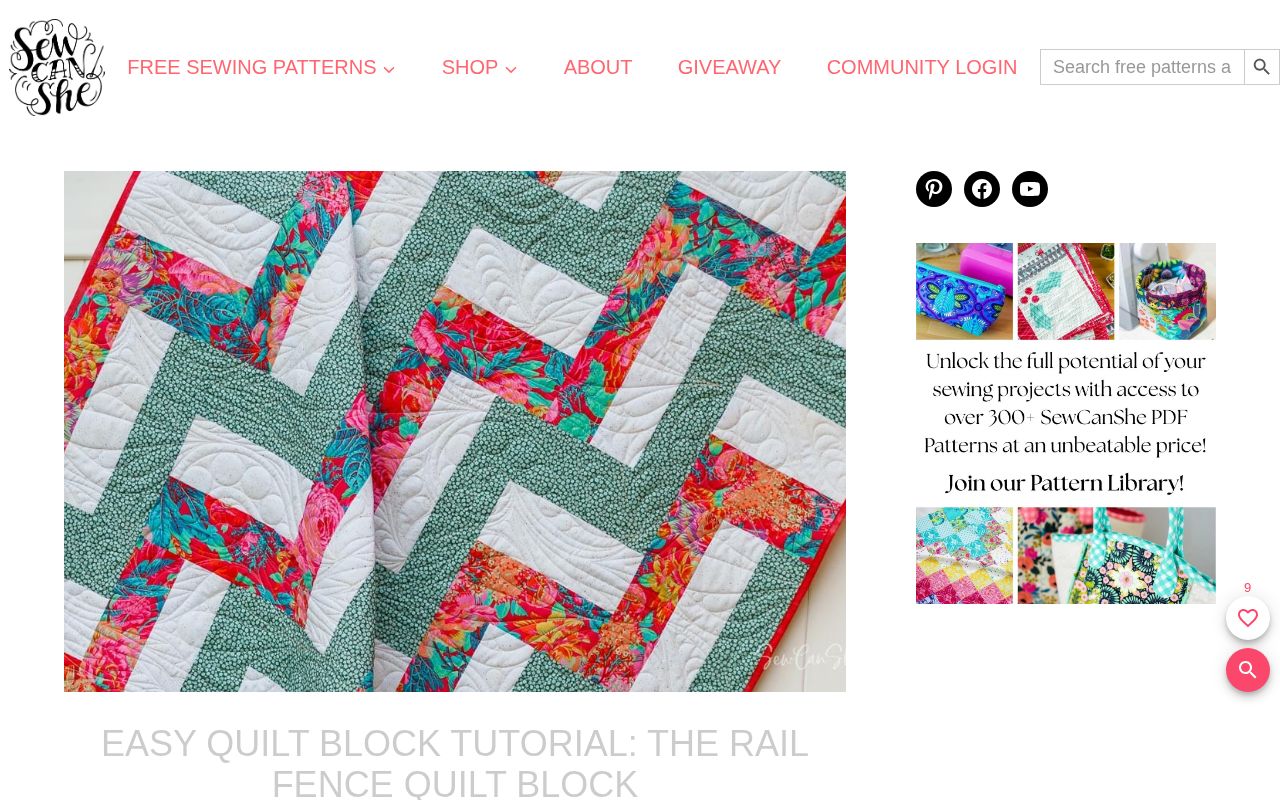
SewCanShe’s Rail Fence block tutorial gives cutting directions for ten-inch and twelve-inch finished blocks. The lesson sews strips together before subcutting the units and discusses using shorter fat-quarter strips or longer yardage strips. Photographs show different block arrangements, demonstrating how a simple unit can create several quilt layouts.
The instructions distinguish the finished size from the larger square you cut before joining blocks. This makes a helpful sampler lesson in both strip piecing and measurement, without requiring triangle points or a specialist cutting system.
- Type
- Quilt block pattern
- Best for
- Practicing strips in two finished block sizes
- License
- Free web block tutorial with cutting instructions
- Price
- Free
Churn Dash by WeAllSew
Quilt block pattern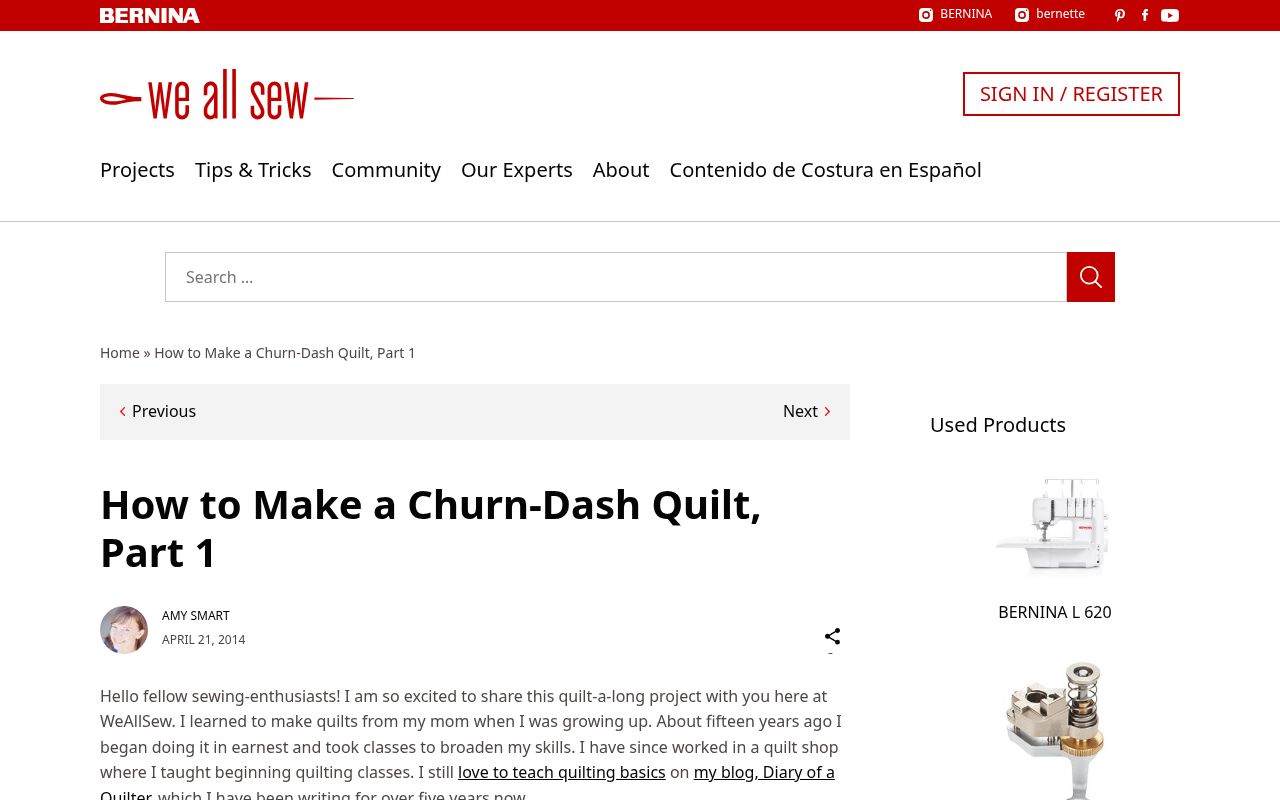
Amy Smart’s Churn Dash quilt-along on WeAllSew starts with fabric selection and cutting. The opening lesson compares contrasting fabric groups, from traditional red and white to softer modern palettes, so you can see how value changes the same block.
It introduces shortcut construction with little waste, then leads into the later lessons for the actual quilt. This is useful when choosing sampler fabrics as well as learning the block. Follow the linked sequence rather than expecting the first post alone to contain every piecing and finishing step.
- Type
- Quilt block pattern
- Best for
- Studying contrast before constructing a traditional block
- License
- Free multi-part quilt-along beginning with fabric selection and cutting
- Price
- Free
Churn Dash by Generations Quilt Patterns
Quilt block pattern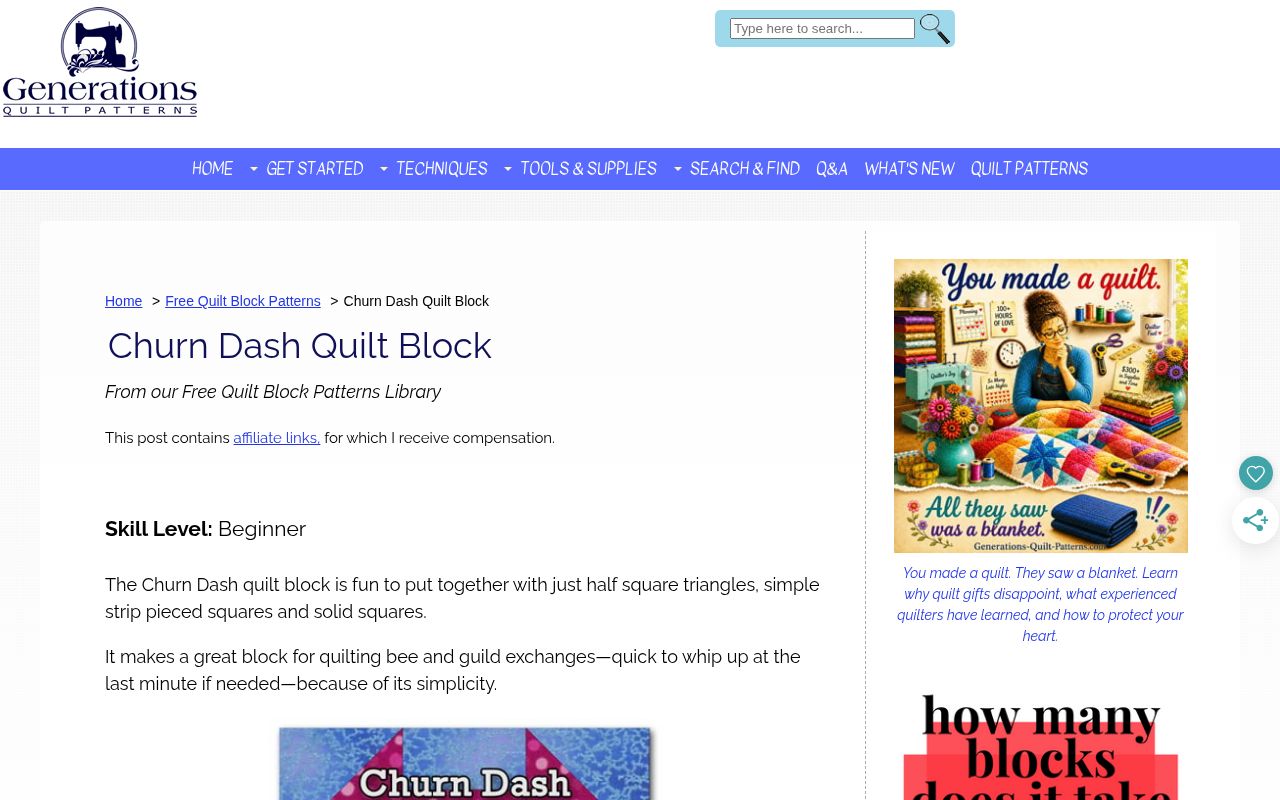
Generations’ Churn Dash tutorial includes a cutting chart for several finished block sizes and a six-inch finished sample. Its units combine corner triangles, paired rectangles, and a central square. The page discusses oversizing half-square-triangle patches before trimming, with supporting measurements to keep the units consistent.
That detail is valuable if your sampler blocks tend to finish slightly small. Choose one chart column and stay with it throughout the lesson. The completed block is a starting point for a quilt setting, not an automatic supply estimate for a finished bed quilt.
- Type
- Quilt block pattern
- Best for
- Comparing several sizes of a traditional nine-patch-style block
- License
- Free web tutorial with cutting and trimming charts
- Price
- Free
Check block sizes before you sew a sampler
Block libraries mix sizes freely, so confirm whether each pattern lists the finished or unfinished size. Decide on one size for your project, such as twelve inches finished, and look for blocks offered at that size or ones that scale easily from a grid.
When a block uses a simple grid, like a nine-patch or four-patch, scaling is straightforward: divide the finished size by the number of units and add seam allowances. Blocks with odd fractions are easier to make from a chart than by redrawing the math yourself.
Make half-square triangles and flying geese accurately
Half-square triangles appear in countless blocks. Make them slightly oversized with the two-at-a-time or eight-at-a-time method, then trim to size with a square ruler. Trimming takes a few minutes but gives perfect points that unoversized triangles rarely manage.
Flying geese can be made one at a time with corner squares or four at a time with the no-waste method. Whichever method a pattern uses, measure the first unit before making the rest. A goose that is too short makes the whole row shrink.
Square up every block
Even careful piecing drifts a little. Squaring up each finished block to its exact unfinished size makes rows easier to join. Line the ruler's diagonal with the block's diagonal seam where possible, so the design stays centred while you trim.
Trim only small slivers. If a block is more than an eighth of an inch too small, it is usually better to remake a unit than to trim the whole block down. Keep a seam allowance of at least a quarter inch beyond every point so nothing gets cut off later.
Plan sashing and the setting
Sashing strips between blocks give each design breathing room and hide small size differences in a sampler. Cornerstones at the intersections add a bit of colour and help rows line up. Two-inch finished sashing is a common starting width.
Blocks can also be set on point, turned at forty-five degrees with setting triangles around the edges. On-point settings make a small number of blocks look bigger, but the setting triangles need careful cutting so their long edges stay on the straight grain.
Join a block-of-the-month or quilt-along
Many fabric companies and designers run block-of-the-month programs that release one free block at a time. Following along spreads the work over a year and gives you a finished sampler, plus a community sharing photos and tips along the way.
Download each release as soon as it appears, because some programs remove free files after the event ends. Keep a sampler record of fabrics, block names and sizes, so you can make replacement blocks or a matching pillow later.