
Good free scrappy quilt patterns start with the fabric you actually have. Long strips, pale background remnants, irregular crumbs, and leftover rectangles suit different constructions. Choosing the project first and forcing every scrap into it often creates more waste than it saves.
These ten sources offer distinct approaches, from tiny-fragment foundation piecing to larger strip blocks. There are quiet low-volume designs as well as rainbow arrangements, so scrap-busting does not have to mean an uncontrolled mixture of every color.
A scrap-friendly pattern is not always an all-scrap pattern. Several projects below need consistent corner fabrics, background yardage, or long strips that a small-remnant basket cannot supply. Read the cutting requirements before committing.
A modest purchase can make existing leftovers usable, but it should be a conscious choice rather than an unexpected discovery halfway through sewing. Reserve backing, binding, and batting separately when estimating how much the finished quilt will cost.
The useful question is which scraps the construction can absorb. A crumb-pieced center accepts fragments that cannot yield a clean square, while a strip-pieced design needs pieces long enough to survive subcutting.
Access also varies between free web instructions, downloadable files, video lessons, and form-based downloads. Optional paid PDFs do not make the visible tutorial paid, but check which instructions you are actually using. Keep designer attribution with any saved pattern and investigate sales terms independently.
Quick picks at a glance
| # | Resource | License | Best for |
|---|---|---|---|
| 1 | Scrap Buster Plus Quilt by Scrap Fabric Love | Free instructions; no redistribution or finished-product sales permission established | Combining small squares, rectangles, and crumb-pieced centers |
| 2 | Scrappy Corners by Quilty Love | Free instructions; no redistribution or finished-product sales permission established | Balancing rainbow scraps with a consistent background |
| 3 | Scrappy Rainbow Throw by SewCanShe | Free instructions; no redistribution or finished-product sales permission established | Turning coordinated offcuts into a generous rectangular throw |
| 4 | Laura Pritchard Scrap Diamond Quilt | Free instructions; no redistribution or finished-product sales permission established | Using narrow strips inside contrasting diamond shapes |
| 5 | Cabin Under the Stars by Patchwork Posse | Free instructions; no redistribution or finished-product sales permission established | Combining four-patches, flying geese, and log cabin units |
| 6 | Darcy Quilts Scrappy Stripe Quilt | Free instructions; no redistribution or finished-product sales permission established | Adapting mixed-width strips to a repeatable block |
| 7 | X Marks the Scrap by Scrap Fabric Love | Free instructions; no redistribution or finished-product sales permission established | Converting tiny remnants into graphic crossed strips |
| 8 | Roundabout Quilt by Sew Nikki | Free instructions; no redistribution or finished-product sales permission established | Using larger leftover strips with repeated square centers |
| 9 | Scrappy Trips by Bonnie Hunter | Free instructions; no redistribution or finished-product sales permission established | Creating diagonal chains from contrasting leftover strips |
| 10 | Lovely Stars by Chelsi Stratton | Free instructions; no redistribution or finished-product sales permission established | Using pale printed scraps without losing star definition |
Scrap Buster Plus Quilt by Scrap Fabric Love
Archived quilt sew-along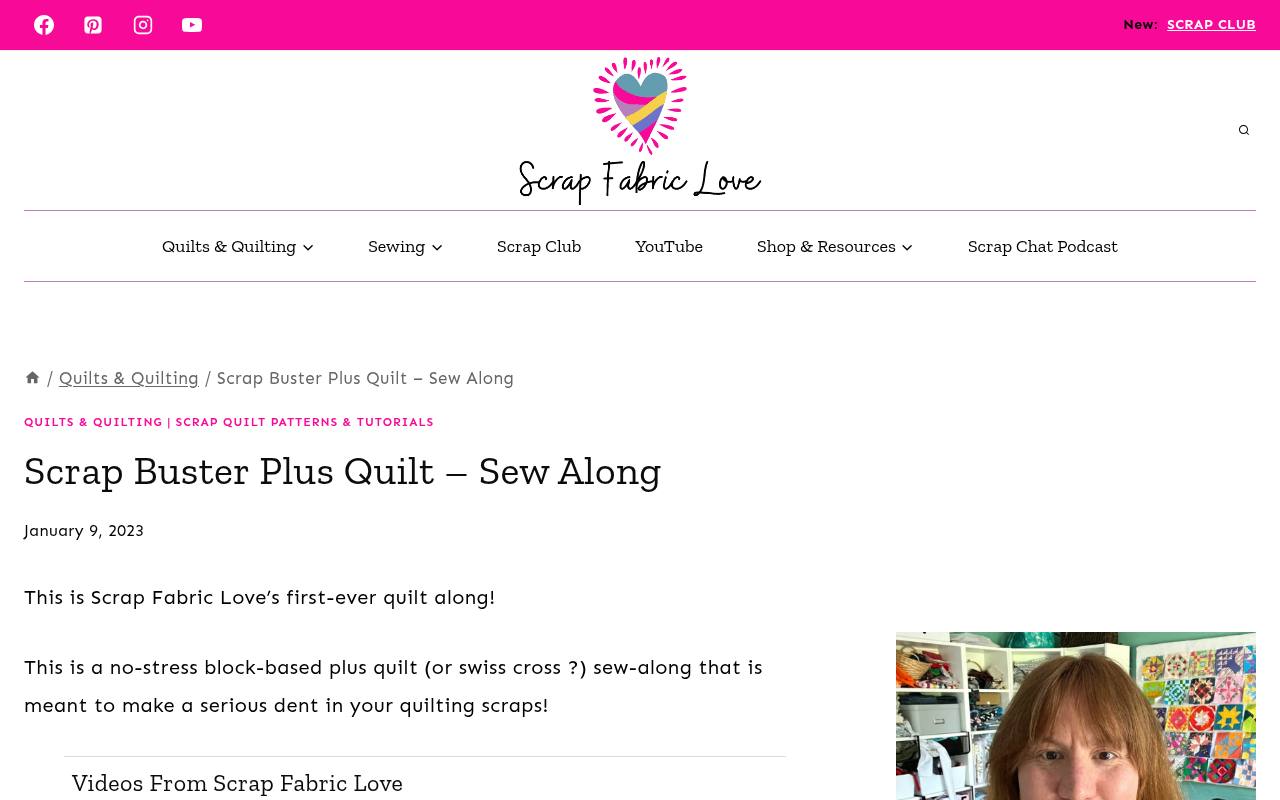
This archived sew-along turns leftover fabric into plus-sign blocks with several ways to construct the centers. A single square can be replaced by a crumb block or a four-patch, allowing different scrap sizes to participate in one project. The written instructions and videos remain available after the original group event.
The article covers sorting, cutting, block construction, layout choices, and finishing. It provides requirements by block rather than demanding a matching fabric collection. Use it when your scrap basket contains both useful rectangles and smaller pieces that need joining first.
- Type
- Archived quilt sew-along
- Best for
- Combining small squares, rectangles, and crumb-pieced centers
- License
- Free instructions; no redistribution or finished-product sales permission established
- Price
- Free
Scrappy Corners by Quilty Love
Free downloadable quilt pattern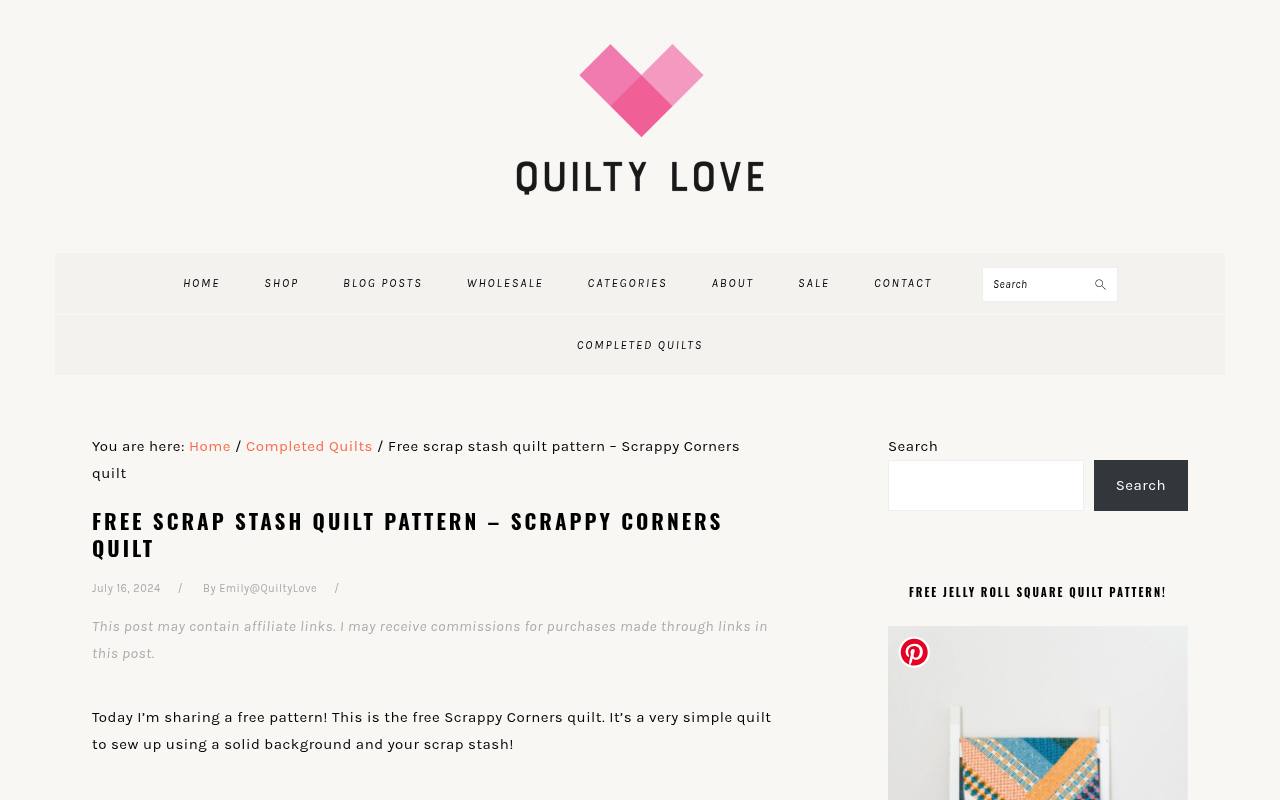
Emily Dennis’s Scrappy Corners combines a solid background with colorful scraps, giving leftover prints an organized setting. The source links to a free pattern containing the fabric cuts and extra color guidance, including estimated color ratios from the sample.
Its hybrid quilting discussion is particularly useful: machine-quilted lines work with hand stitching in colorful pearl cotton. The pictured background is Kona Cotton in Natural, which helps explain the softer effect compared with bright white. Start with the download for construction details, then use the blog photographs to consider your own color distribution.
- Type
- Free downloadable quilt pattern
- Best for
- Balancing rainbow scraps with a consistent background
- License
- Free instructions; no redistribution or finished-product sales permission established
- Price
- Free
Scrappy Rainbow Throw by SewCanShe
Free online quilt instructions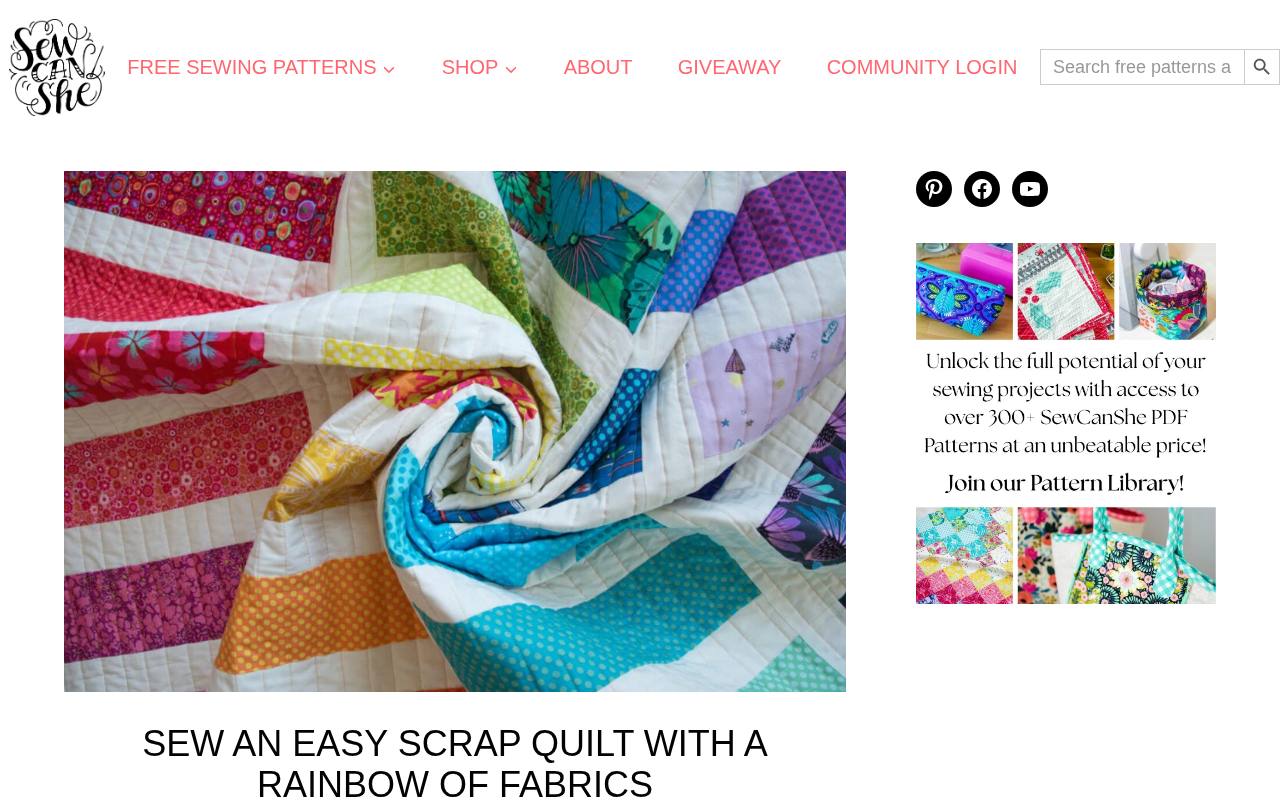
SewCanShe’s Scrappy Rainbow Quilt uses simple rectangles rather than triangles, arranging leftover prints into a colorful throw. The stated finished size is fifty-two by seventy inches, and the project is labeled beginner level. The complete blog tutorial is free to read and print, while an optional PDF is offered separately.
The designer developed it from coordinated offcuts, so the photographed harmony is not entirely accidental. You can reproduce that sense of order by choosing related scraps instead of emptying every bin into the layout. White scraps also contribute to the design.
- Type
- Free online quilt instructions
- Best for
- Turning coordinated offcuts into a generous rectangular throw
- License
- Free instructions; no redistribution or finished-product sales permission established
- Price
- Free
Laura Pritchard Scrap Diamond Quilt
Template-based quilt tutorial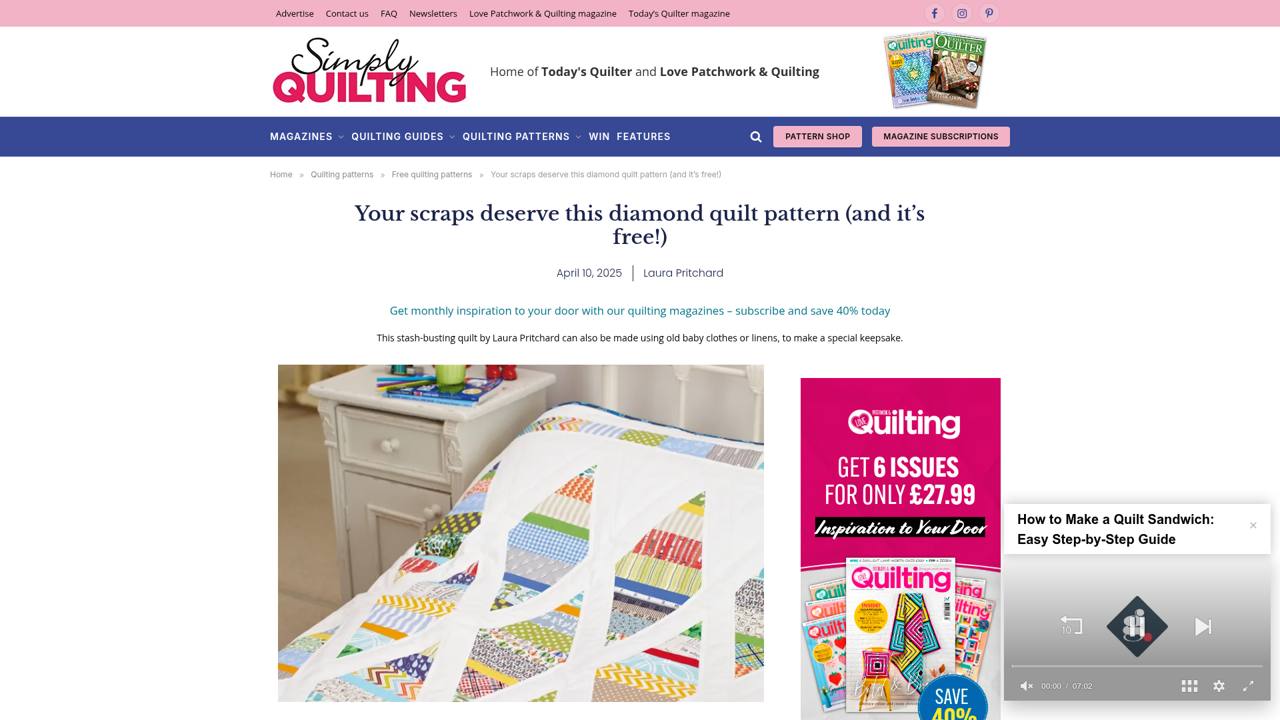
Laura Pritchard’s diamond project combines patterned strips and narrow solid strips with white sashing and borders. Simply Quilting provides the instructions online and links to a downloadable triangle template used to form the diamonds. The finished quilt measures approximately thirty-six by forty-eight inches.
The materials list distinguishes the wider patterned strips from the narrower solid pieces, making it easier to assess whether your scraps will fit. Smaller offcuts can contribute near tapered ends. The article also suggests using old clothing or linens for a keepsake, where fabric condition and stability deserve special attention.
- Type
- Template-based quilt tutorial
- Best for
- Using narrow strips inside contrasting diamond shapes
- License
- Free instructions; no redistribution or finished-product sales permission established
- Price
- Free
Cabin Under the Stars by Patchwork Posse
Free online scrappy quilt tutorial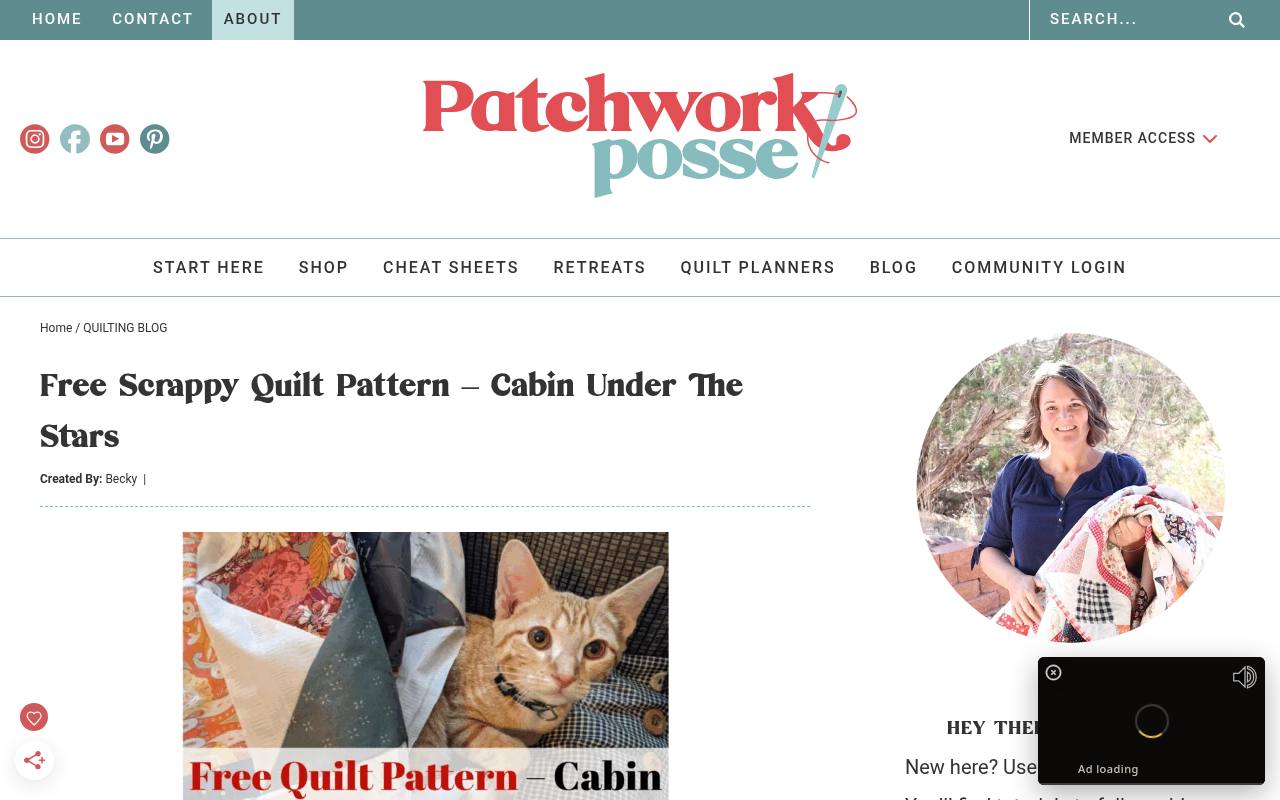
Cabin Under the Stars builds its design from four-patches, flying geese, and log cabin blocks. Patchwork Posse explains how varied background scraps work alongside a focus color and a flower or other print fabric. The online instructions are free, with a full pattern purchase offered as an alternative.
This is not a project made solely from tiny leftovers: the materials include substantial light and focus-fabric quantities. Assemble a balanced fabric pull before cutting. Repeated value relationships will help the stars remain visible even when the individual prints vary widely across the quilt.
- Type
- Free online scrappy quilt tutorial
- Best for
- Combining four-patches, flying geese, and log cabin units
- License
- Free instructions; no redistribution or finished-product sales permission established
- Price
- Free
Darcy Quilts Scrappy Stripe Quilt
Online scrap quilt tutorial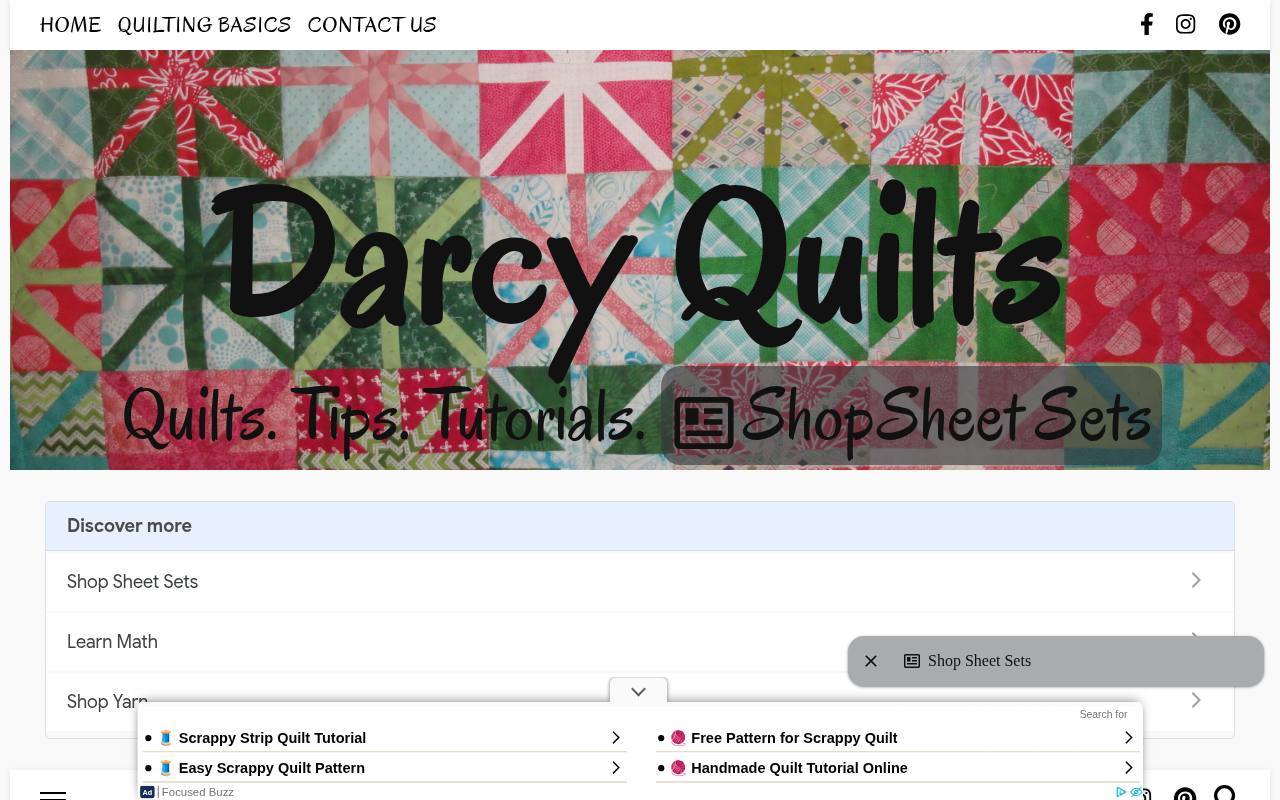
Darcy Quilts constructs scrappy center stripes from pieces of varied widths, then combines them with corner fabrics. The tutorial starts with an eight-inch finished block and explains adapting the method to different scrap dimensions. It also notes an important limitation: two half-yard fabric cuts are required for the corners in the illustrated version.
This is scrap-friendly, not necessarily an entirely leftover-only quilt. Written steps explain joining strips into larger sections before trimming. The sample uses thirty blocks in a five-by-six arrangement, giving you a concrete starting point for planning your own version.
- Type
- Online scrap quilt tutorial
- Best for
- Adapting mixed-width strips to a repeatable block
- License
- Free instructions; no redistribution or finished-product sales permission established
- Price
- Free
X Marks the Scrap by Scrap Fabric Love
Foundation paper piecing tutorial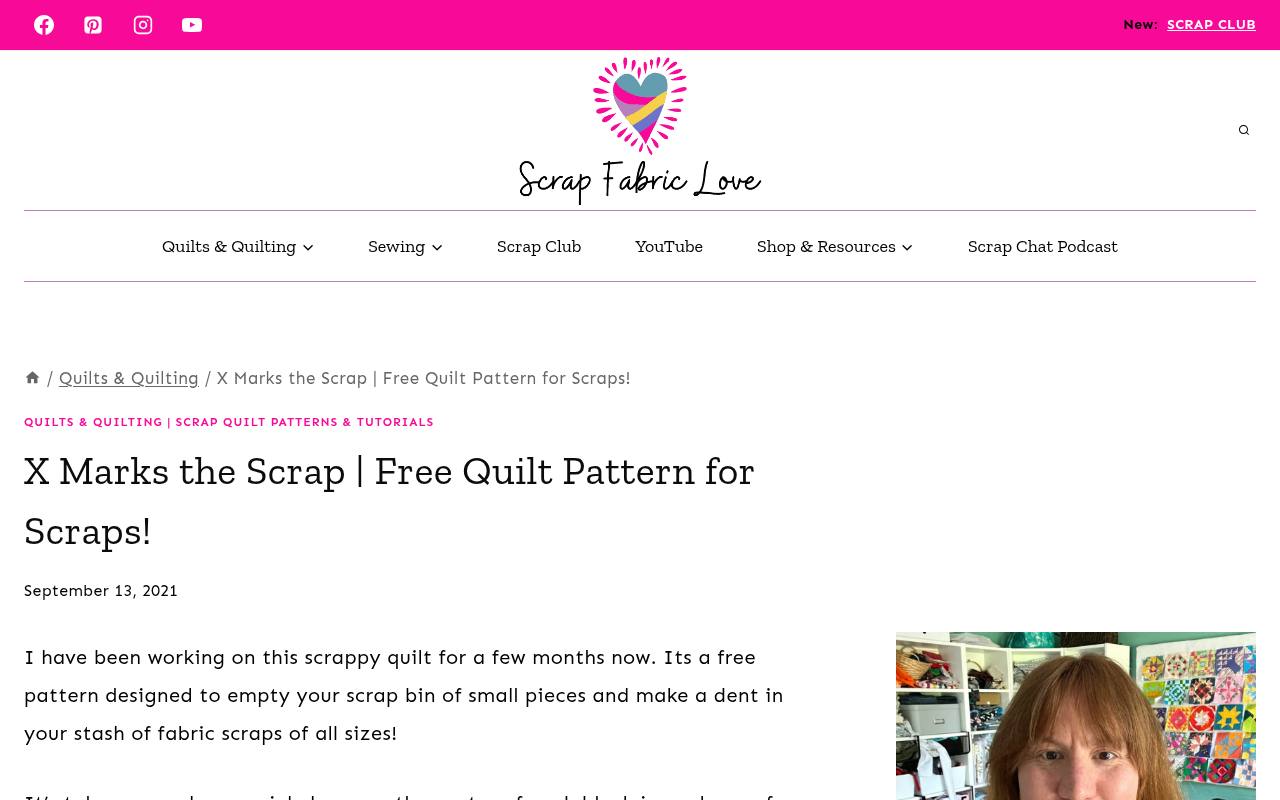
X Marks the Scrap joins tiny scraps into narrow strips that become the arms of larger X shapes. The designer describes a simple foundation-paper-pieced block, with four quarter blocks making each complete unit. A form unlocks the printable PDF and cutting templates, while the article supplies construction guidance and per-block fabric requirements.
Adding-machine paper is one suggested support for the scrappy strips. This is useful when ordinary square-based patterns leave your smallest remnants untouched. Expect extra seams and paper handling; the value lies in combining fragments that would otherwise be too small to cut consistently.
- Type
- Foundation paper piecing tutorial
- Best for
- Converting tiny remnants into graphic crossed strips
- License
- Free instructions; no redistribution or finished-product sales permission established
- Price
- Free
Roundabout Quilt by Sew Nikki
Free strip-block quilt tutorial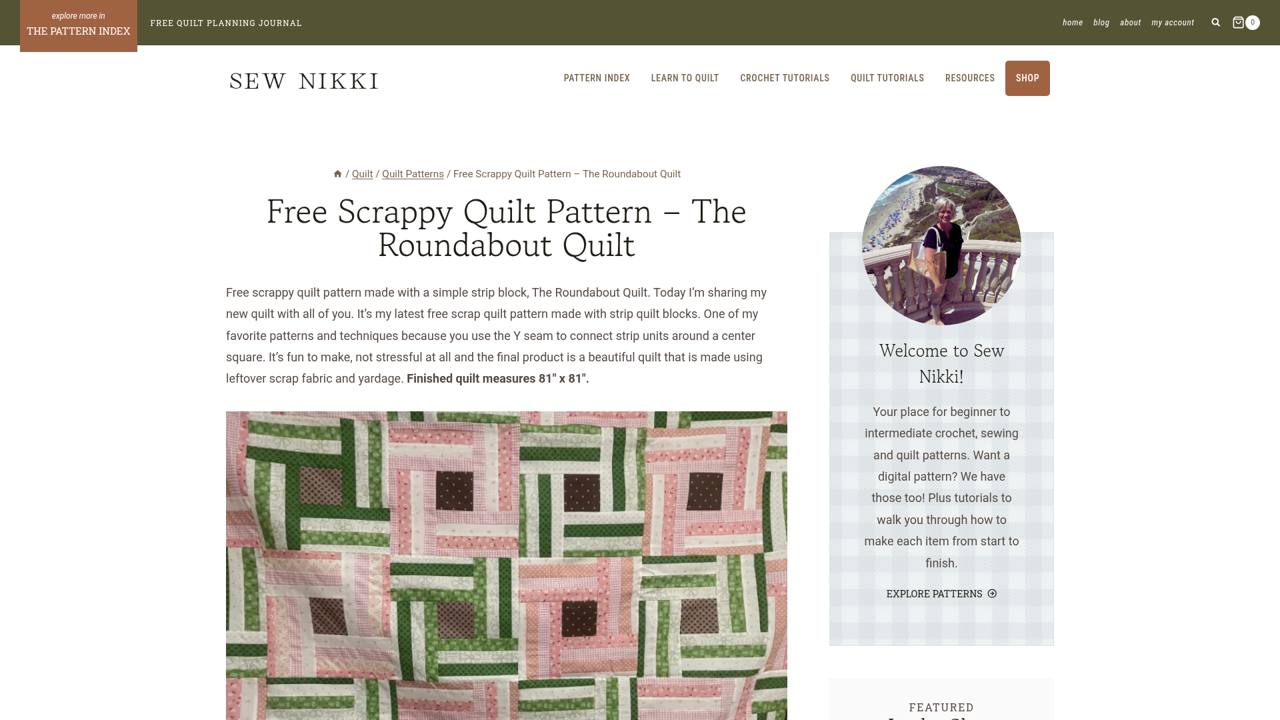
Sew Nikki’s Roundabout Quilt finishes at eighty-one inches square and is described as a confident-beginner project. Strip units surround center squares, and the author discusses the Y-seam connection used in the construction. The free tutorial explains a sample organized into pink and green colorways with brown centers.
It specifically calls for leftover yardage as well as scraps, so check strip lengths before expecting a small-remnant basket to supply everything. This is a better match for substantial offcuts than crumb-sized pieces, particularly if you want a larger quilt with visible color structure.
- Type
- Free strip-block quilt tutorial
- Best for
- Using larger leftover strips with repeated square centers
- License
- Free instructions; no redistribution or finished-product sales permission established
- Price
- Free
Scrappy Trips by Bonnie Hunter
Online strip-pieced quilt pattern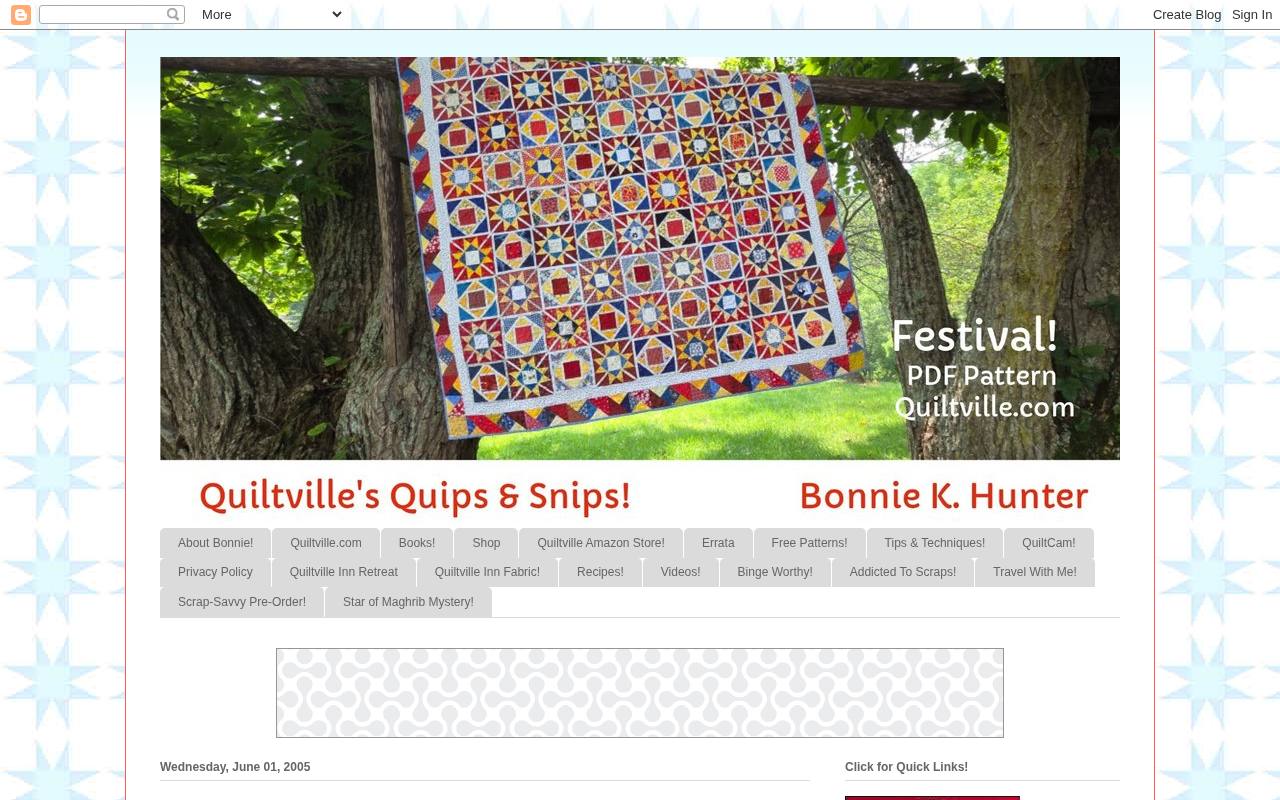
Bonnie Hunter’s Scrappy Trips turns contrasting strips into diagonal chains, loosening the coordinated color rounds of a traditional Trip Around the World. The Quiltville tutorial specifies six rectangles for a twelve-inch block and explains strip arrangement, sewing, and alternating pressing directions. A printer-friendly PDF link accompanies the online instructions.
The original tutorial grew from donation-quilt work, and reader quilts demonstrate different settings. Pay particular attention to the first and last strips in each panel: they meet later, so their contrast matters just as much as neighboring strips at the cutting table.
- Type
- Online strip-pieced quilt pattern
- Best for
- Creating diagonal chains from contrasting leftover strips
- License
- Free instructions; no redistribution or finished-product sales permission established
- Price
- Free
Lovely Stars by Chelsi Stratton
Video tutorial with free PDF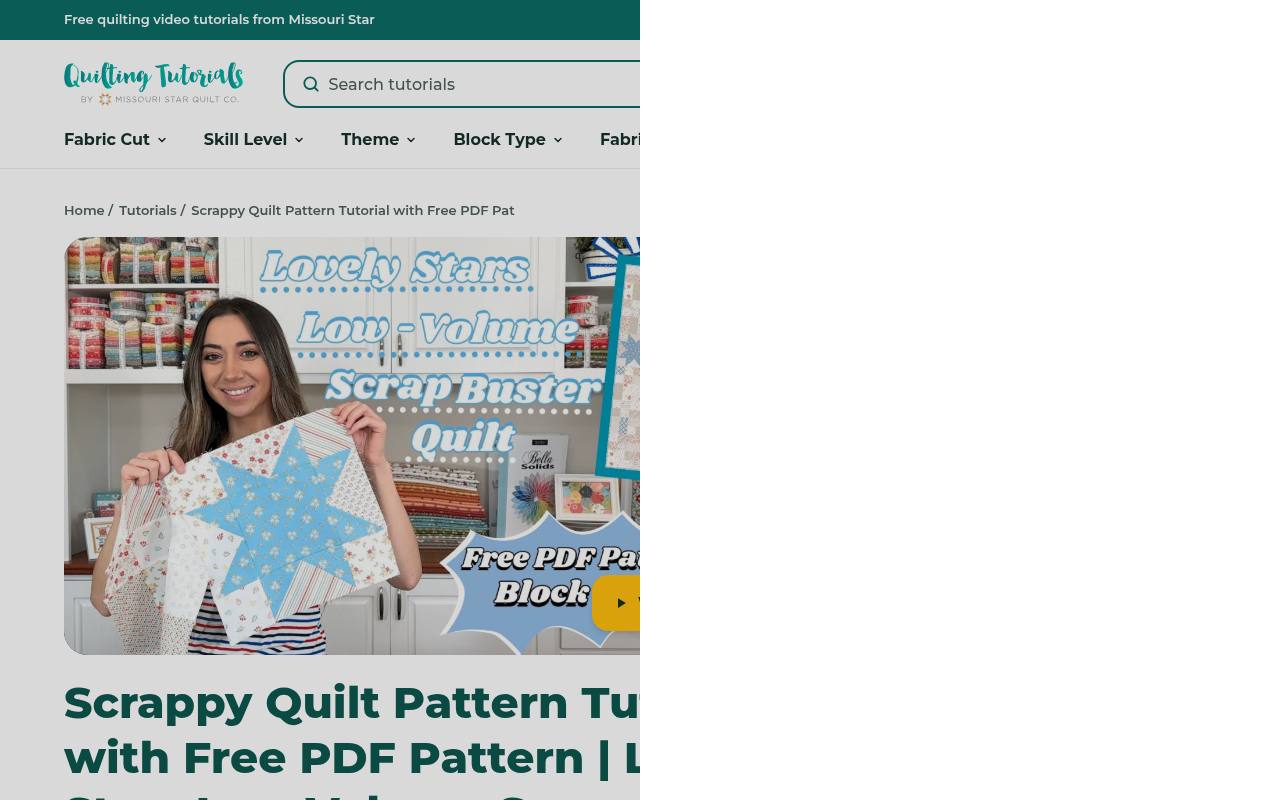
Chelsi Stratton demonstrates two complementary blocks in this Lovely Stars video tutorial, with a free PDF linked beneath the lesson. The finished quilt measures sixty by seventy-two inches. Its distinguishing feature is the low-volume scrap palette, using pale printed fabrics rather than a saturated rainbow.
Sawtooth stars add structure within the softer field. This is a useful alternative when your leftover fabrics are mostly cream, white, or delicate neutrals. Compare the darkest and lightest prints before cutting, because a quiet palette still needs enough separation for the star shapes to remain legible.
- Type
- Video tutorial with free PDF
- Best for
- Using pale printed scraps without losing star definition
- License
- Free instructions; no redistribution or finished-product sales permission established
- Price
- Free
Sort scraps by usefulness
Begin with fabric condition and fiber behavior, not just color. Remove pieces that are too worn to hold a seam, and separate unusually stretchy or heavy cloth from ordinary quilting cotton.
Press salvageable scraps before measuring them; a wrinkled piece can appear smaller than it really is. Sort the rest into strips, squares, larger chunks, and tiny crumbs. Keeping a small container beside the cutting mat makes this easier than postponing all sorting until the basket overflows.
Cut a practical standard-size system
Choose standard scrap sizes that match projects you enjoy, such as two-inch and two-and-a-half-inch squares or strips. Label containers with the unfinished cutting size so it cannot be confused with the finished patch measurement.
Do not cut every large remnant down immediately: future patterns may need rectangles or longer strips. Save the largest useful shape first, then harvest smaller pieces from the remainder. Consistent widths help, but a system only saves time when you actually sew from it.
Build a leaders-and-enders habit
Use leaders and enders to piece a second project between units of your main quilt. Keep a prepared stack of matched scrap pairs beside the machine, sew one pair after a seam sequence, and leave it ready to lead into the next task.
Maintain the same seam allowance the secondary project needs. Count completed pairs periodically and press them in batches. This approach turns routine transitions into useful patchwork, but it works best with a specific block and destination in mind.
Control color without losing variety
A scrappy quilt can have controlled color and varied prints at the same time. Limit the palette to a few families, repeat one background, or group scraps by value before distributing them. Lay out several blocks together rather than judging each in isolation.
A single very dark patch may need companions elsewhere to avoid becoming an accidental focal point. If you want an anything-goes look, maintain contrast where the construction relies on visible diagonals, stars, or crossing strips.
Account for seams and bulk
Tiny scraps bring extra seam allowances, which can make a top heavier and harder to quilt than its size suggests. Press small units carefully, remove unnecessary bulk only where construction allows, and test the needle and quilting approach on a representative sample.
Avoid repeatedly placing thick intersections at the same joining points. A backing made from leftovers needs its own plan for seam placement and adequate size. Finishing one manageable throw can be more satisfying than accumulating dozens of unjoined blocks.
Check terms before selling finished quilts
Before selling quilts made from free patterns, distinguish permission to use instructions from permission to reproduce the document or market finished objects. Read the designer’s current terms and ask for clarification when commercial use is not addressed.
Do not sell or share the pattern file itself. For pricing, track preparation, piecing, quilting, finishing, and material costs even when the top uses leftovers. Keep a source record with each project, and describe your own workmanship without implying that you designed someone else’s pattern.