
The strongest free modern quilt patterns do more than replace traditional prints with trendy colors. They use proportion, repeated geometry, open background, or deliberate asymmetry to give the eye a clear route across the quilt.
This selection includes structured downloadable patterns alongside online tutorials and one improvisational guide. Some are restrained and quiet; others use directional shapes or bold prints. Choose according to the composition you want to explore, rather than assuming that every modern quilt must look minimalist.
Think of negative space as an active fabric choice, not simply an empty area waiting for more blocks. A broad background can frame a small feature, separate repeated shapes, or make quilting stitches part of the design.
Before buying fabric, identify what creates the pattern’s impact: sharp value contrast, changing direction, subtle tonal shifts, or an unexpected accent. Those relationships are more transferable than the exact fabric collection photographed by the designer.
These are specific projects rather than pattern libraries, and their access routes differ. A free PDF may sit at the bottom of a long article, while another design requires joining a newsletter.
Online tutorials can be just as useful as printable files, especially for unfamiliar construction. Supplies, custom-printed cloth, and optional paid products remain separate expenses. Free access to instructions also does not establish permission to redistribute a pattern or sell quilts made from it.
Quick picks at a glance
| # | Resource | License | Best for |
|---|---|---|---|
| 1 | Modern Improv Scrap Quilt by Scrap Fabric Love | Free instructions; no redistribution or finished-product sales permission established | Exploring asymmetry without a fixed cutting chart |
| 2 | Frameworks by Nydia Kehnle | Free instructions; no redistribution or commercial-use license stated on the project page | Using a coordinated roll of solid fabric strips |
| 3 | Windborne by A Piece of Quiet Quilts | Free instructions; no redistribution or finished-product sales permission established | Using rotating flying geese to suggest movement |
| 4 | Twisted Ribbons by Suzy Quilts | Free instructions; no redistribution or finished-product sales permission established | Making long color bands the focal point |
| 5 | Bird Watching by Suzy Quilts | Free instructions; no redistribution or finished-product sales permission established | Displaying large motifs within clean triangle geometry |
| 6 | Mod Melons by Suzy Quilts | Free instructions; no redistribution or finished-product sales permission established | Trying playful curved geometry with supporting lessons |
| 7 | Simple Four Square Quilt by Purl Soho | Free instructions; no redistribution or finished-product sales permission established | Exploring proportion with restrained prints and a bright accent |
| 8 | Watercolor Quilt by Purl Soho | Free instructions; no redistribution or finished-product sales permission established | Creating quiet minimalism with tonal fabric bands |
| 9 | Crossroads Quilt by Purl Soho | Free instructions; no redistribution or finished-product sales permission established | Producing an overlapping-line illusion from basic shapes |
| 10 | Lou Orth Modern Geometric Quilt | Free instructions; no redistribution or finished-product sales permission established | Practicing repeated triangle units in an airy layout |
Modern Improv Scrap Quilt by Scrap Fabric Love
Improv quilt tutorial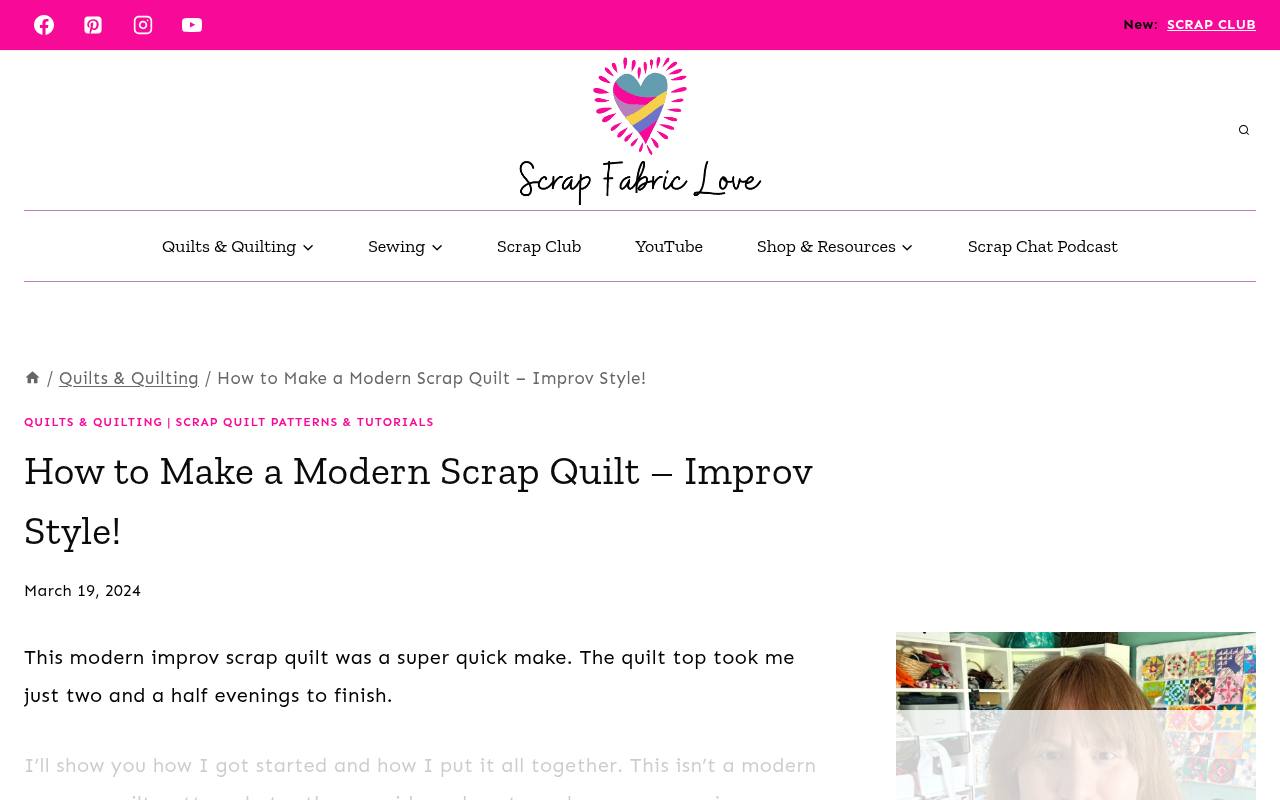
Scrap Fabric Love presents a design process rather than a fixed pattern, showing how small feature fabrics can float in a low-volume background. The author combines scraps with background remnants and explains joining improvised sections into a top.
Embedded video tutorials support the written account, making this particularly useful when you want to watch decisions develop. Read it online without purchasing a pattern. Choose this for permission to experiment, not for predictable yardage or an exact final measurement. Your background supply and the dimensions of your scraps will influence the composition.
- Type
- Improv quilt tutorial
- Best for
- Exploring asymmetry without a fixed cutting chart
- License
- Free instructions; no redistribution or finished-product sales permission established
- Price
- Free
Frameworks by Nydia Kehnle
Downloadable quilt pattern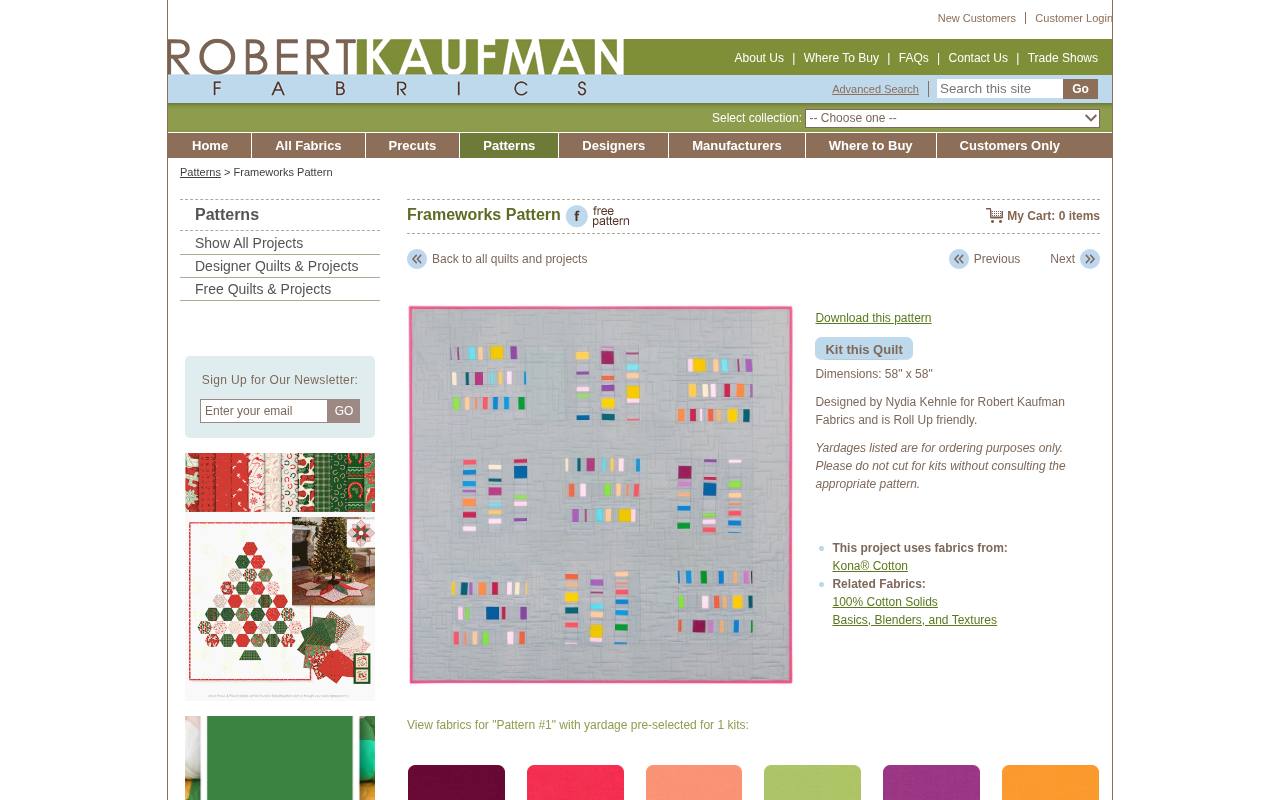
Designed by Nydia Kehnle for Robert Kaufman Fabrics, Frameworks finishes at fifty-eight inches square and is identified as Roll Up friendly. The official project page provides a free pattern download alongside a detailed Kona Cotton fabric list, making it a practical alternative to a bare PDF link.
Its many solid-color entries are useful when planning a coordinated palette or comparing substitutes already in your stash. Kaufman cautions that the displayed yardages serve ordering purposes: consult the actual pattern before cutting, rather than treating the retailer’s kit quantities as cutting instructions.
- Type
- Downloadable quilt pattern
- Best for
- Using a coordinated roll of solid fabric strips
- License
- Free instructions; no redistribution or commercial-use license stated on the project page
- Price
- Free
Windborne by A Piece of Quiet Quilts
Newsletter quilt pattern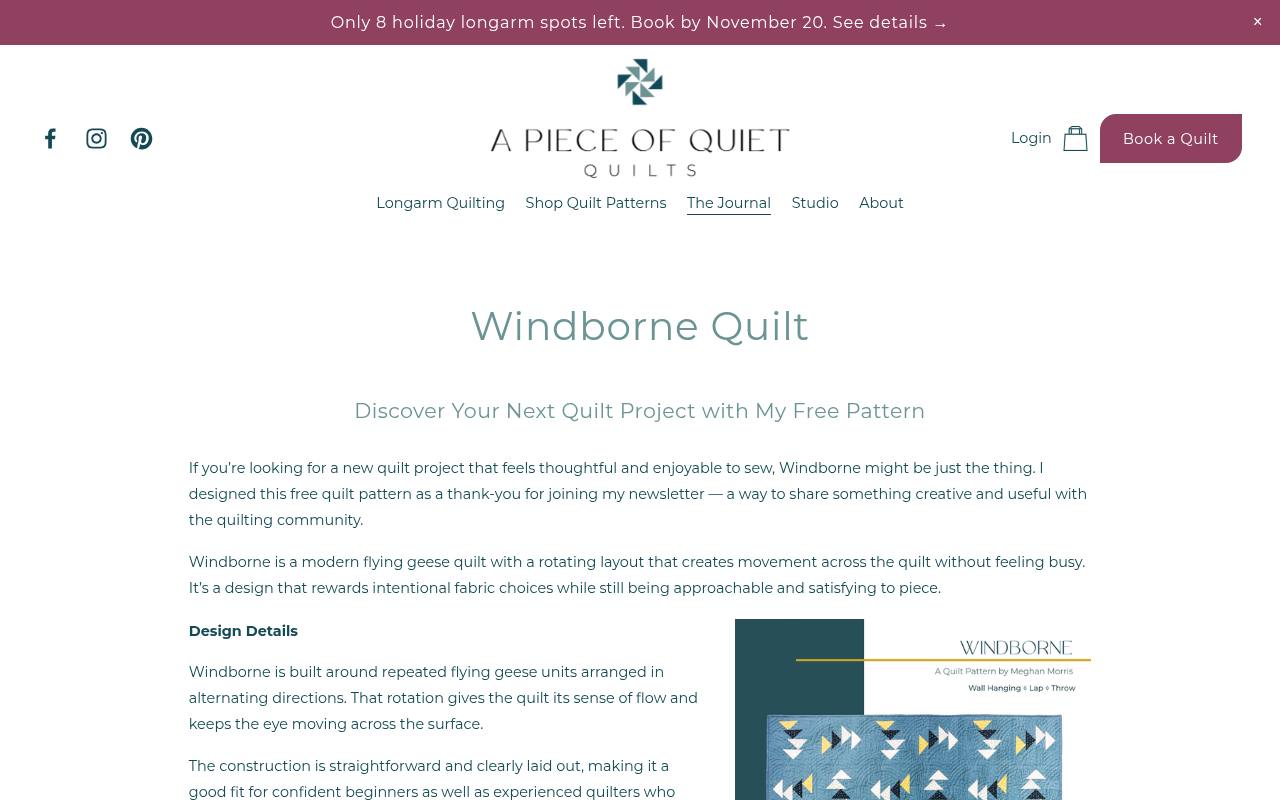
Meghan Morris offers Windborne as a newsletter thank-you pattern, rather than an unrestricted download on the blog itself. Repeated flying geese rotate across the layout, creating a modern composition through direction and spacing. The designer describes it as suitable for confident beginners and includes wall hanging, lap, and throw sizes.
Coloring pages help you test subtle or strong contrast before committing to fabric. The accompanying article explains the design and signup route; fabric is not included. This suits someone who enjoys orderly units but wants their arrangement to do the visual work.
- Type
- Newsletter quilt pattern
- Best for
- Using rotating flying geese to suggest movement
- License
- Free instructions; no redistribution or finished-product sales permission established
- Price
- Free
Twisted Ribbons by Suzy Quilts
Digital quilt pattern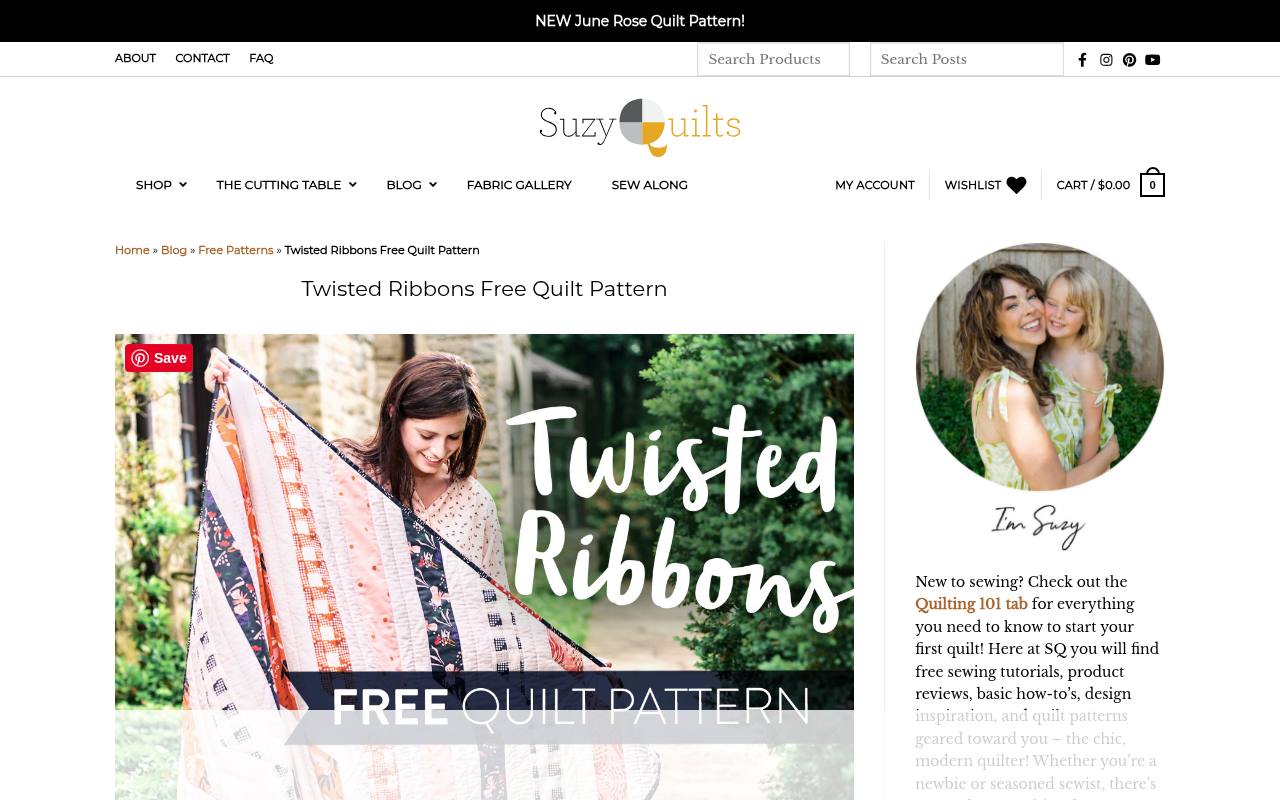
Twisted Ribbons pairs a minimal modern layout with long fabric strips, and the Suzy Quilts article links to the free digital pattern near its end. The project was developed with Spoonflower and explains its Fill-A-Yard printing feature, including how several designs can share a single fabric order.
That shopping discussion is separate from the free pattern access. Read the requirements before substituting ordinary fabric widths, since the unusually wide printed cloth is part of the article’s construction discussion. This is an appealing study in ribbon-like movement rather than dense block repetition.
- Type
- Digital quilt pattern
- Best for
- Making long color bands the focal point
- License
- Free instructions; no redistribution or finished-product sales permission established
- Price
- Free
Bird Watching by Suzy Quilts
Free quilt pattern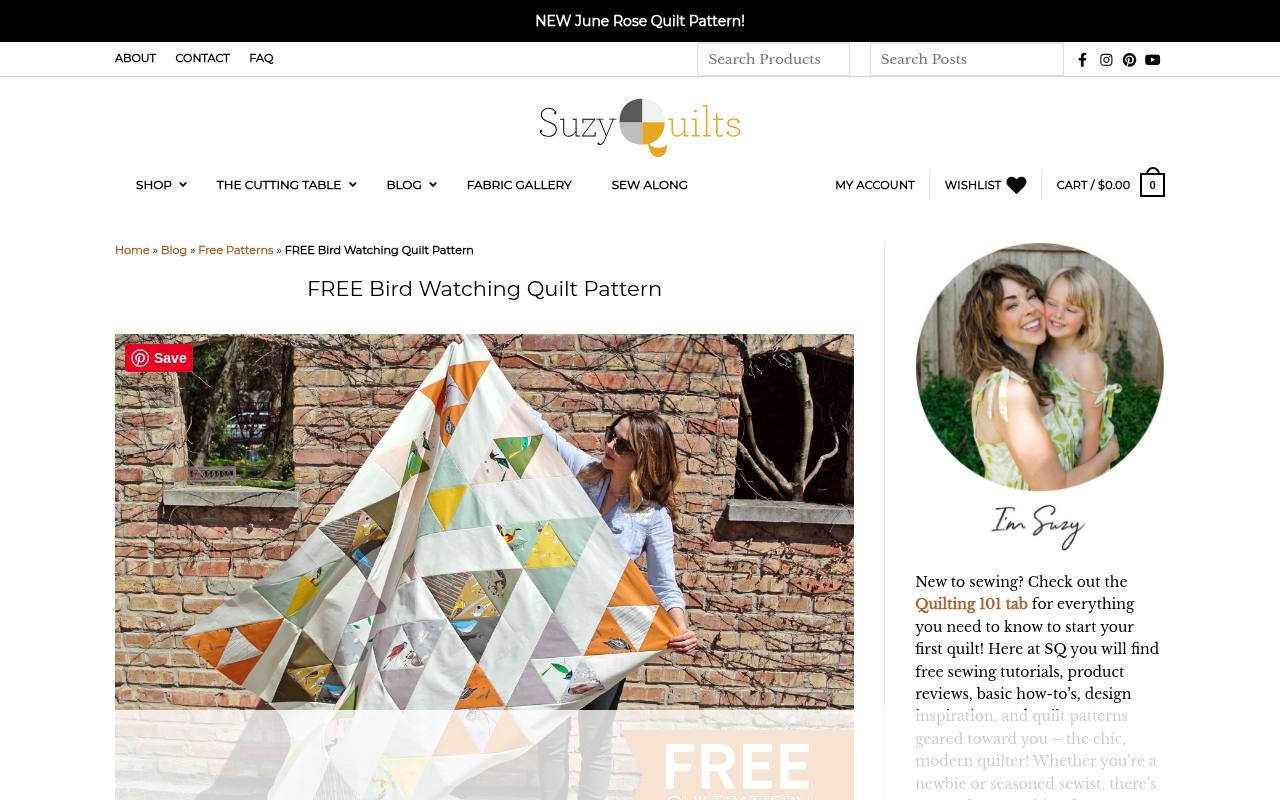
Bird Watching uses large triangular shapes to showcase Charley Harper bird fabrics from Birch Fabrics. Suzy Williams explains how fussy cutting can place an individual bird inside a triangle, with triangles finishing at about six inches.
The free pattern article therefore offers a useful connection between graphic geometry and print selection, rather than requiring an all-solid palette. Explore the pattern link within the post, not the unrelated paid designs displayed nearby. Directional motifs deserve extra planning because centering a particular image can consume more fabric than ordinary repeated cutting.
- Type
- Free quilt pattern
- Best for
- Displaying large motifs within clean triangle geometry
- License
- Free instructions; no redistribution or finished-product sales permission established
- Price
- Free
Mod Melons by Suzy Quilts
Free curved quilt pattern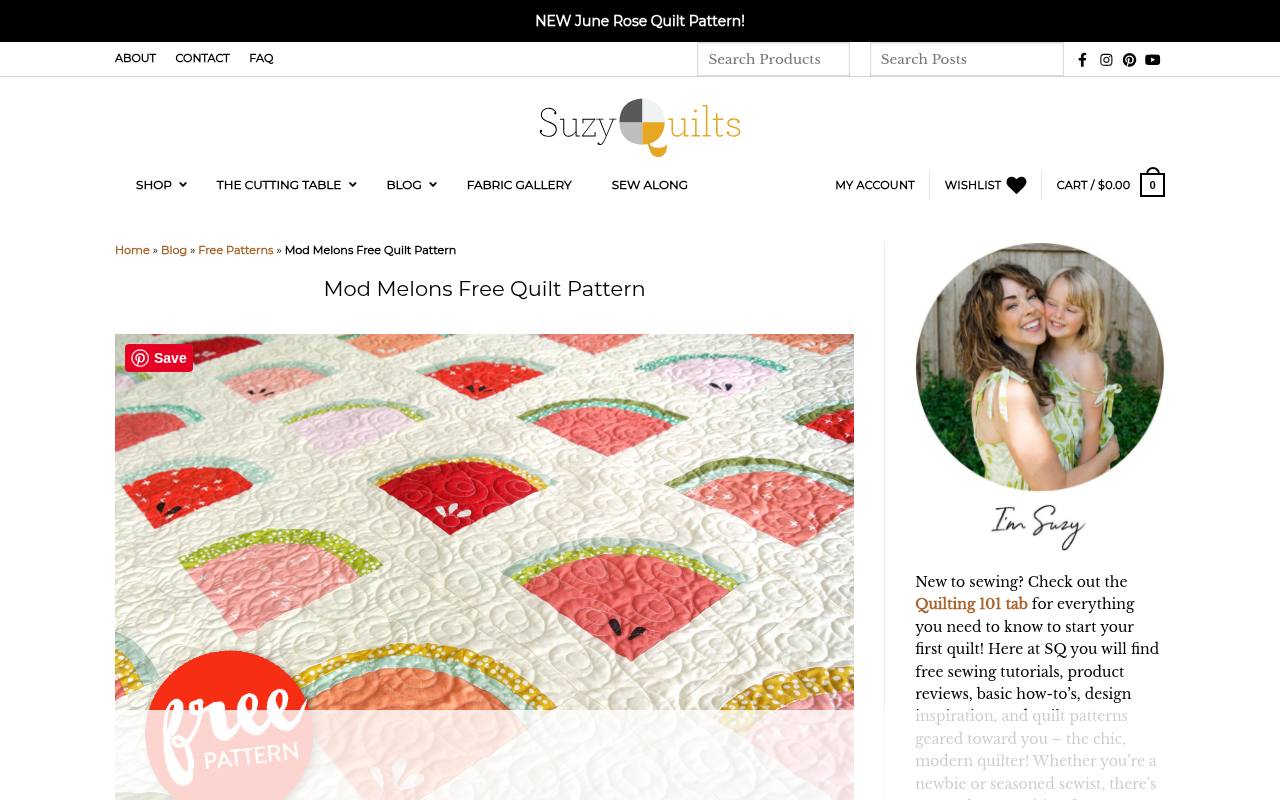
Mod Melons gives modern quilting a playful direction through stylized watermelon shapes and curved piecing. The free pattern article links to additional instruction on sewing curves and cutting templates, so it offers a route beyond straight-sided geometric units. Birch Fabrics’ Mod Basics collection inspired the pictured version.
Use the curve-sewing resources before deciding that the design is beyond your experience, but allow time for practice pieces. Paid pattern promotions elsewhere on the page are separate products. This choice adds rounded forms to a list otherwise dominated by strips, rectangles, and triangles.
- Type
- Free curved quilt pattern
- Best for
- Trying playful curved geometry with supporting lessons
- License
- Free instructions; no redistribution or finished-product sales permission established
- Price
- Free
Simple Four Square Quilt by Purl Soho
Online quilt tutorial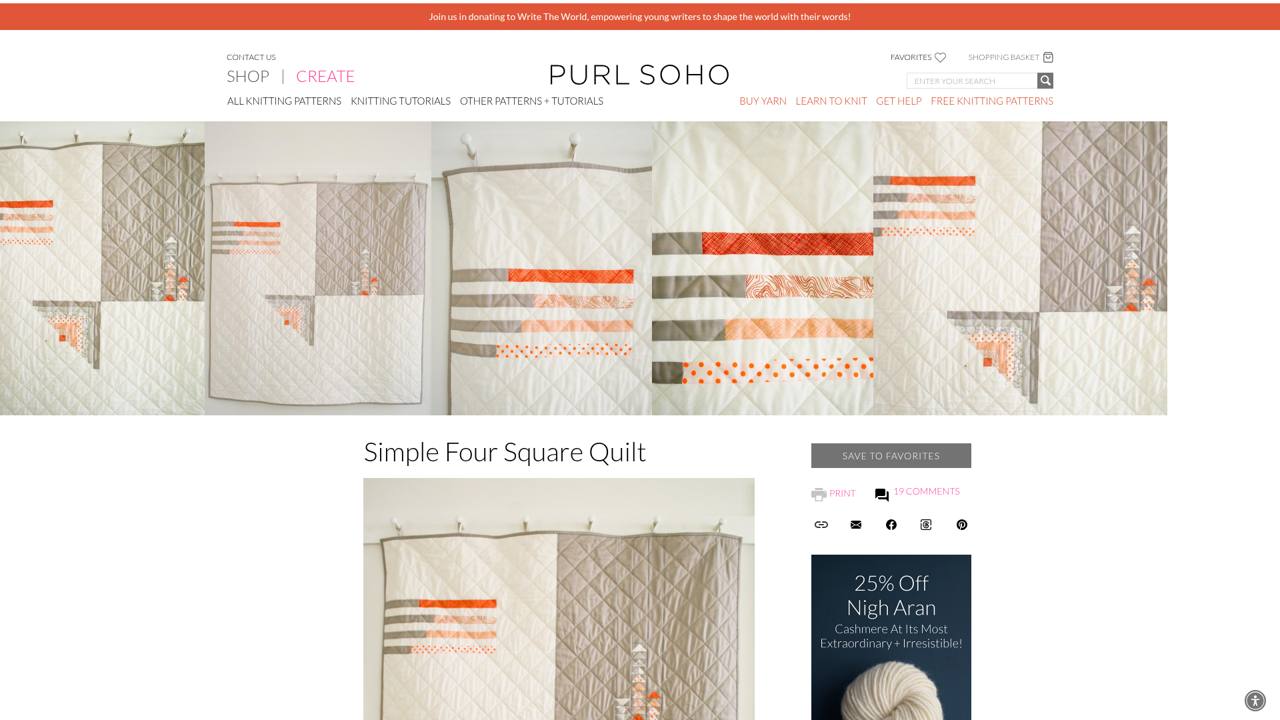
Purl Soho’s Simple Four Square Quilt combines traditional block ideas with unusual proportions, producing a composition the designer compares to modern painting. The finished quilt measures forty-eight inches square. Materials include several lightweight cotton prints, a gray solid, and an orange accent, with instructions available on the page rather than a required pattern purchase.
The source explicitly notes that its original Architextures prints are no longer available. Substitute according to visual role instead of hunting for identical fabric, and give the cutting and pressing the deliberate attention recommended in the tutorial.
- Type
- Online quilt tutorial
- Best for
- Exploring proportion with restrained prints and a bright accent
- License
- Free instructions; no redistribution or finished-product sales permission established
- Price
- Free
Watercolor Quilt by Purl Soho
Strip quilt tutorial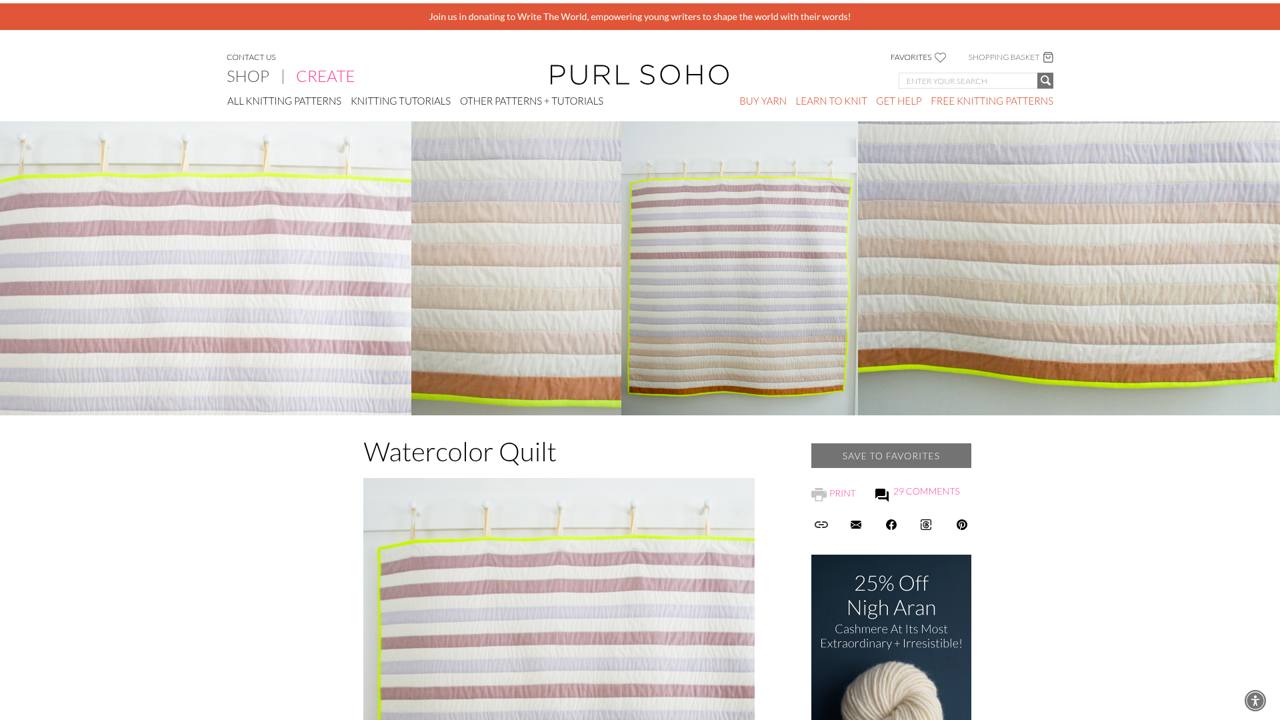
Inspired by Agnes Martin’s artwork, the Watercolor Quilt explores soft tonal color and repeated lines. Purl Soho describes straightforward strip construction without corners to align or complicated angles, making color relationships the main design decision. Its online materials list separates backing and top fabrics and includes several different cloth types in the original version.
The neon binding accent deliberately interrupts the subdued palette. Read the free tutorial as a composition lesson as well as sewing instructions, and evaluate fabric weight carefully if replacing the original mixture with fabrics from your own collection.
- Type
- Strip quilt tutorial
- Best for
- Creating quiet minimalism with tonal fabric bands
- License
- Free instructions; no redistribution or finished-product sales permission established
- Price
- Free
Crossroads Quilt by Purl Soho
Geometric quilt tutorial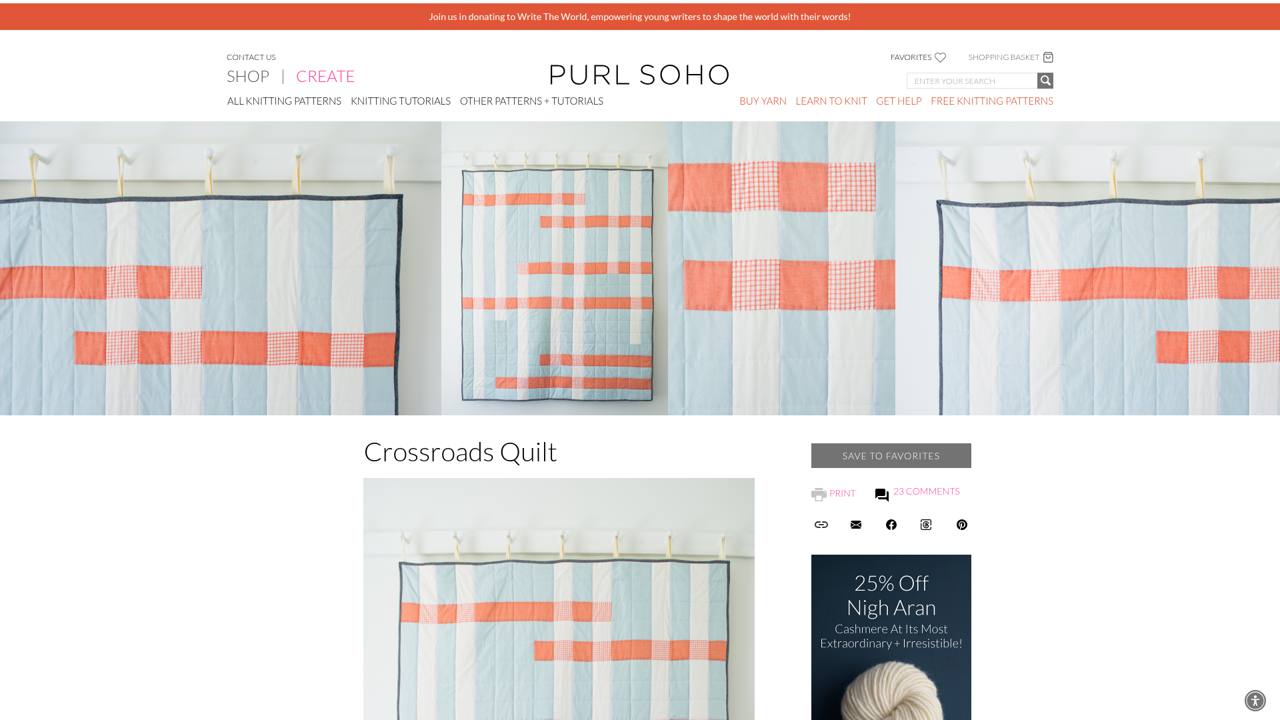
Crossroads creates an overlapping grid illusion using squares and rectangles rather than curved seams or tricky intersections. Purl Soho assigns distinct fabrics to background, vertical lines, horizontal lines, and their crossing points. The free online project measures fifty-one by sixty inches and links to a companion rotary-cutting lesson.
Its material list includes a linen-cotton background alongside other woven fabrics. Keep the four visual roles separate when choosing replacements; the intersections need to read as intentional overlaps. This is especially useful for studying how a small color change can transform simple geometry.
- Type
- Geometric quilt tutorial
- Best for
- Producing an overlapping-line illusion from basic shapes
- License
- Free instructions; no redistribution or finished-product sales permission established
- Price
- Free
Lou Orth Modern Geometric Quilt
Online half-square-triangle tutorial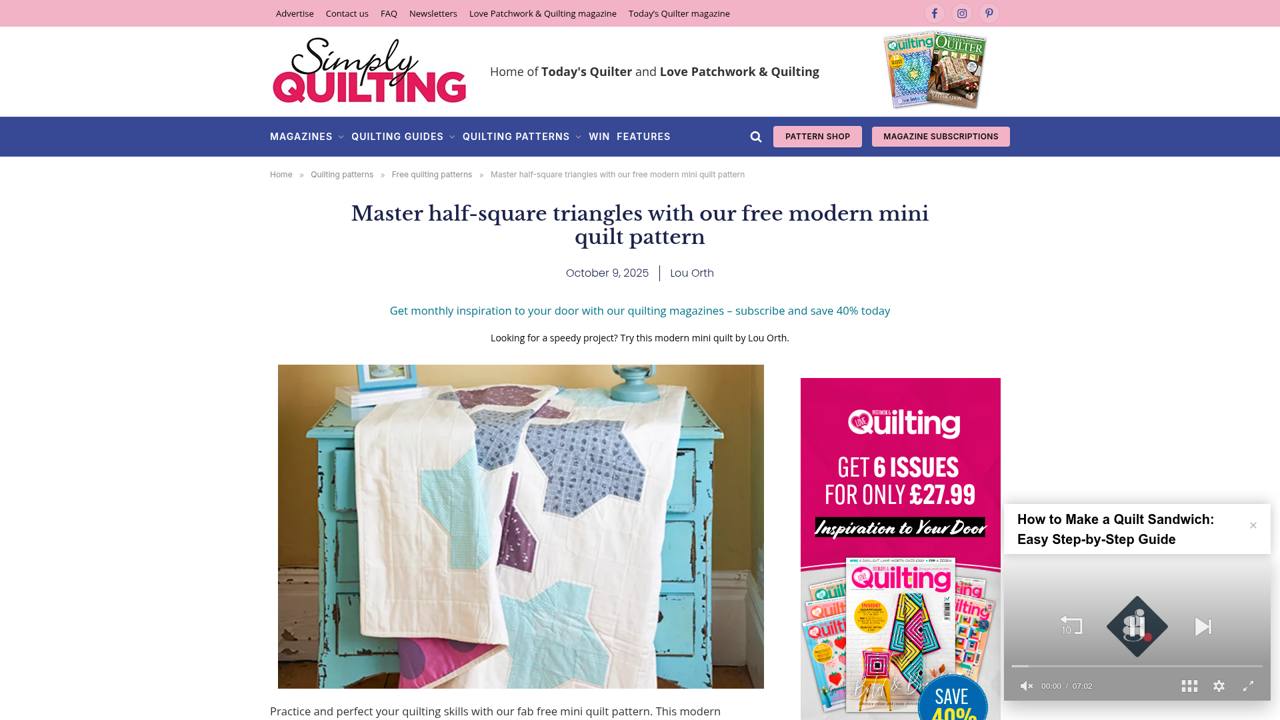
Lou Orth’s free project at Simply Quilting teaches half-square triangle construction with a white background and gray, mint, and mauve prints. Although the headline calls it a mini quilt, the stated finished size is approximately sixty inches square. Use that measurement when budgeting fabric or planning where it will go.
Materials and cutting instructions are available in the article, including backing and batting measurements. The repeated geometry provides a useful setting for comparing pale colors against white, but a test block will reveal whether your own substitutes retain enough definition.
- Type
- Online half-square-triangle tutorial
- Best for
- Practicing repeated triangle units in an airy layout
- License
- Free instructions; no redistribution or finished-product sales permission established
- Price
- Free
Plan value before choosing color
A grayscale photograph can reveal whether your fabrics provide the contrast the design needs. Place small swatches in their intended roles, photograph them together, and look for shapes that disappear. Two different hues can have almost identical value.
That may be desirable in a tonal project but disappointing in a crisp geometric layout. Test the relationship at the block scale, not only as folded fabric on a shelf. Preserve deliberate quiet areas instead of strengthening every boundary equally.
Use solids with intention
Working with solid fabrics makes edges, seams, and quilting more visible because a busy print is not distracting the eye. Buy enough background from one consistent fabric and dye lot when possible. Keep labeled offcuts until the top is complete so later repairs or additions match.
Solids need not mean bright primary colors: charcoal, cream, muted green, and dusty rose can create an equally contemporary composition. Mix in prints selectively when they serve a specific shape or focal point.
Give negative space a job
Evaluate background areas from a distance before sewing the final rows. Photograph the layout on a wall or floor and turn the image upside down to see weight and balance without focusing on individual fabrics.
Ask whether the open areas direct attention toward the feature shapes or merely look unfinished. Avoid adding an extra block automatically whenever a gap feels unfamiliar. In an asymmetrical quilt, a small concentrated group can balance a much larger, quieter field.
Try walking-foot straight-line quilting
For walking-foot straight-line quilting, begin with a well-basted sandwich and test the complete fabric, batting, and thread combination on a scrap sample. Support the quilt’s weight so it does not pull against the needle.
Mark a reliable reference line, then use a guide for parallel passes if your machine has one. Do not assume dense stitching is necessary for a modern finish. Follow the batting manufacturer’s maximum spacing requirement, and choose line spacing that complements the scale of the piecing.
Keep simple piecing accurate
Large geometric units benefit from consistent cutting and pressing, even when they involve only straight seams. Measure a test unit before chain piecing the rest of the quilt. Handle bias edges gently and press rather than dragging the iron across them.
Open backgrounds make an accidental wave or distorted seam particularly noticeable. For improvisation, replace rigid uniformity with deliberate checkpoints: flatten each section, check its edges, and consider the next joining seam before adding another piece.
Continue with Modern Quilt Guild resources
The Modern Quilt Guild is a useful next stop for exploring the language and variety of modern quilting. Browse its official website for public information, community connections, and learning opportunities, while distinguishing public material from membership benefits.
Use finished quilts as prompts for questions about scale, negative space, and contrast rather than as compositions to duplicate. Keeping a short notebook of your own experiments will help turn a free pattern into a lasting design lesson instead of another unused download.