
Jelly roll quilt patterns turn narrow fabric strips into more than a simple race quilt. These ten individual projects use the familiar two-and-a-half-inch strip format, with options ranging from compact squares to larger throws.
The selection combines Fat Quarter Shop downloads with Moda projects and independent designers’ tutorials. Compare the construction methods as well as the finished dimensions: strip sets, appliquéd hearts, and rail-fence arrangements offer quite different sewing experiences.
A coordinated roll saves cutting time, but precut convenience still needs planning. Check the number of strips, the usable width of fabric, and any extra background before choosing a design.
A bundle in your cupboard might contain fewer pieces than the roll shown in a sample. Large motifs also behave differently after being reduced to a narrow finished strip, so imagine the fabric at its sewn width rather than judging the rolled bundle.
Each link below opens an original pattern page or project tutorial, never a direct PDF file. Some sources provide downloadable instructions, while others teach the project directly on the page. SewCanShe separates its free browser-readable tutorial from optional paid PDF access.
Materials and finishing supplies are not included with any instructions. Read the selected project’s requirements before shopping, and remember that free access does not automatically authorize redistribution or commercial use of a designer’s writing and illustrations.
Quick picks at a glance
| # | Resource | License | Best for |
|---|---|---|---|
| 1 | Jelly Roll Slice by Fat Quarter Shop | Free PDF; no commercial-use permission stated on listing | Making two coordinated small quilt tops |
| 2 | Jelly Roll Check by Fat Quarter Shop | Free PDF; no commercial-use permission stated on listing | A rectangular quilt with a compact instruction file |
| 3 | Jelly Roll Twist by Fat Quarter Shop | Free PDF; no commercial-use permission stated on listing | Practicing strip pressing and quarter-inch seams |
| 4 | Jelly Strip Stash Buster by Cluck Cluck Sew | Free instructions; no blanket commercial-use permission asserted | Combining leftover strips from several bundles |
| 5 | Four-Patch Heart Mini Quilt by Jedi Craft Girl | Free instructions; no blanket commercial-use permission asserted | Combining strip scraps with fusible appliqué |
| 6 | Jelly Roll Rail Fence by Material Girl Quilts | Free instructions; no blanket commercial-use permission asserted | Following a one-roll rail-fence video |
| 7 | Jelly Roll Kisses by SewCanShe | Free instructions; no blanket commercial-use permission asserted | Making a generous square strip-pieced quilt |
| 8 | Rail Fence Quick Jelly Roll Quilt by Sewing by Sarah | Free instructions; no blanket commercial-use permission asserted | Arranging six colors into graduated strip sets |
| 9 | Verticals by Moda Fabrics | Free instructions; no blanket commercial-use permission asserted | Pairing a printed roll with background strips |
| 10 | Star Flower by Moda Fabrics | Free instructions; no blanket commercial-use permission asserted | Using contrasting solid and collection rolls |
Jelly Roll Slice by Fat Quarter Shop
Downloadable quilt pattern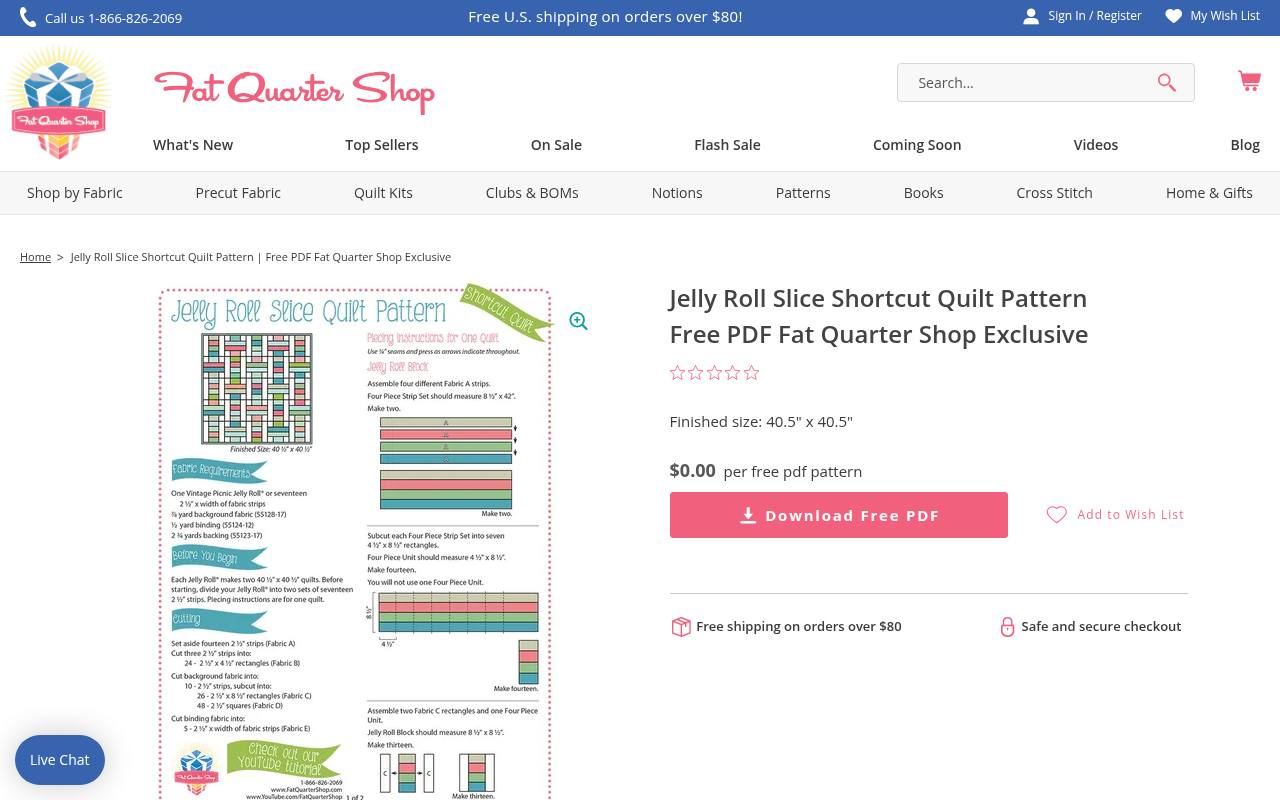
Jelly Roll Slice pairs a five-page PDF with a Short Cut Quilt video featuring Kimberly Jolly. The listing explains that the project turns a favorite Moda Jelly Roll into two quilts, with a stated finished size of 40.5 inches square.
That makes it worth considering when you want related gifts rather than one large top. Read the cutting plan before dividing your strips between projects. The free download covers instructions, not the fabric, batting, backing, or quilting needed to complete both pieces.
- Type
- Downloadable quilt pattern
- Best for
- Making two coordinated small quilt tops
- License
- Free PDF; no commercial-use permission stated on listing
- Price
- Free
Jelly Roll Check by Fat Quarter Shop
Downloadable quilt pattern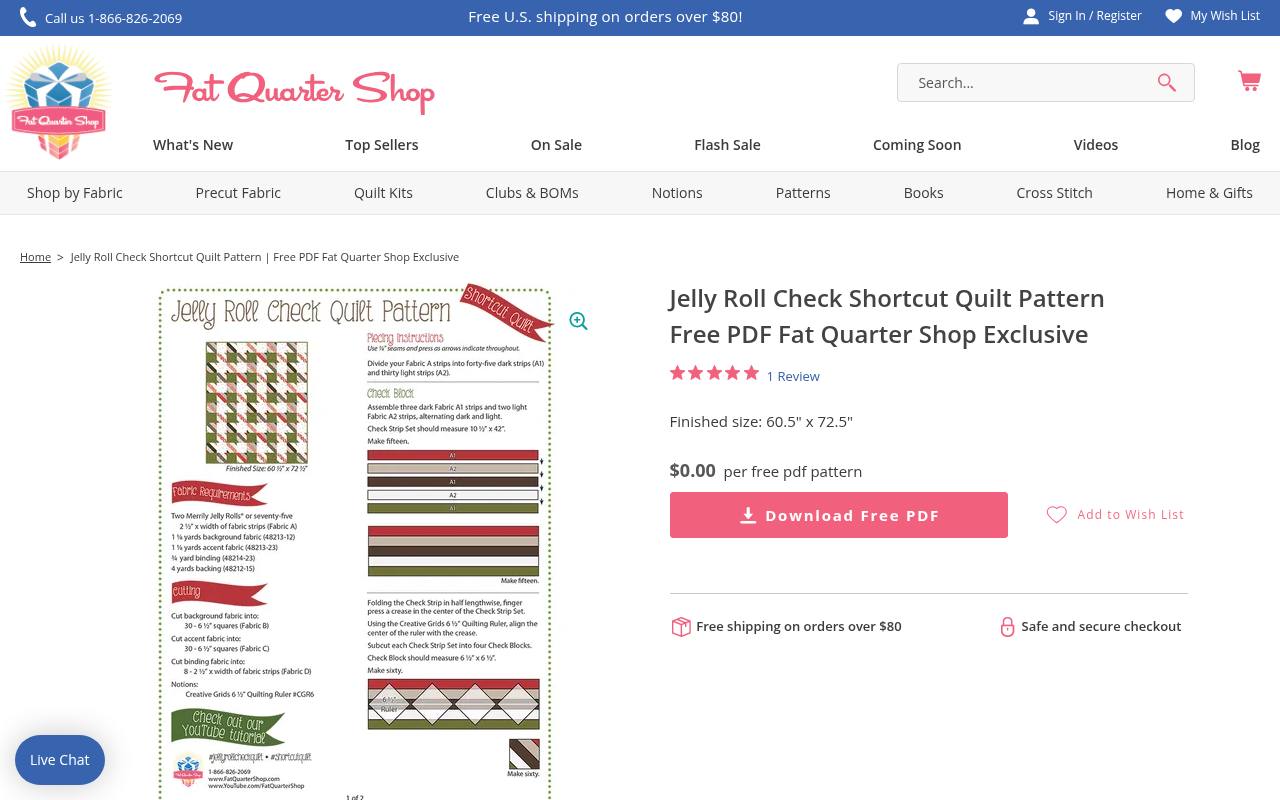
Jelly Roll Check is offered as a two-page downloadable pattern, with a finished measurement of 60.5 by 72.5 inches. Fat Quarter Shop describes it as an easy, fun project for Jelly Rolls, rather than a general strip-piecing reference.
Its larger rectangular footprint makes it a different proposition from the small square projects in this selection. Compare those dimensions with your intended use before choosing fabric. Keep the short PDF handy at the machine, and consult its requirements rather than estimating purchases from the product photograph.
- Type
- Downloadable quilt pattern
- Best for
- A rectangular quilt with a compact instruction file
- License
- Free PDF; no commercial-use permission stated on listing
- Price
- Free
Jelly Roll Twist by Fat Quarter Shop
Downloadable quilt pattern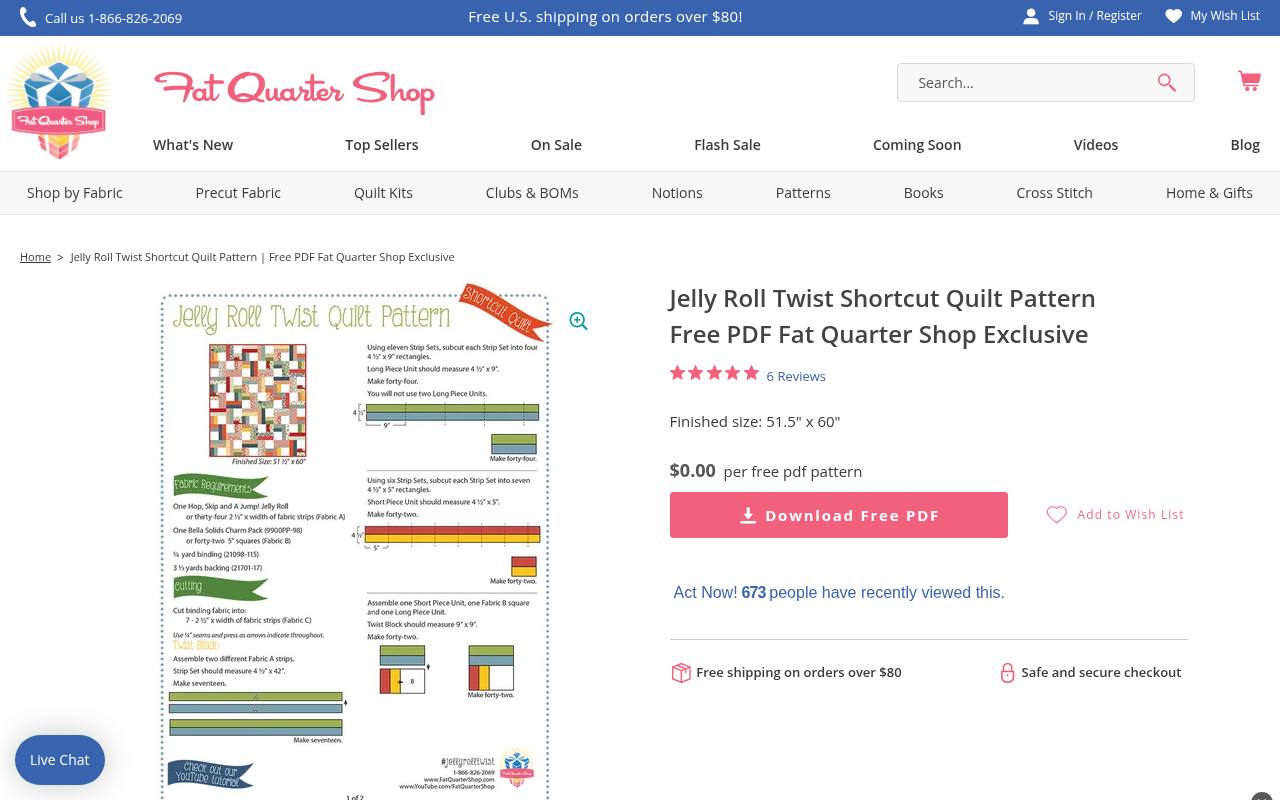
The Jelly Roll Twist listing specifically introduces a beginner-friendly quilt using one Jelly Roll. Kimberly’s accompanying instruction covers making the block, sewing a quarter-inch seam, and pressing the strips. The free PDF is two pages, and the finished quilt measures 51.5 by 60 inches.
This is a useful choice if you want the strip-handling lesson as well as a finished project. One roll describes the featured precut requirement, not every finishing material; review the download before assuming your existing bundle completes the supply list.
- Type
- Downloadable quilt pattern
- Best for
- Practicing strip pressing and quarter-inch seams
- License
- Free PDF; no commercial-use permission stated on listing
- Price
- Free
Jelly Strip Stash Buster by Cluck Cluck Sew
Quilt pattern and tutorial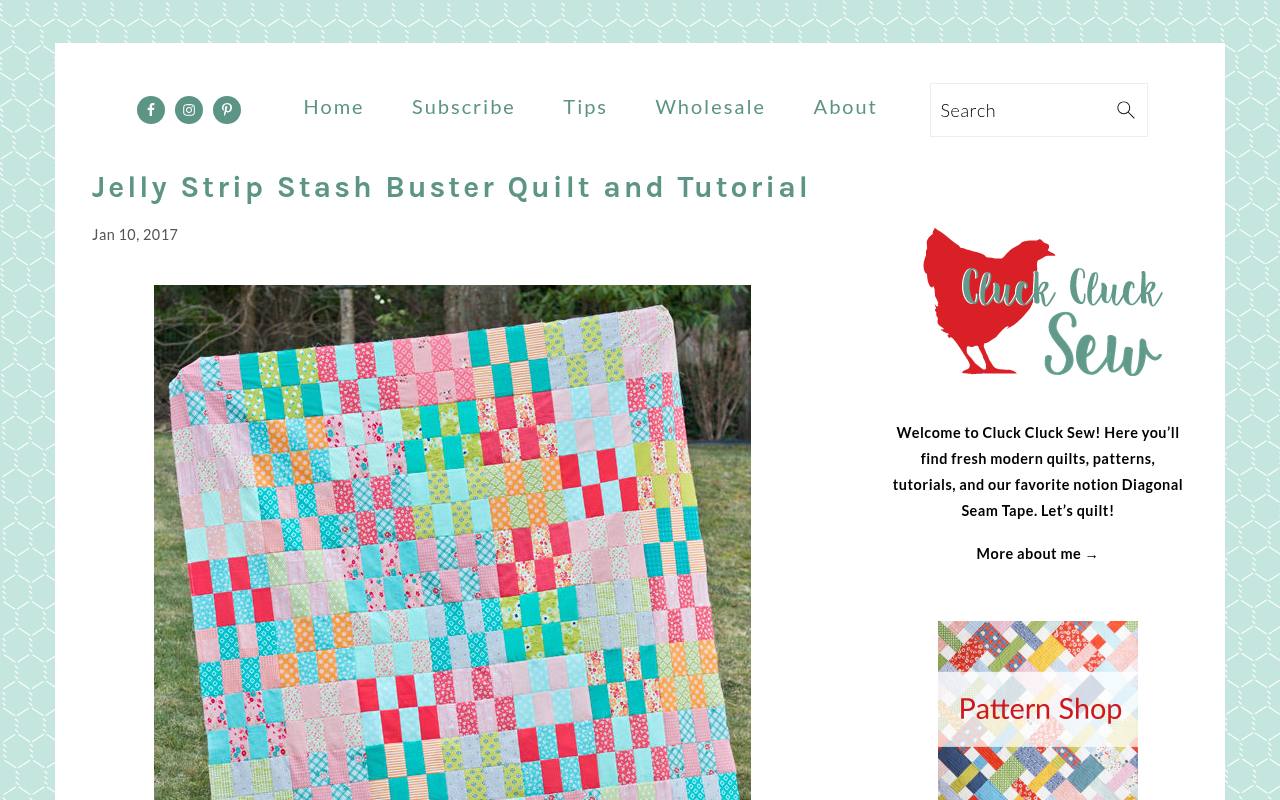
Allison Harris adapts Ashley’s Two by Four idea specifically for leftover jelly roll strips, with the original designer’s permission. Her photo-based tutorial uses one width-of-fabric strip per block, finishing each block at seven by eight inches.
Choose two rectangular layouts: 63 strips make a 56-by-63-inch quilt, while 64 strips produce a 56-by-64-inch version with the blocks turned sideways. This is a stash-combining project rather than a single-roll promise. The instructions appear in the blog post, with photographs carrying much of the construction explanation.
- Type
- Quilt pattern and tutorial
- Best for
- Combining leftover strips from several bundles
- License
- Free instructions; no blanket commercial-use permission asserted
- Price
- Free
Four-Patch Heart Mini Quilt by Jedi Craft Girl
Quilt pattern and tutorial
Amanda’s 26-inch-square mini quilt combines four-patch appliqué hearts with pieced blocks, using half a Jelly Roll or an equivalent selection of strips. The tutorial cuts the strips into two-and-a-half-inch squares and supplies a separate downloadable heart template.
Heat n Bond Lite holds the hearts before stitching, so this project adds fusible appliqué to ordinary patchwork practice. The page lists background, backing, and binding quantities and illustrates the assembly. Leftover strips can supply the binding, making this a useful small project when a complete large-quilt bundle is unavailable.
- Type
- Quilt pattern and tutorial
- Best for
- Combining strip scraps with fusible appliqué
- License
- Free instructions; no blanket commercial-use permission asserted
- Price
- Free
Jelly Roll Rail Fence by Material Girl Quilts
Quilt pattern and tutorial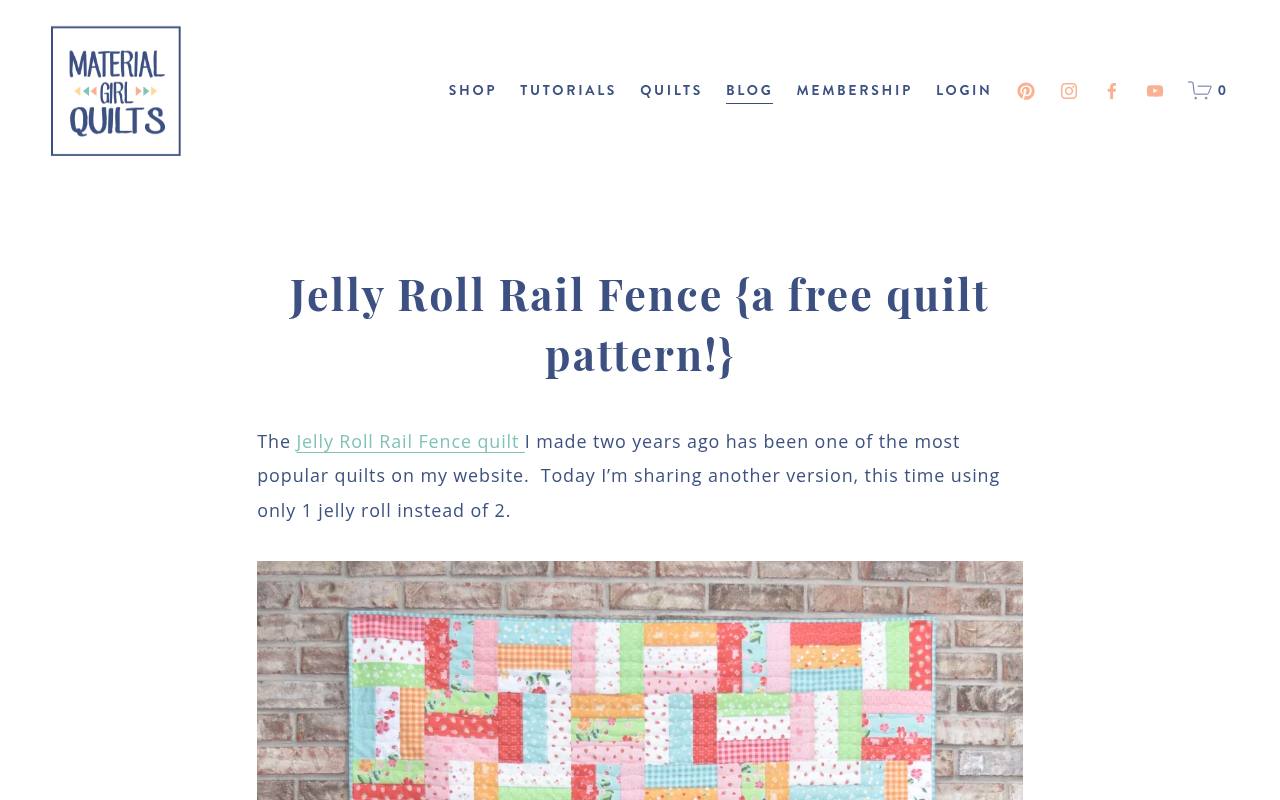
Amanda Castor shares a one-jelly-roll version of her popular rail-fence quilt, contrasting it with the earlier two-roll project. The Strawberry Honey sample shows how coordinated novelty prints can work together without an added background dominating the design.
Her page includes a video tutorial and free printable pattern link, letting you choose between watching the process and consulting written instructions. She also shows organic wavy-line quilting and incorporates leftover front fabrics into the backing. Those finishing photographs are helpful inspiration, rather than a requirement to duplicate her exact fabric collection.
- Type
- Quilt pattern and tutorial
- Best for
- Following a one-roll rail-fence video
- License
- Free instructions; no blanket commercial-use permission asserted
- Price
- Free
Jelly Roll Kisses by SewCanShe
Quilt pattern and tutorial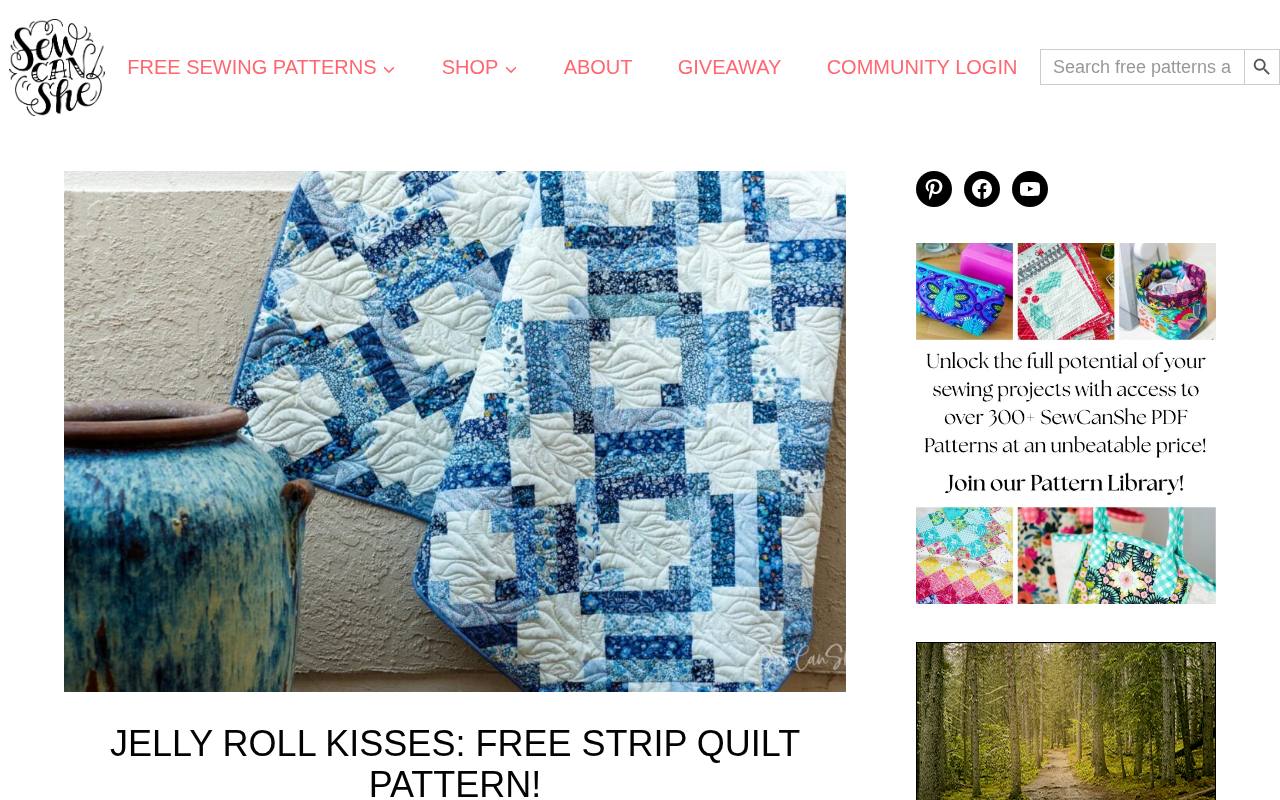
Caroline Fairbanks’s 80-inch-square quilt uses two jelly rolls or a suitable stash of two-and-a-half-inch strips. Strip piecing is central to the construction, and the blue Liberty sample illustrates a coordinated palette rather than a random mix.
The complete blog tutorial is free to read, print through your browser, and sew. Optional PDF access belongs to the site’s paid pattern-library or community offerings, so a free tutorial does not mean every download button is free. Consider the generous square proportions when planning backing and quilting space.
- Type
- Quilt pattern and tutorial
- Best for
- Making a generous square strip-pieced quilt
- License
- Free instructions; no blanket commercial-use permission asserted
- Price
- Free
Rail Fence Quick Jelly Roll Quilt by Sewing by Sarah
Quilt pattern and tutorial
Allison Kelley’s tutorial organizes six-color strip sets into rail-fence blocks that finish at twelve inches square. The smallest listed quilt uses eighteen two-and-a-half-inch strips for a 36-inch-square top; the page also charts larger rectangles.
Her green gradient example includes a substituted print after a stained strip was discovered, demonstrating how a similar value can preserve the arrangement. On-page numbered instructions cover selecting colors, sewing quarter-inch seams, and pressing. You can use precut strips or cut the same width from yardage, making the project practical for coordinated solids as well as prints.
- Type
- Quilt pattern and tutorial
- Best for
- Arranging six colors into graduated strip sets
- License
- Free instructions; no blanket commercial-use permission asserted
- Price
- Free
Verticals by Moda Fabrics
Quilt pattern and tutorial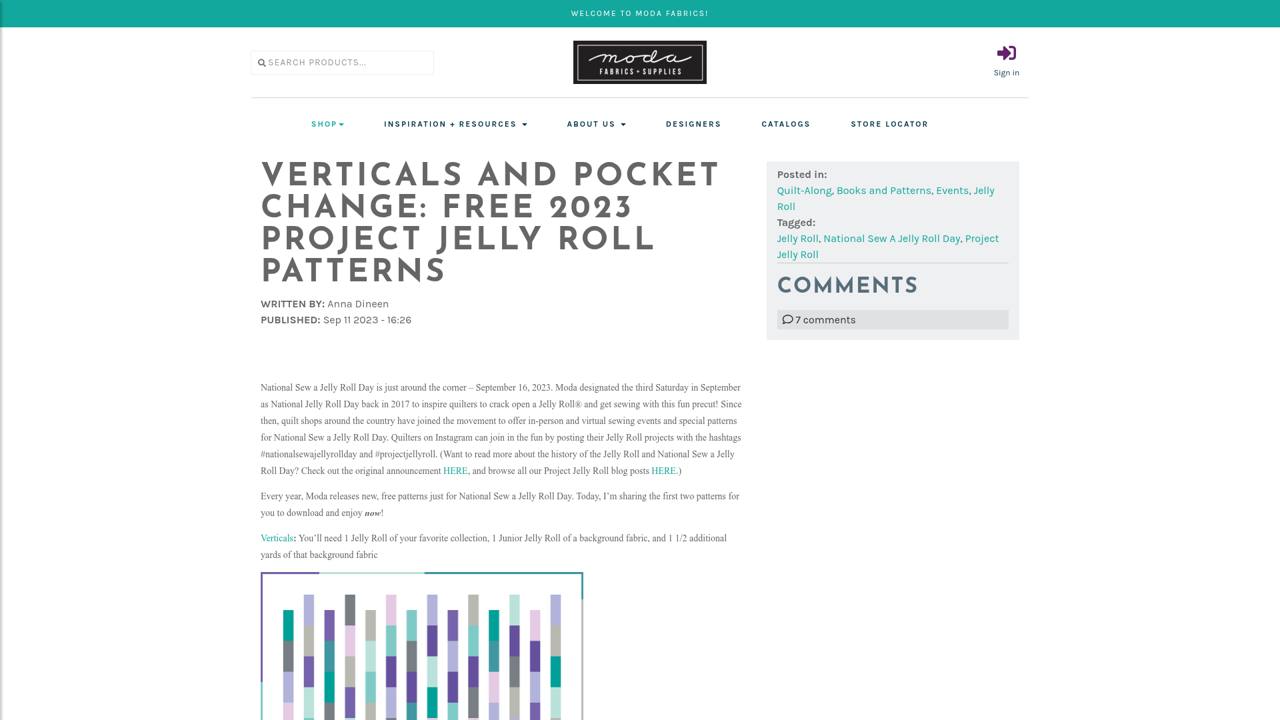
Moda introduces Verticals as a free downloadable pattern in its Project Jelly Roll celebration post, alongside the separate Pocket Change design. Verticals calls for one collection Jelly Roll, one Junior Jelly Roll of background fabric, and another one-and-a-half yards of that background.
The page shows multiple fabric interpretations, including serene Cascade blues, holiday Favorite Things prints, and Bonfire Batiks against dark Grunge. These examples make the effect of background contrast particularly clear. Follow the Verticals download rather than the neighboring Pocket Change supply list when preparing your fabrics.
- Type
- Quilt pattern and tutorial
- Best for
- Pairing a printed roll with background strips
- License
- Free instructions; no blanket commercial-use permission asserted
- Price
- Free
Star Flower by Moda Fabrics
Quilt pattern and tutorial
Moda’s Project Jelly Roll celebration page introduces Brittany Clark’s Star Flower quilt as a free pattern. Its fabric plan uses two contrasting Jelly Rolls: a solid or low-volume roll plus a roll from your favorite collection. That makes it a useful option when you want both the prints and the background supplied in precut-strip form.
The post also features Tiddlywinks and a playful quilt-toss video, so look specifically for the Star Flower pattern link. Choose the two bundles for readable contrast rather than assuming every pair of coordinated rolls will work equally well.
- Type
- Quilt pattern and tutorial
- Best for
- Using contrasting solid and collection rolls
- License
- Free instructions; no blanket commercial-use permission asserted
- Price
- Free
Count strips before unrolling everything
Count actual strips, not just rolls, before matching a pattern to your stash. Forty strips is a common bundle size, but smaller rolls and other package counts exist. Check the label and then count the pieces you can genuinely use.
A pattern may depend on contrasting groups, so a full roll can still leave you short of enough lights or darks. Keep binding, borders, and background yardage separate from the printed-strip total.
Establish your pinked-edge reference
Pinked edges need a consistent measuring reference. Place a strip under a ruler to see where its nominal two-and-a-half-inch width falls relative to the points and valleys. Avoid trimming every strip automatically, which may remove fabric the cutting plan expects.
Sew a test unit with the actual bundle and measure after pressing. Adjust your guide or needle position to obtain the specified unit size rather than assuming the edge of every manufacturer’s precut behaves identically.
Test the seam allowance after pressing
A reliable quarter-inch seam allowance matters particularly when many narrow strips accumulate across a block. Stitch several short test strips, press them as directed, and compare the center strip’s finished width with the expected two inches.
Thread thickness and the turn of the cloth can affect that result. Support long strip sets on the table instead of letting their weight pull behind the machine. Press deliberately without stretching, and square the units at the stages the pattern specifies.
Think carefully before prewashing precuts
Prewashing narrow precuts can cost usable width through fraying, shrinkage, and tangling. Many quilters therefore sew them unwashed, but fabric care instructions and dye concerns still deserve attention. If you suspect bleeding, test a spare piece separately before committing the entire bundle.
Prewashing background yardage while leaving strips unwashed can create different shrinkage behavior later. Decide on a consistent approach with the fabrics you actually have, and allow for shrinkage when judging the finished quilt’s eventual coverage.
Make a strip layout before chain piecing
A quick color-and-value arrangement helps a coordinated roll look intentional. Separate very dark, medium, and pale strips, then inspect how the pattern distributes them. Photograph a trial arrangement before sewing, especially when you need related sections for two small quilts.
Some prints may read almost solid once the seam allowances disappear. Keep directional motifs in mind when subcutting long sets, and label groups so chain piecing does not quietly turn a planned sequence into a different arrangement.
Size up with measured borders
Borders add coverage without changing every block, but they require their own calculation. Adding a border that finishes four inches wide on all sides increases both quilt dimensions by eight inches. Cut widths include seam allowances in addition to that finished width.
Measure the assembled top through its center and fit borders to those measurements rather than stretching strips along uneven edges. Recalculate backing, batting, and binding afterward; enlarging the top also increases the length needed around its perimeter.