
The best free space wallpapers often begin as scientific images rather than ready-made background packs. Observatories publish galaxies, stellar nurseries, planets, and solar activity with captions that explain what you are seeing.
Downloading from the institution responsible gives you useful context alongside the picture. These ten sources focus on astronomy and space exploration, helping you find an appealing background without losing the connection to the mission, telescope, or researcher behind it.
Not every astronomy image archive has identical permissions. Some collections use Creative Commons licenses with mandatory attribution, while NASA-related pages may combine government material with separately copyrighted contributions. A free download is therefore not automatically an unrestricted stock asset.
The summaries below identify the relevant policy, but the individual image page remains important. Keep its full credit line, especially if your wallpaper might later appear in a public screenshot, presentation, or shared collection.
These free astronomy backgrounds also differ in how much preparation they need. A finished telescope composite may work immediately as a desktop picture, whereas a planetary observation can require careful cropping.
Scientific files and enormous originals are not always the most convenient downloads. Start with a display-ready image, check its dimensions against your screen, and choose a composition that leaves enough quiet space for icons without cutting through the object that attracted you.
Quick picks at a glance
| # | Resource | License | Best for |
|---|---|---|---|
| 1 | ESA/Hubble | Free; CC BY 4.0, full credit required | Classic nebulae and galaxies with scientific context |
| 2 | ESA/Webb | Free; CC BY 4.0, subject to stated exceptions | Infrared views of galaxies and stellar nurseries |
| 3 | ESO | Free; generally CC BY 4.0, retain full credit | Ground-based astronomy and southern-sky observatory views |
| 4 | Chandra Photo Album | Free NASA/SAO material; third-party rights may apply | X-ray structures and multiwavelength cosmic composites |
| 5 | NOIRLab | Free; generally CC BY 4.0, check image notice | Wide-field cosmic scenes from ground-based observatories |
| 6 | NASA Cassini Multimedia | Free under NASA usage rules; check third-party credits | Saturn rings and moons from Cassini observations |
| 7 | HiRISE | Free; credit NASA/JPL-Caltech/University of Arizona | Detailed orbital views of the Martian surface |
| 8 | Astronomy Picture of the Day | Free viewing; download and reuse rights vary by contributor | Discovering annotated astronomical images across many creators |
| 9 | NASA Solar Dynamics Observatory | Free NASA imagery; follow NASA acknowledgment and usage rules | Solar disks and wavelength-specific views of activity |
| 10 | ESA Space in Images | Free personal/educational use; other uses depend on image rights | Exploring European missions beyond individual telescope archives |
ESA/Hubble
Image gallery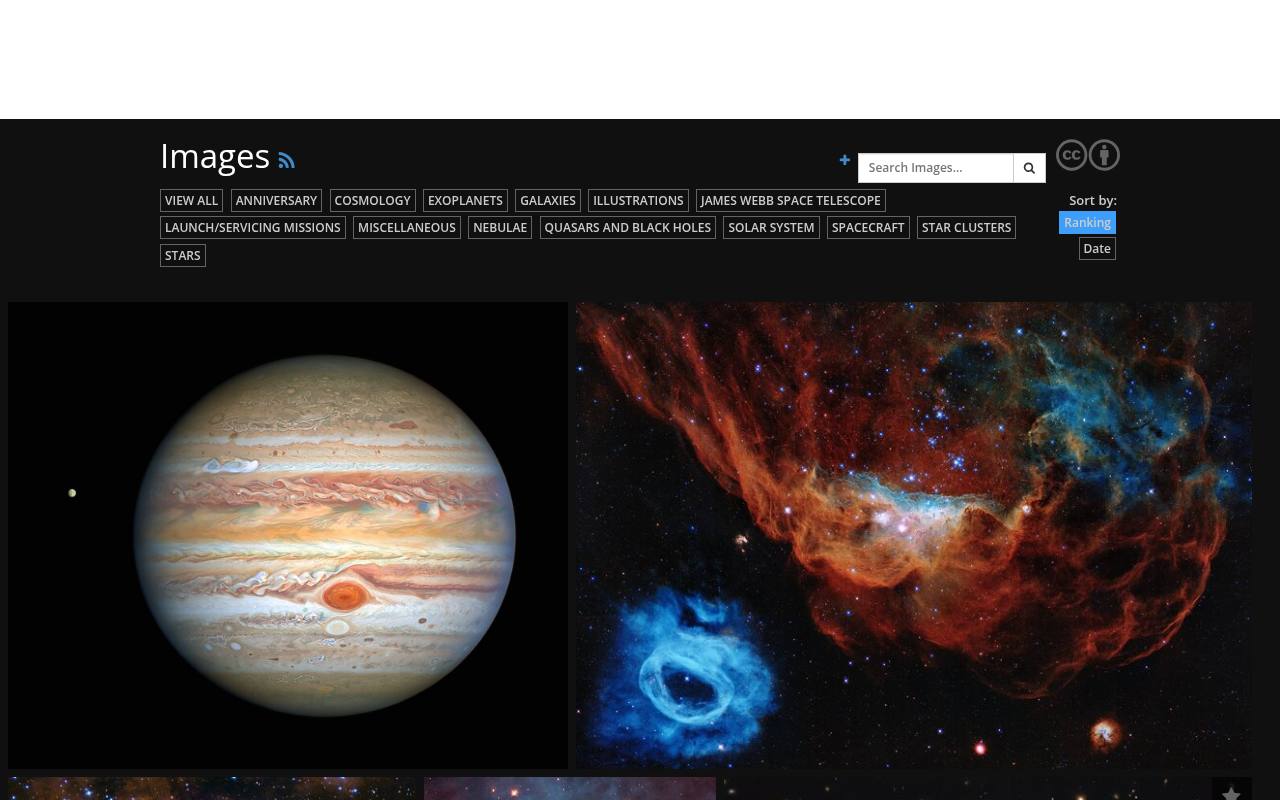
ESA/Hubble organizes its archive into subjects including nebulae, galaxies, star clusters, and the Solar System. You can sort by ranking or date, making it easy to alternate between celebrated views and newer releases.
Its telescope image categories are particularly helpful when you know the kind of object you want rather than its catalog number. The published policy uses CC BY 4.0 and requires the complete, visible image credit. Preserve that wording when sharing a background, and distinguish observational images from illustrations before describing the result.
- Type
- Image gallery
- Best for
- Classic nebulae and galaxies with scientific context
- License
- Free; CC BY 4.0, full credit required
- Price
- 100% free
ESA/Webb
Image gallery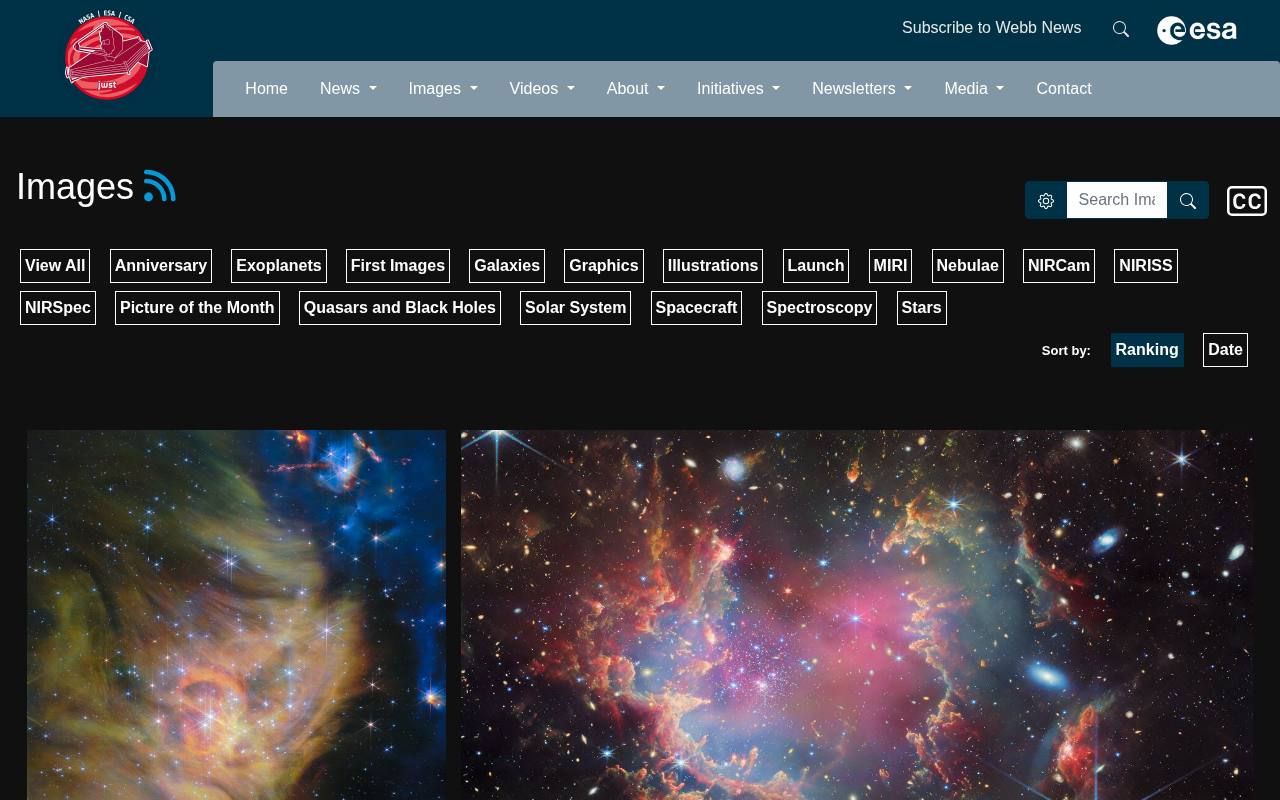
ESA/Webb separates its image collection by astronomical subject and instrument, with categories for NIRCam, MIRI, spectroscopy, and more. That makes this a useful stop for Webb telescope wallpapers whose appearance reflects different infrared observations.
The archive also includes illustrations and spacecraft pictures, so read the caption rather than assuming every colorful scene is a direct view through the telescope. Images are generally available under Creative Commons Attribution, with the full per-image credit required and any explicit exceptions taking precedence. Downloads do not require a subscription.
- Type
- Image gallery
- Best for
- Infrared views of galaxies and stellar nurseries
- License
- Free; CC BY 4.0, subject to stated exceptions
- Price
- 100% free
ESO
Image gallery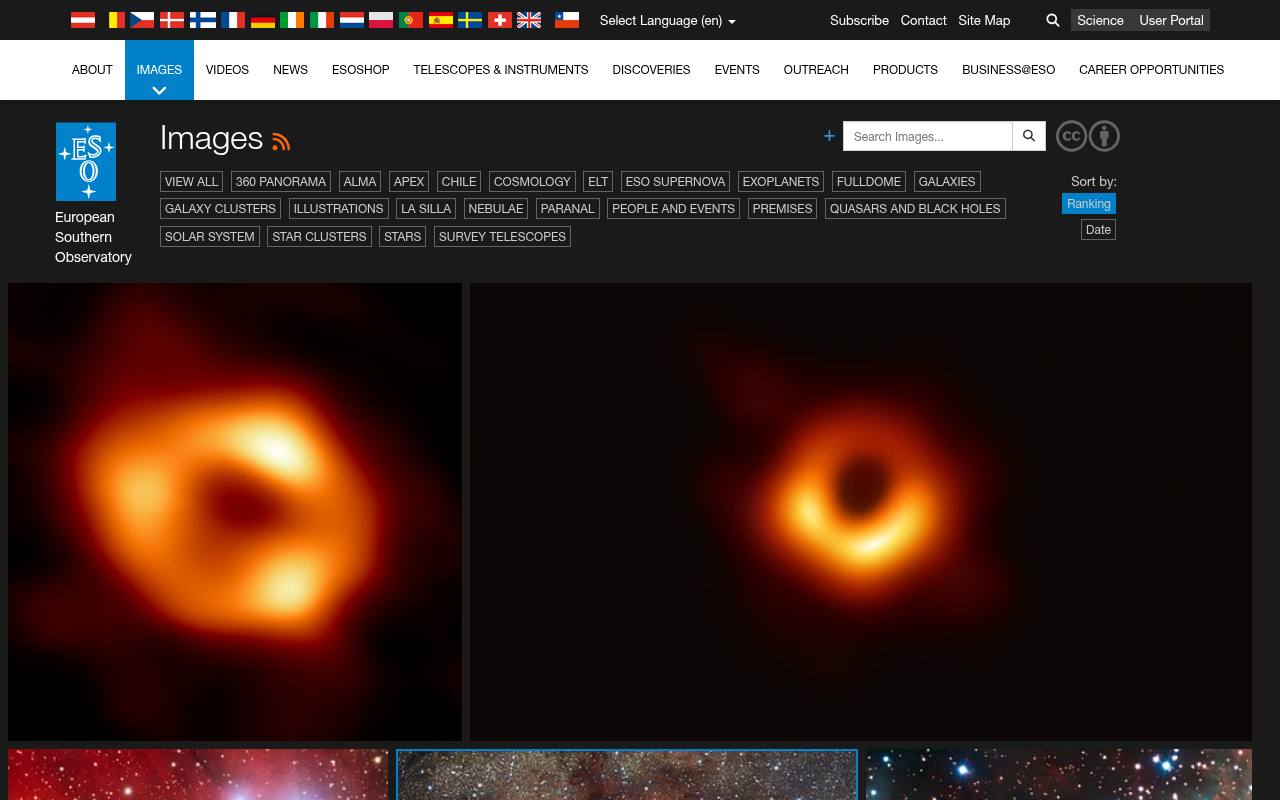
ESO brings together astronomical subjects and the settings where observations happen. Its categories include galaxies, nebulae, star clusters, ALMA, Paranal, and La Silla, alongside panoramas and illustrations. Choose ground-based telescope images for richly structured cosmic scenes, or explore the observatory categories when you want the relationship between instruments and the sky.
Sorting by date or ranking provides two straightforward starting points. ESO generally publishes this material under CC BY 4.0 with full credit requirements; check individual notices, and do not treat its protected logos as freely reusable artwork.
- Type
- Image gallery
- Best for
- Ground-based astronomy and southern-sky observatory views
- License
- Free; generally CC BY 4.0, retain full credit
- Price
- 100% free
Chandra Photo Album
Image gallery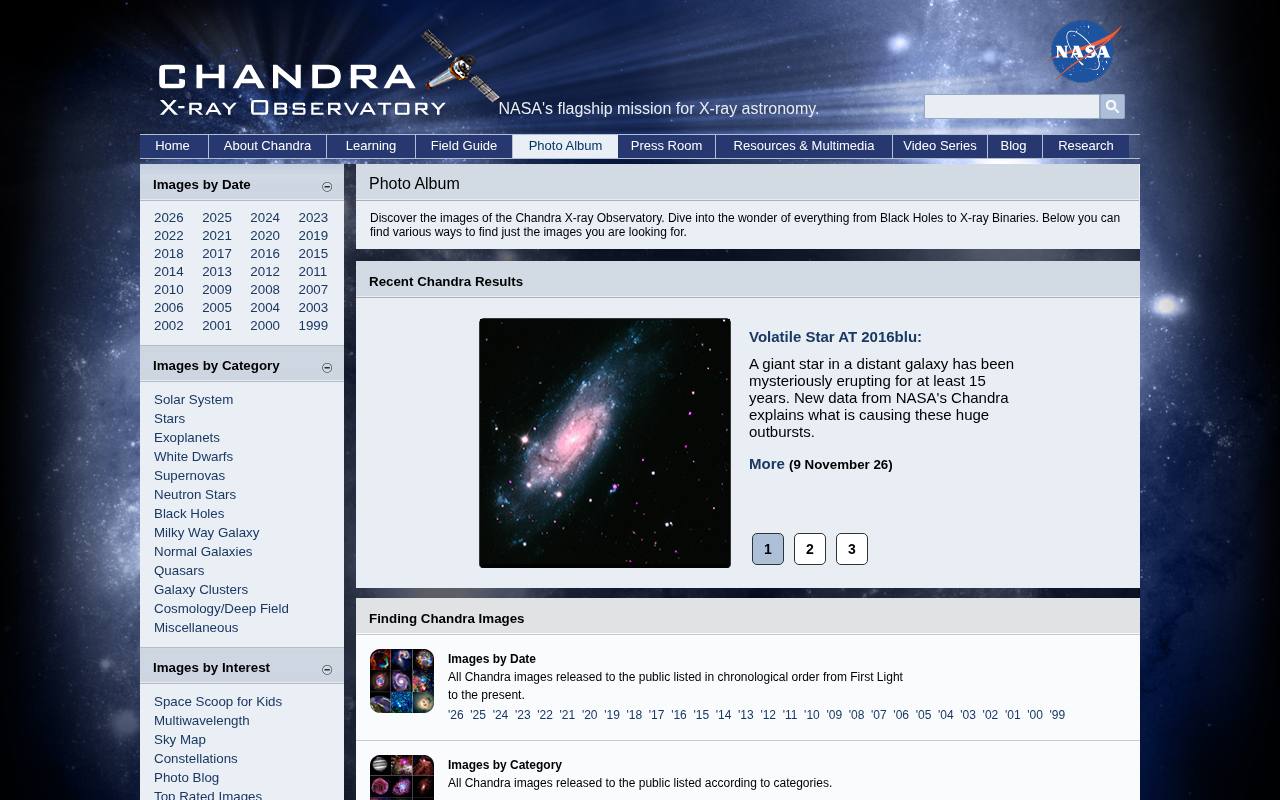
Chandra’s photo album offers browsing by date, object category, constellation, and top-rated images. Black holes, supernova remnants, and galaxy clusters are especially interesting starting points for X-ray astronomy backgrounds. Supporting material explains false color, angular measurement, and processing, which helps you understand a striking composite before using it.
NASA/SAO does not assert copyright over its Chandra material and requests acknowledgment under NASA usage rules. However, multiwavelength image credits can include outside institutions with separate rights, so review the actual image rather than assuming every component is unrestricted.
- Type
- Image gallery
- Best for
- X-ray structures and multiwavelength cosmic composites
- License
- Free NASA/SAO material; third-party rights may apply
- Price
- 100% free
NOIRLab
Image gallery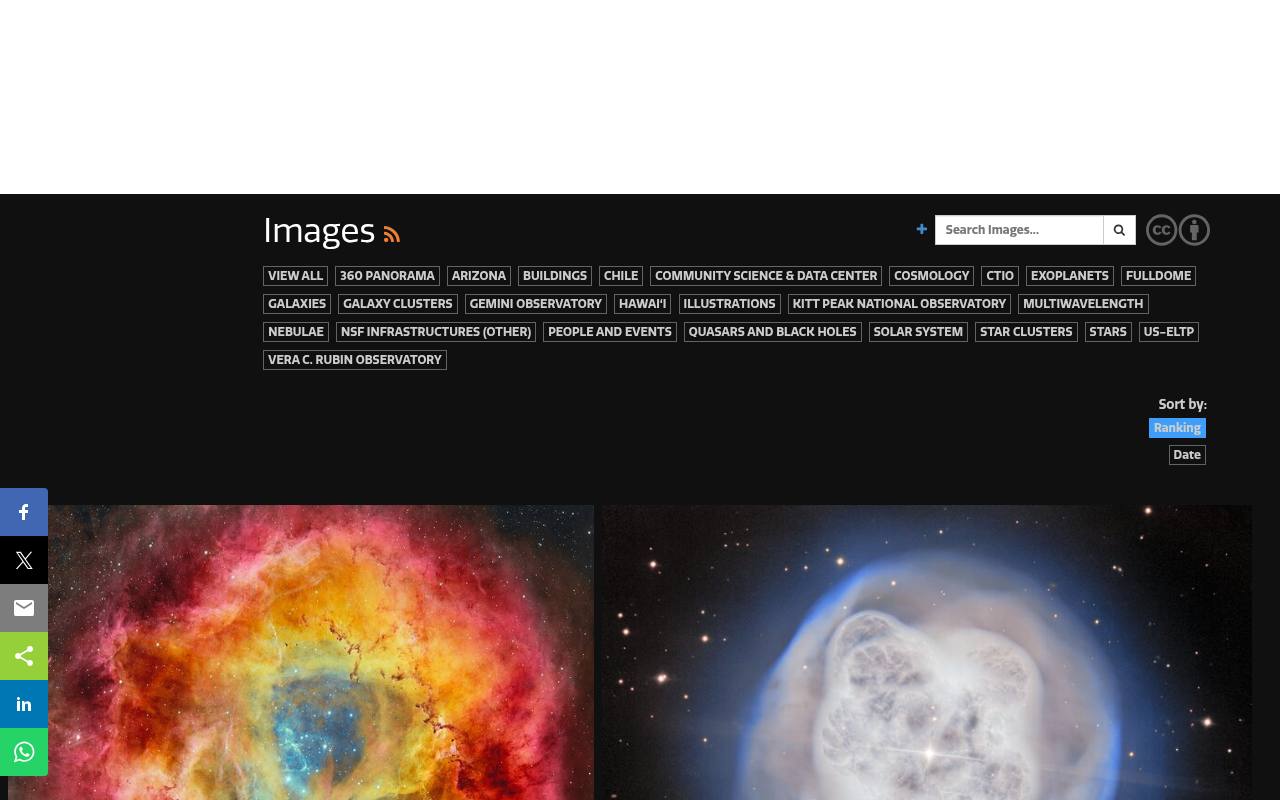
NOIRLab’s public collection includes subject categories, advanced image search, top images, and a dedicated wallpapers area linked from its navigation. Its observatory programs and instruments give the archive a different emphasis from space-telescope collections.
Browse wide-field astronomy images for richly populated star fields and extended nebulae, then open the individual record for its caption and available downloads. The general policy uses CC BY 4.0 unless otherwise stated, requiring proper attribution rather than a payment. Keep each contributor in the credit line, including processing contributors where listed.
- Type
- Image gallery
- Best for
- Wide-field cosmic scenes from ground-based observatories
- License
- Free; generally CC BY 4.0, check image notice
- Price
- 100% free
NASA Cassini Multimedia
Image gallery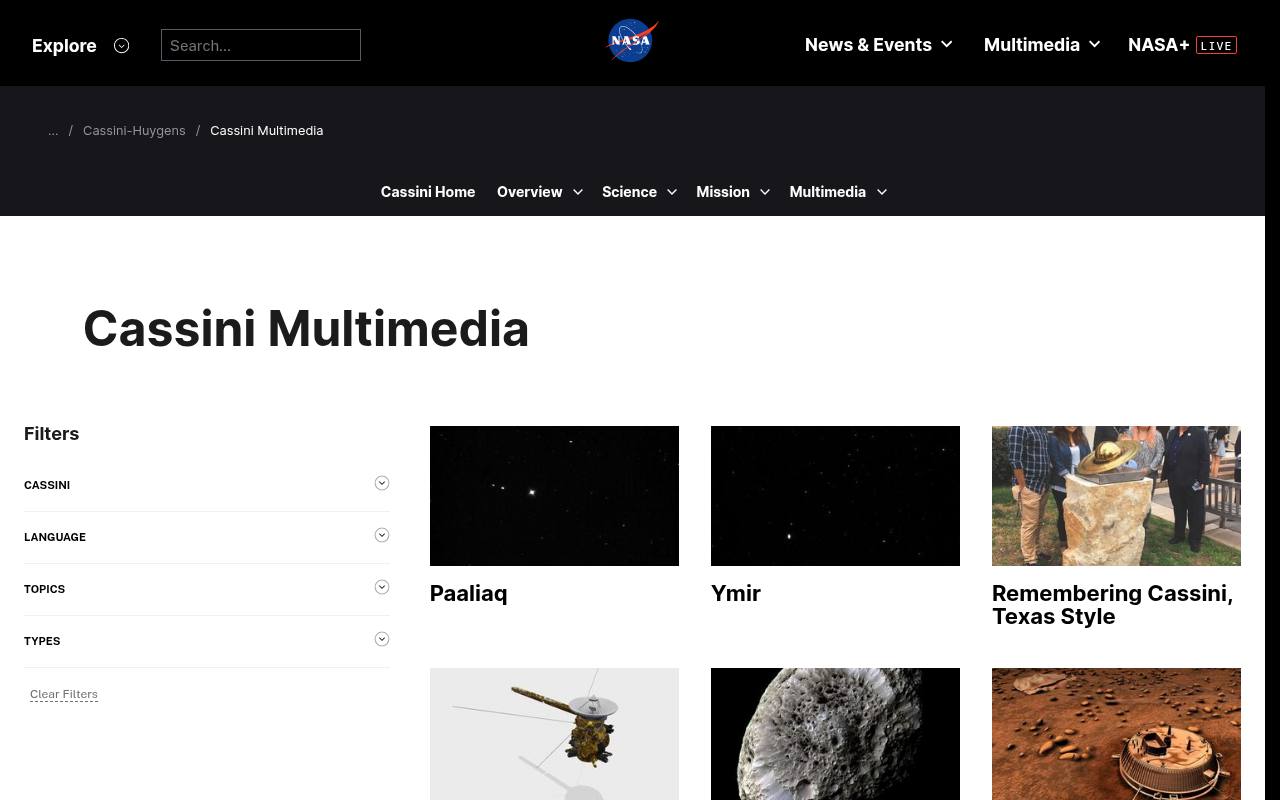
Cassini’s mission-specific multimedia page is a focused alternative to searching NASA’s entire media library. The collection includes Saturn-related imagery, moon observations, mosaics, models, and artist concepts, with filters for content type and topic. For Saturn wallpaper images, favor image records rather than assuming every multimedia result is a usable still background.
Captions distinguish spacecraft observations from reconstructed or illustrated scenes. Downloads are free, but NASA media conditions still apply: check for outside copyright notices, preserve source information, and never imply that NASA endorses a product using the image.
- Type
- Image gallery
- Best for
- Saturn rings and moons from Cassini observations
- License
- Free under NASA usage rules; check third-party credits
- Price
- 100% free
HiRISE
Image gallery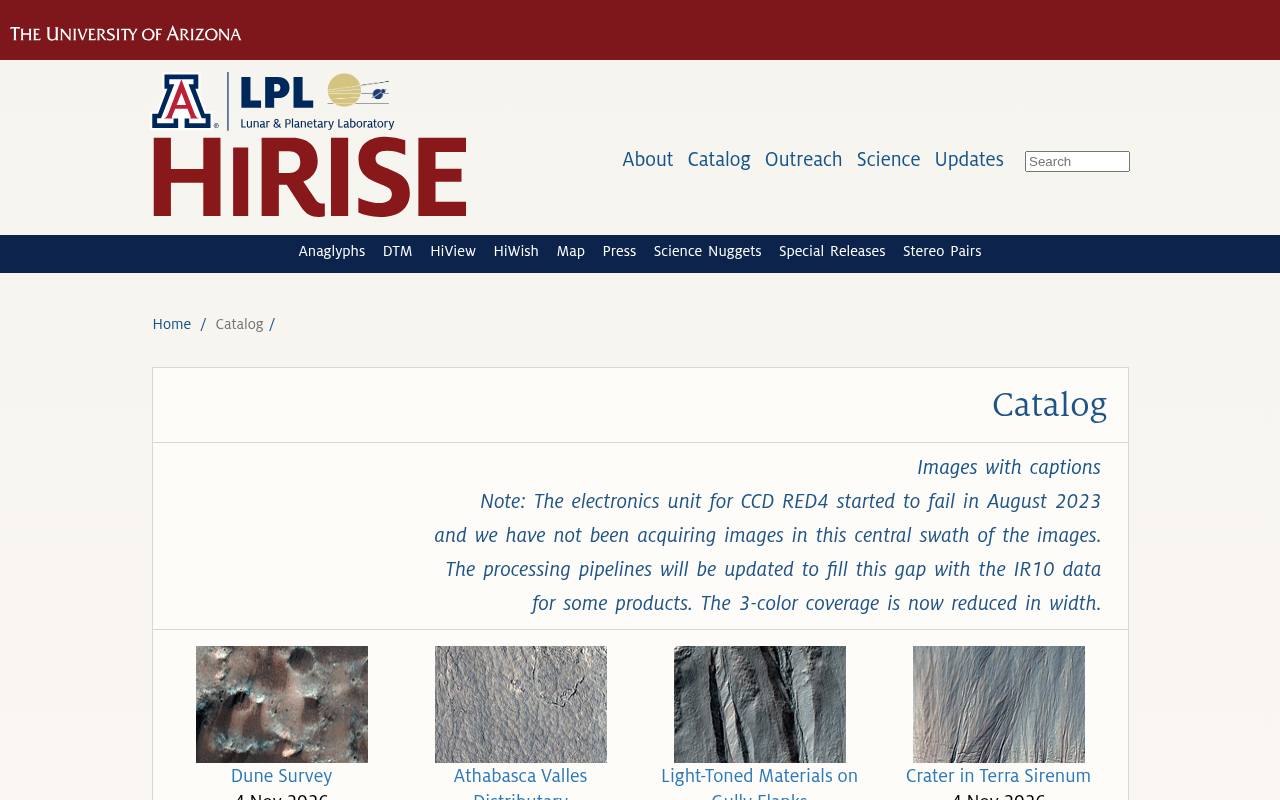
HiRISE provides a close look at Mars through images from the High Resolution Imaging Science Experiment aboard Mars Reconnaissance Orbiter. The catalog is a good match for Martian surface wallpapers built around dunes, craters, layered deposits, and other geological structures rather than distant planetary disks.
Read the observation description before selecting a crop; color treatments and image products may differ. The project permits free image use and supplies mission credit wording, commonly NASA/JPL-Caltech/University of Arizona. Large scientific products can be less convenient than browse images for an ordinary desktop background.
- Type
- Image gallery
- Best for
- Detailed orbital views of the Martian surface
- License
- Free; credit NASA/JPL-Caltech/University of Arizona
- Price
- 100% free
Astronomy Picture of the Day
Image gallery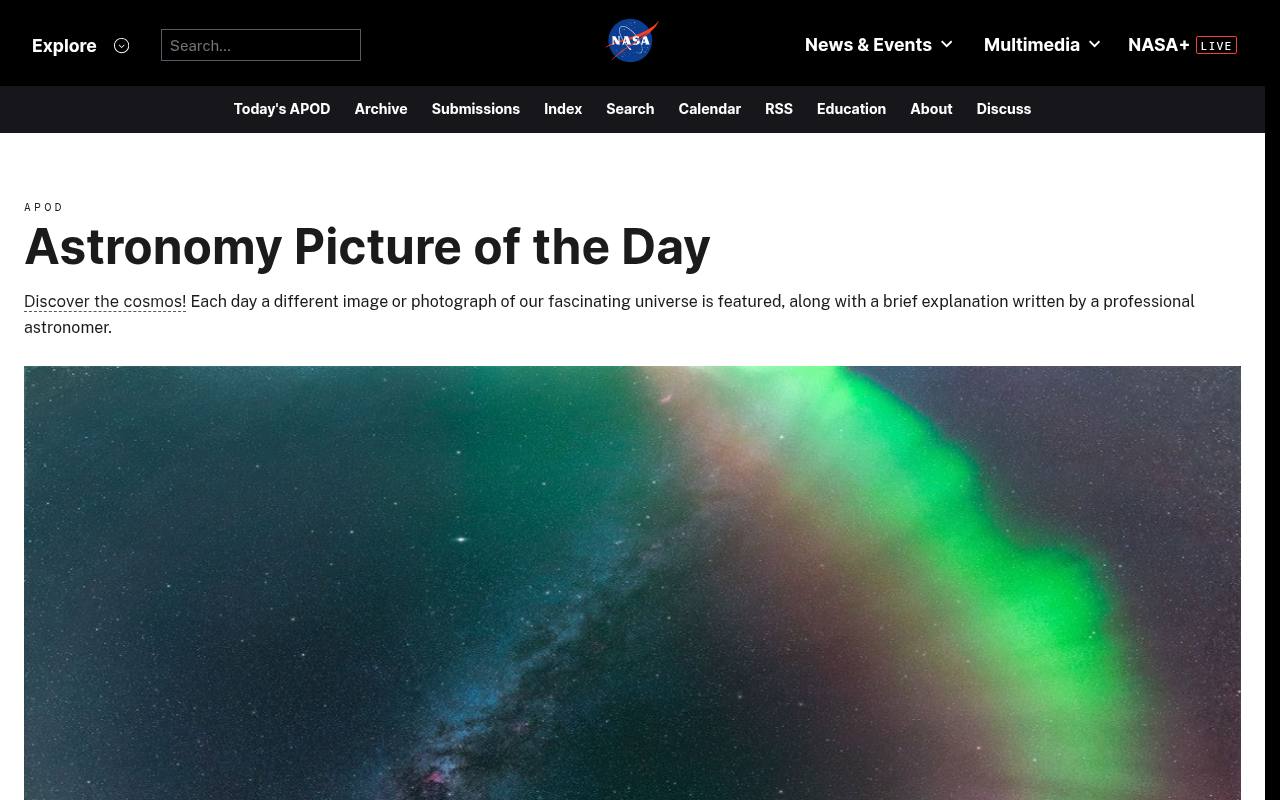
Astronomy Picture of the Day pairs a selected image or other media feature with an explanatory text and linked credits. Its archive makes astronomy image discovery enjoyable when you do not already have a specific target in mind.
Some selections are photographs by independent astrophotographers, not NASA-owned assets; others may be videos rather than downloadable wallpaper stills. Follow the copyright and credit links to determine whether a particular image permits your intended use. Treat APOD as a free discovery source, not a blanket public-domain wallpaper collection or redistribution license.
- Type
- Image gallery
- Best for
- Discovering annotated astronomical images across many creators
- License
- Free viewing; download and reuse rights vary by contributor
- Price
- 100% free
NASA Solar Dynamics Observatory
Image gallery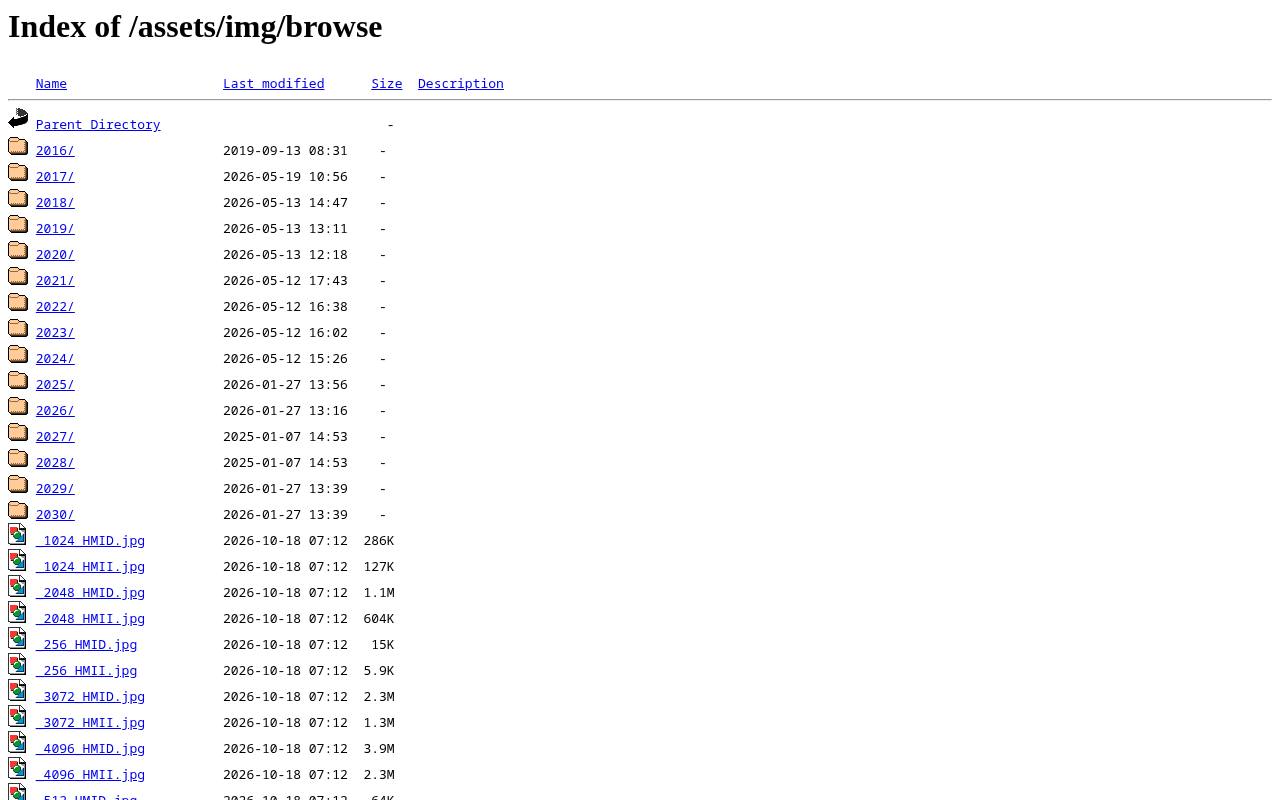
The Solar Dynamics Observatory browse archive exposes dated folders and image files rather than presenting a conventional wallpaper storefront. That straightforward structure suits readers looking for solar observation backgrounds and willing to navigate an archive.
Image names and dimensions help distinguish products, including HMI views, but scientific labels deserve attention before you assign a description to a download. Use a display-ready solar image instead of trying to set a research data file as wallpaper. NASA image-use conditions apply, including acknowledgment and restrictions against implying agency endorsement; no paid image tier is needed.
- Type
- Image gallery
- Best for
- Solar disks and wavelength-specific views of activity
- License
- Free NASA imagery; follow NASA acknowledgment and usage rules
- Price
- 100% free
ESA Space in Images
Image gallery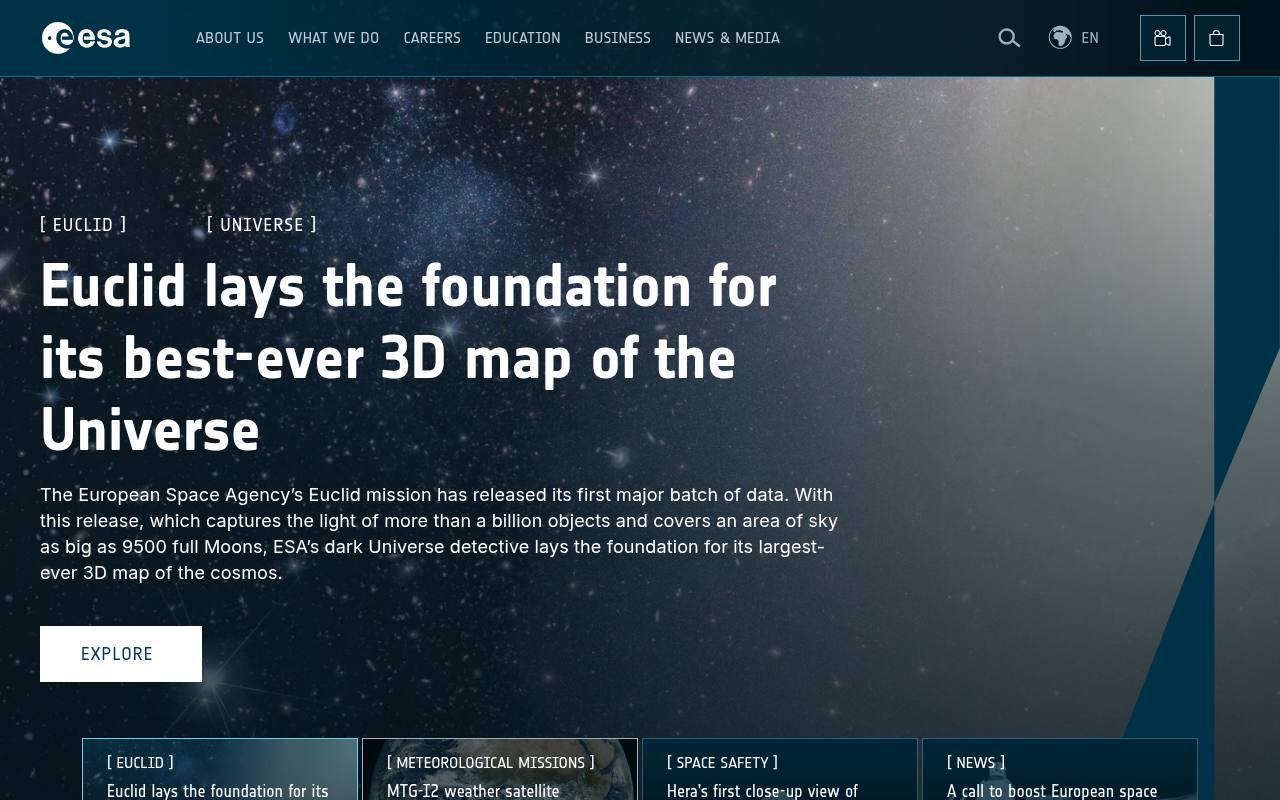
ESA’s Space in Images collection provides a broader institutional route into missions and astronomical subjects than its dedicated Hubble and Webb sites. It is useful for European space mission imagery and for discovering pictures through their accompanying stories rather than through a single telescope’s categories.
Do not transfer the dedicated telescope sites’ Creative Commons policy to all ESA material. The agency’s broader image usage terms distinguish personal or educational use from uses that may require authorization, and outside rights can apply. Read the credit and linked conditions before publishing or commercially repackaging a download.
- Type
- Image gallery
- Best for
- Exploring European missions beyond individual telescope archives
- License
- Free personal/educational use; other uses depend on image rights
- Price
- 100% free
Choose an astronomical subject before a resolution
Start your free wallpaper search with the scene you actually want to live with: a solar disk, planetary rings, a star field, or a structured nebula.
Cassini and HiRISE narrow the subject immediately, while Hubble, Webb, ESO, and NOIRLab support broader exploration. This is often faster than downloading the largest available file and only afterward deciding whether its composition suits your desktop.
Understand scientific colors
Many space telescope images show wavelengths your eyes cannot detect directly. Editors map those observations into visible colors to reveal structure or distinguish measurements.
That does not make the image an invented landscape, but it does mean that its colors may not match a hypothetical view from a spacecraft window. Keep the caption with your saved original so you can explain the image accurately later.
Download a practical image format
For a normal background, a high-quality JPEG is usually more convenient than a scientific dataset or a huge publication master. PNG can also work when offered.
FITS and specialized planetary products may need dedicated software before they become ordinary pictures. Open the downloaded file once before setting it as wallpaper, and check for labels, borders, or comparison panels that were not obvious in the thumbnail.
Crop around the science
Use a non-destructive crop and retain the original download. A galaxy’s faint outer structure or a planet’s rings can disappear if your operating system fills the screen aggressively.
Try fitting the entire image first, then crop only as much as necessary. A square astronomical image does not need to become a full-width scene if doing so removes its most interesting features or creates a misleading composition.
Keep attribution attached
Save the complete image credit, source URL, and license beside your original file. Creative Commons attribution is not satisfied by assuming that everyone recognizes a famous telescope image.
If you publish a modified background, identify the changes and provide the required license information and credits. For strictly private use, keep those records anyway: a background can easily become public when you share a desktop screenshot or record a demonstration.
Separate free access from redistribution rights
A free image download does not establish permission to sell prints, distribute wallpaper packs, or use an image in advertising. APOD in particular brings together material with different copyright owners.
NASA and Chandra pages can also contain outside contributions. ESA’s general collection has different terms from ESA/Hubble and ESA/Webb. Review the individual record and policy again when the intended use changes, not just when you first save the picture.
Make the background comfortable to use
Even a spectacular astronomy desktop background can become tiring if its brightest stars sit directly behind your working documents or icons. Choose a quieter region for desktop shortcuts and avoid increasing saturation simply to imitate a compressed preview.
A slightly darker local copy may be more practical, provided any shared adaptation meets its license conditions. Keep a small, credited shortlist rather than an untraceable folder of hundreds of images.