
A strong logo project starts with questions, not a blank artboard. Which visual conventions help people recognize the category? Which symbols have become predictable? Free logo inspiration galleries make those questions easier to explore without committing to a subscription.
The best references reveal different approaches to proportion, lettering, symbolism, and presentation. Use them to understand decisions rather than collect shapes to imitate, and your research becomes a practical starting point for an original identity instead of an endless scrolling session.
These ten destinations cover several kinds of logo design inspiration: tightly organized symbol archives, community submissions, contemporary catalogs, and editorial collections that show a mark within a larger identity. Some are dedicated logo grids; others offer richer project stories.
All provide free public browsing, although separate products or services may cost money. Importantly, free access does not mean the featured artwork is free to download, modify, or adopt as your own business logo.
Choose a small combination rather than opening every archive at once. Pair a logo reference website focused on form with a case-study collection focused on application, then record what each reference teaches you.
A geometric symbol might demonstrate balance; a restaurant wordmark might demonstrate personality through spacing. The selections below explain where each source fits, what you can explore without paying, and how to keep brand identity research useful while preserving a clear boundary between inspiration and copying.
Quick picks at a glance
| # | Resource | License | Best for |
|---|---|---|---|
| 1 | Logobook | Free to browse; artwork rights remain with owners | Studying symbols by shape, subject, and letter |
| 2 | Logosystem | Free to browse; artwork rights remain with owners | Filtering contemporary marks across several visual attributes |
| 3 | Logggos | Free to browse; artwork rights remain with owners | Comparing lettering styles across contemporary company logos |
| 4 | LogoMoose | Free to browse; artwork rights remain with owners | Exploring themed concepts and community-rated logo examples |
| 5 | Logospire | Free to browse; artwork rights remain with owners | Quick visual warmups without elaborate browsing controls |
| 6 | Logopond | Free to browse; artwork rights remain with owners | Comparing designers and searching specific logo subjects |
| 7 | Logo Design Love | Free to browse; artwork rights remain with owners | Understanding the stories behind recognizable brand marks |
| 8 | Identity Designed | Free to browse; artwork rights remain with owners | Seeing logos work within complete visual identities |
| 9 | Pentagram | Free to browse; artwork rights remain with owners | Connecting identity decisions with real client applications |
| 10 | The Brand Identity | Free to browse; artwork rights remain with owners | Finding contemporary identities with studio commentary attached |
Logobook
Logo archive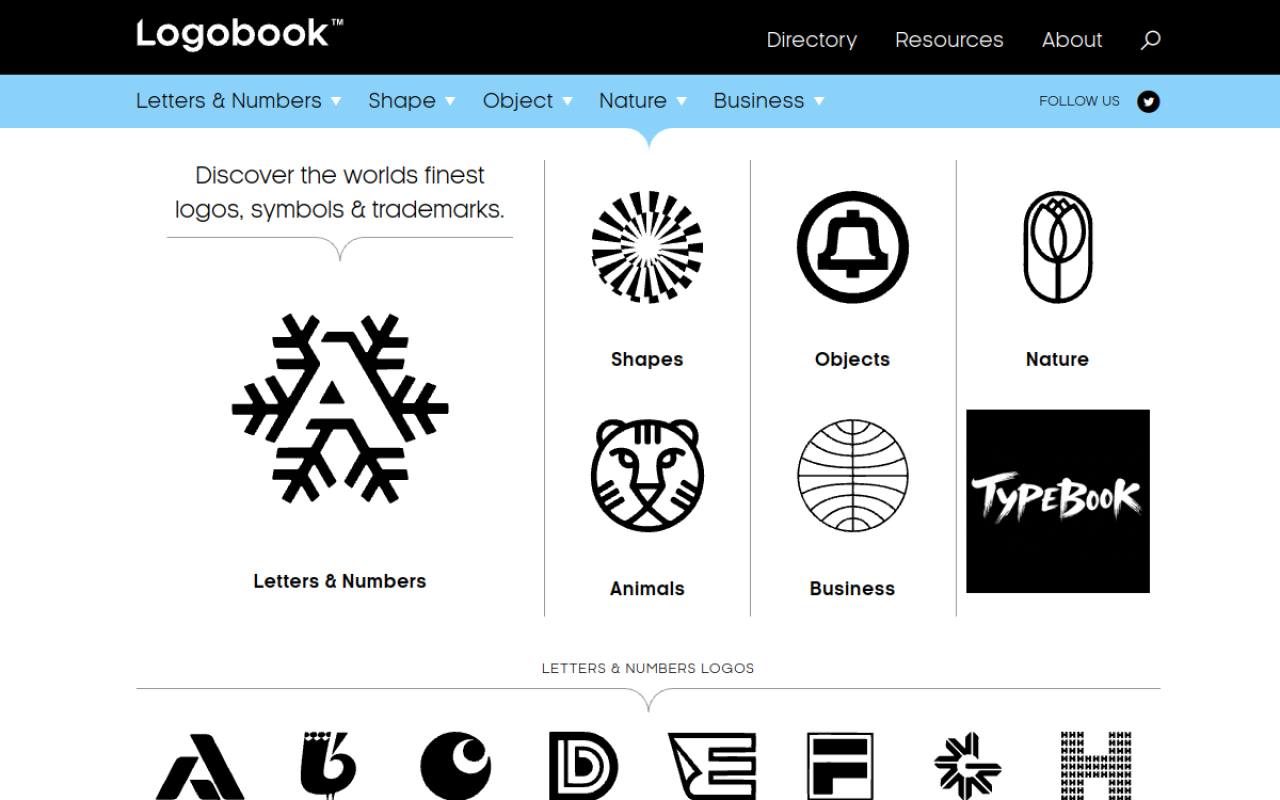
Logobook organizes its collection around visual building blocks, making it especially helpful when you know the territory you want to investigate. Browse Letters & Numbers, Shape, Object, Nature, and Business rather than relying on a stream of recent uploads.
Subcategories include circles, arrows, birds, architecture, and individual letters, so comparisons stay focused. Its symbol research value lies in seeing how different designers solve related formal problems. Treat the displayed trademarks as references, not a stock library: public browsing does not grant permission to reuse a featured mark.
- Type
- Logo archive
- Best for
- Studying symbols by shape, subject, and letter
- License
- Free to browse; artwork rights remain with owners
- Price
- Free browsing
Logosystem
Curated gallery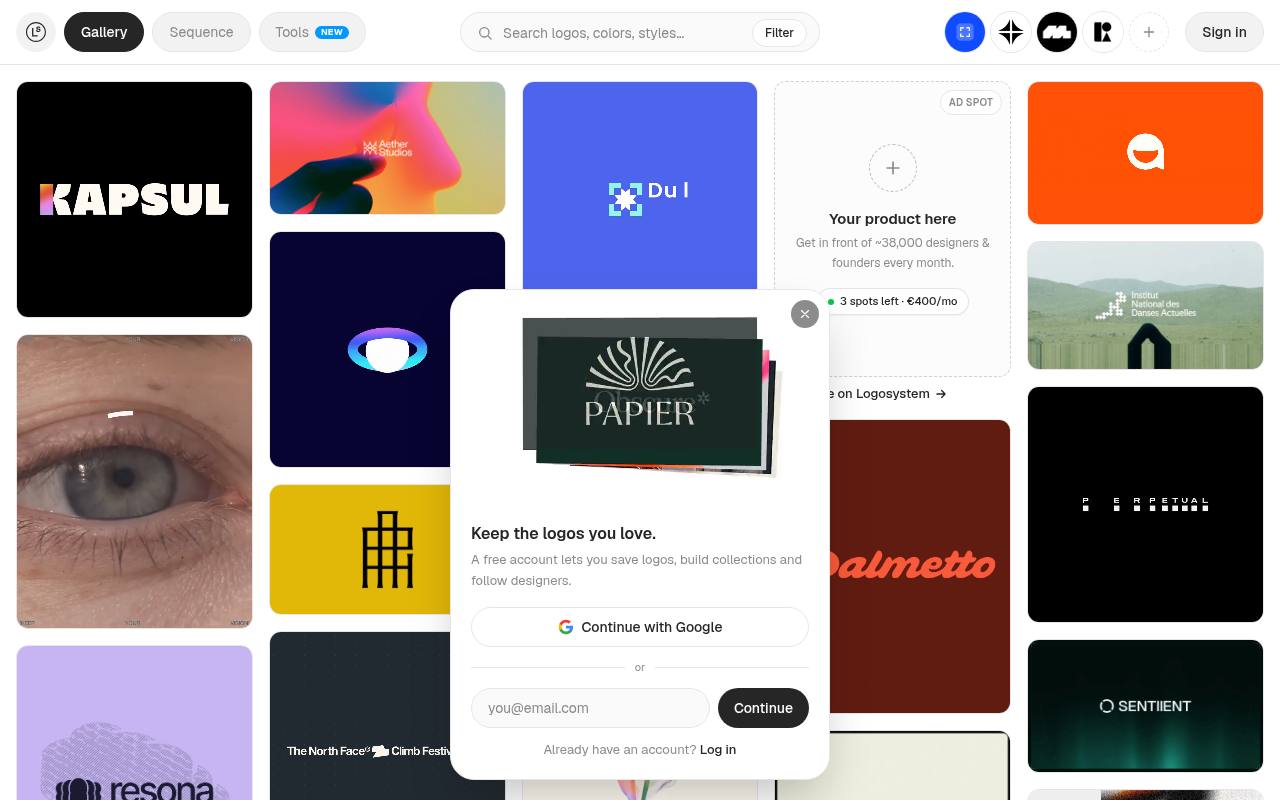
Logosystem brings filtered logo inspiration into a contemporary, designer-attributed gallery. Its categories cover wordmarks, symbols, combined marks, and animated logos, with additional ways to explore style, shape, industry, mood, and color. Combining those dimensions helps narrow a vague brief into a manageable comparison set.
The site explicitly describes itself as a free reference library and points visitors toward original designers or sources. That makes source attribution part of the research process, while its ownership notice clearly separates looking for ideas from receiving a license to reuse the artwork.
- Type
- Curated gallery
- Best for
- Filtering contemporary marks across several visual attributes
- License
- Free to browse; artwork rights remain with owners
- Price
- Free browsing
Logggos
Curated catalog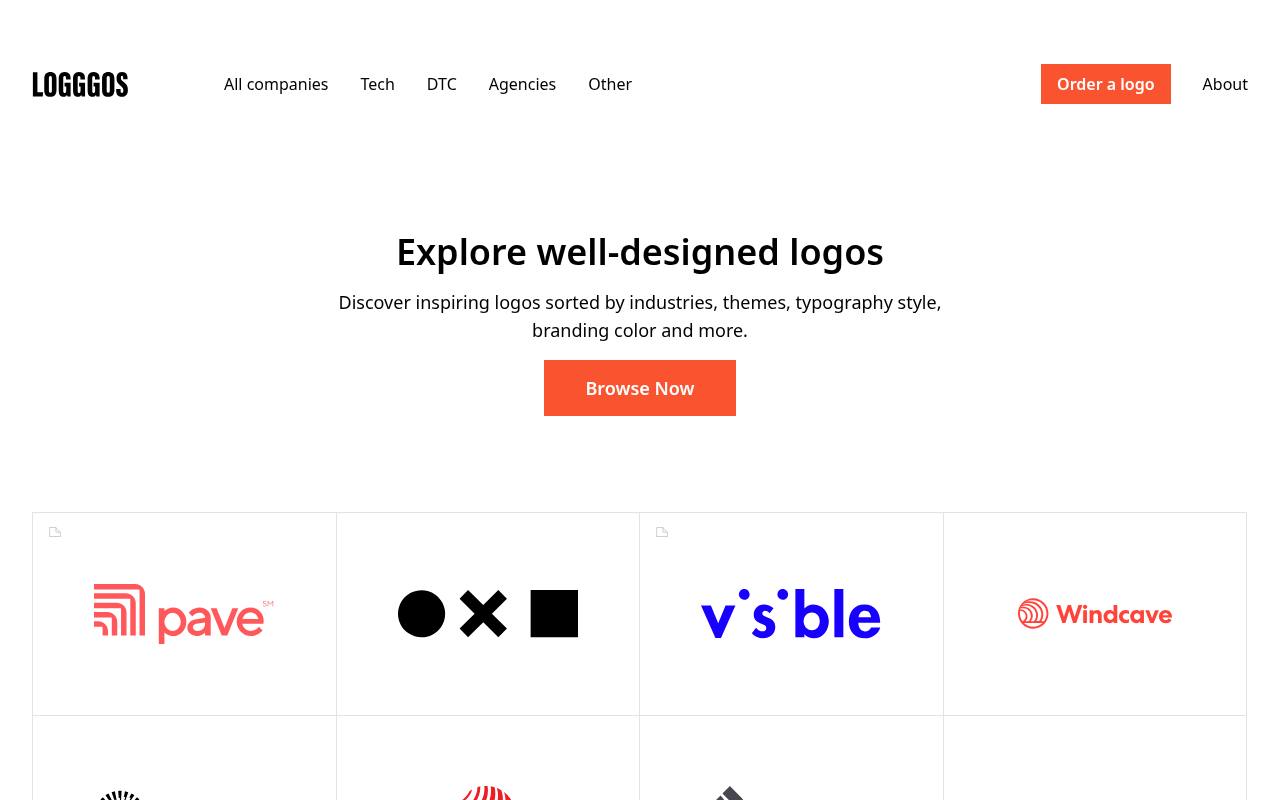
Logggos is particularly useful for wordmark inspiration because its catalog exposes typography-oriented styles such as condensed, extended, italic, serif, slab-serif, and lowercase. Company groupings include Tech, DTC, Agencies, and Other, alongside color and motif tags.
This lets you compare how similar lettering choices serve different kinds of organizations instead of judging a mark in isolation. The site's research catalog is publicly browsable, while ordering a logo is a separate offering. Its footer states that rights to logos in SVG, PNG, or JPG belong to their owners.
- Type
- Curated catalog
- Best for
- Comparing lettering styles across contemporary company logos
- License
- Free to browse; artwork rights remain with owners
- Price
- Free browsing
LogoMoose
Community gallery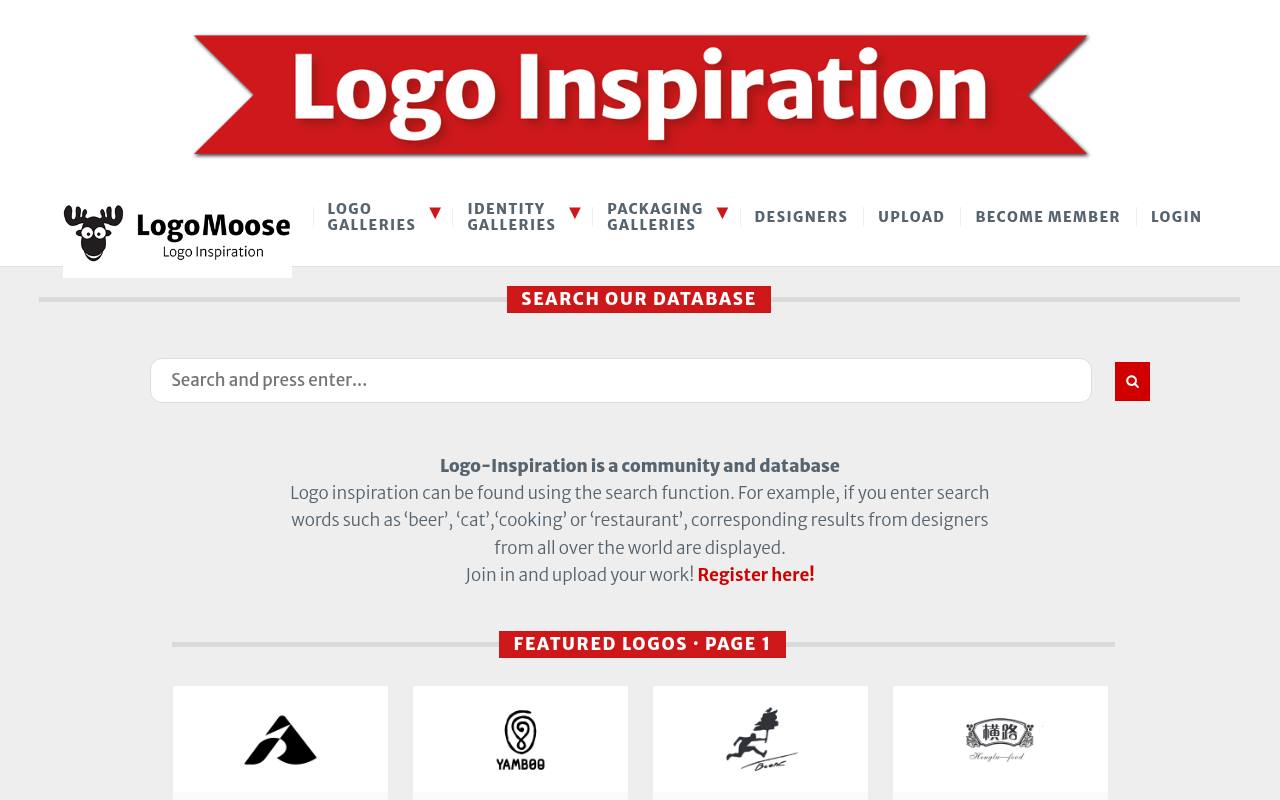
LogoMoose combines a community logo gallery with search and browsing routes such as featured, most rated, and most viewed logos. Its popular tags include monograms, typography, animals, restaurants, minimal work, and color-based groupings. You can also move into separate identity and packaging galleries when you want more context.
For concept exploration, search a subject and compare the range of interpretations rather than assuming that the highest-rated solution fits your brief. Browsing is free; registration and uploading are separate actions, and the site states that logos remain their respective owners' property.
- Type
- Community gallery
- Best for
- Exploring themed concepts and community-rated logo examples
- License
- Free to browse; artwork rights remain with owners
- Price
- Free browsing
Logospire
Logo gallery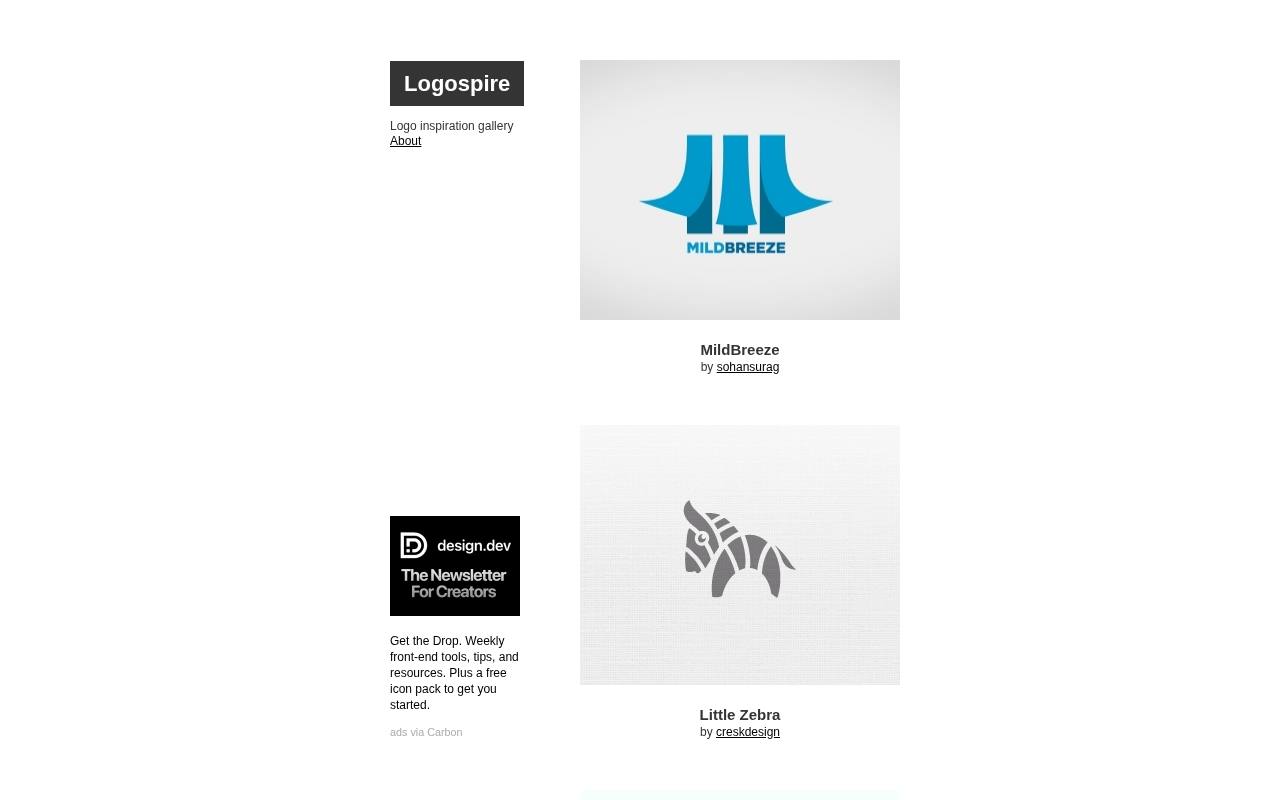
Logospire takes a simple gallery approach: its public page presents logo entries with project titles and creator handles rather than surrounding them with lengthy editorial content. Examples on the landing page range from Little Zebra to Plexus Puzzles, giving you a direct route into a varied visual selection.
This is useful for a short visual warmup before sketching, especially when complicated filters would interrupt your momentum. It is a viewing resource, not an advertised package of editable assets, so follow individual entries for context and avoid assuming reproduction rights.
- Type
- Logo gallery
- Best for
- Quick visual warmups without elaborate browsing controls
- License
- Free to browse; artwork rights remain with owners
- Price
- Free browsing
Logopond
Community showcase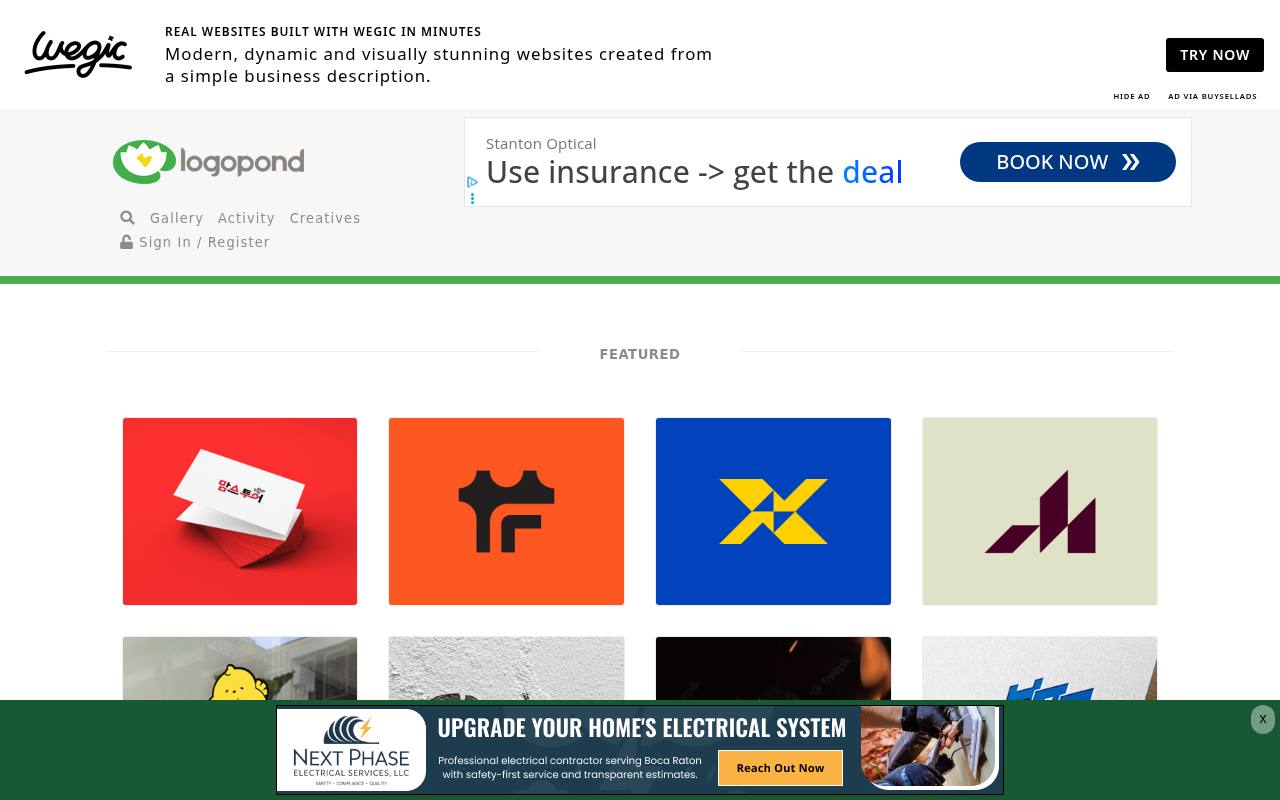
Logopond centers on designer-submitted logos, with creator names attached to gallery entries and search routes that include title and tag matching. Exploring a subject can reveal multiple approaches to mascots, lettermarks, or visual puns, while browsing a designer's work adds context that a detached image cannot provide.
Some entries are offered for sale, which reinforces an important distinction: free inspiration browsing is not free ownership of a concept. Use the public showcase for comparison, then investigate any commercial arrangement directly rather than treating a displayed design as an unrestricted asset.
- Type
- Community showcase
- Best for
- Comparing designers and searching specific logo subjects
- License
- Free to browse; artwork rights remain with owners
- Price
- Free browsing
Logo Design Love
Editorial logo archive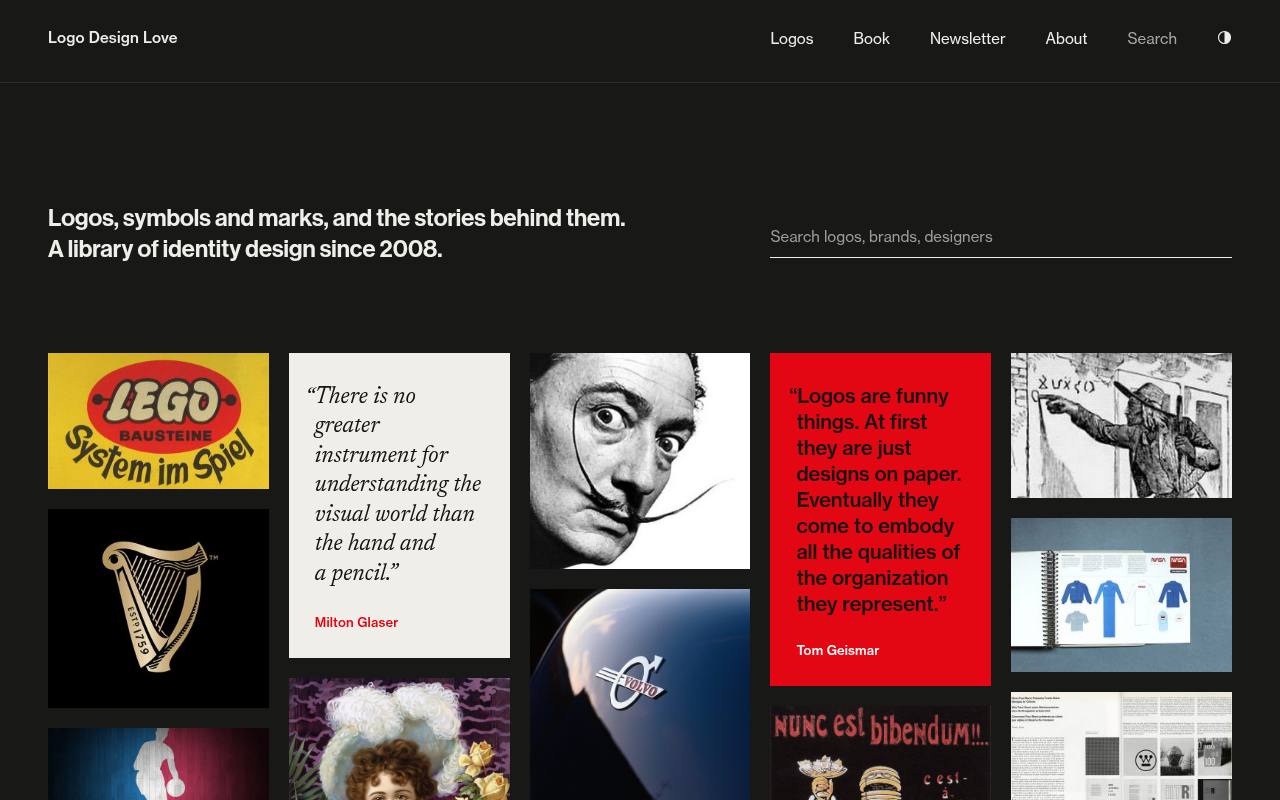
Logo Design Love adds historical logo context to visual browsing through stories about symbols, wordmarks, monograms, and identity evolution. David Airey's archive includes recognizable subjects such as LEGO, Coca-Cola, NASA, and the Guinness harp, with search covering logos, brands, and designers.
It is particularly useful when a client asks why a restrained mark can be memorable: the surrounding story often explains more than an isolated thumbnail. The free editorial archive is distinct from the separately sold book, and reading a feature does not license its illustrated identity work.
- Type
- Editorial logo archive
- Best for
- Understanding the stories behind recognizable brand marks
- License
- Free to browse; artwork rights remain with owners
- Price
- Free browsing
Identity Designed
Identity project gallery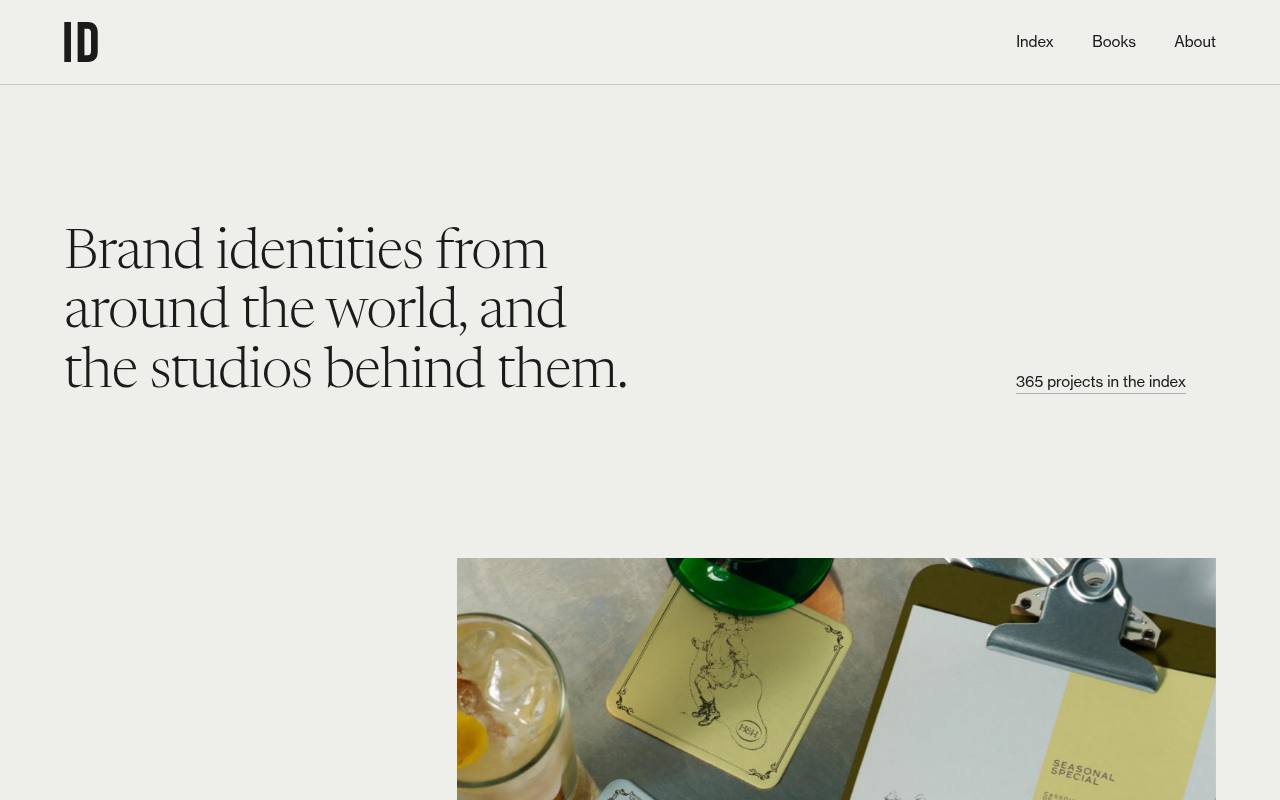
Identity Designed moves beyond the isolated mark into identity case studies from studios around the world. Its index and project listings connect brand names with the studios responsible, while featured work spans areas such as food and drink, healthcare, and cultural organizations.
Use it to investigate how a logo relates to typography, imagery, and physical applications rather than choosing a symbol solely for its silhouette. The public project archive is free to explore; associated books are sold separately. Featured project photography and identity artwork are references, not a bundled download license.
- Type
- Identity project gallery
- Best for
- Seeing logos work within complete visual identities
- License
- Free to browse; artwork rights remain with owners
- Price
- Free browsing
Pentagram
Studio portfolio gallery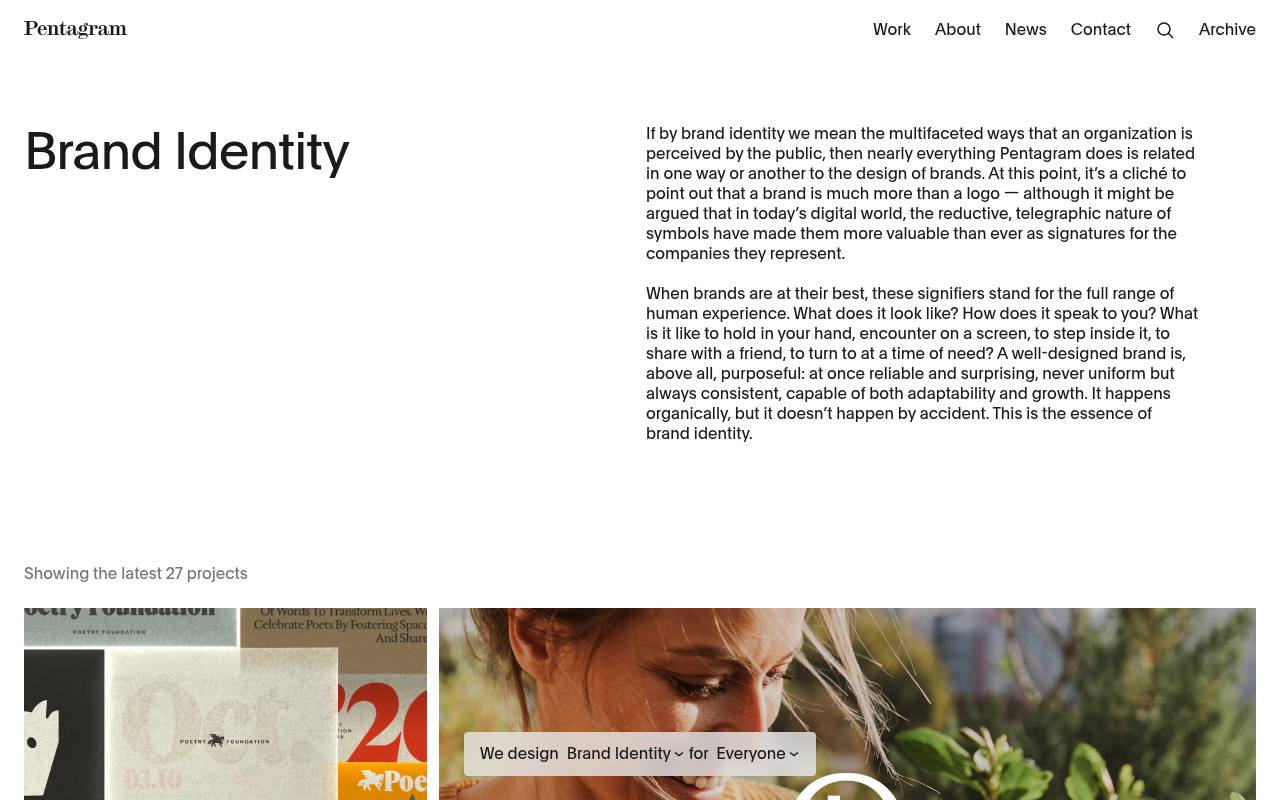
Pentagram's Brand Identity collection is a studio portfolio gallery, not an open submission feed. That makes it valuable for studying finished commissions alongside project descriptions and their client contexts. The work navigation distinguishes disciplines and sectors, while the identity page presents projects across fields including finance, publishing, entertainment, and civic organizations.
Read several examples to see how applied logo design changes with the audience and setting. Viewing the portfolio is free, but the presentation offers no blanket permission to copy a client's mark or reuse the accompanying project images.
- Type
- Studio portfolio gallery
- Best for
- Connecting identity decisions with real client applications
- License
- Free to browse; artwork rights remain with owners
- Price
- Free browsing
The Brand Identity
Editorial project gallery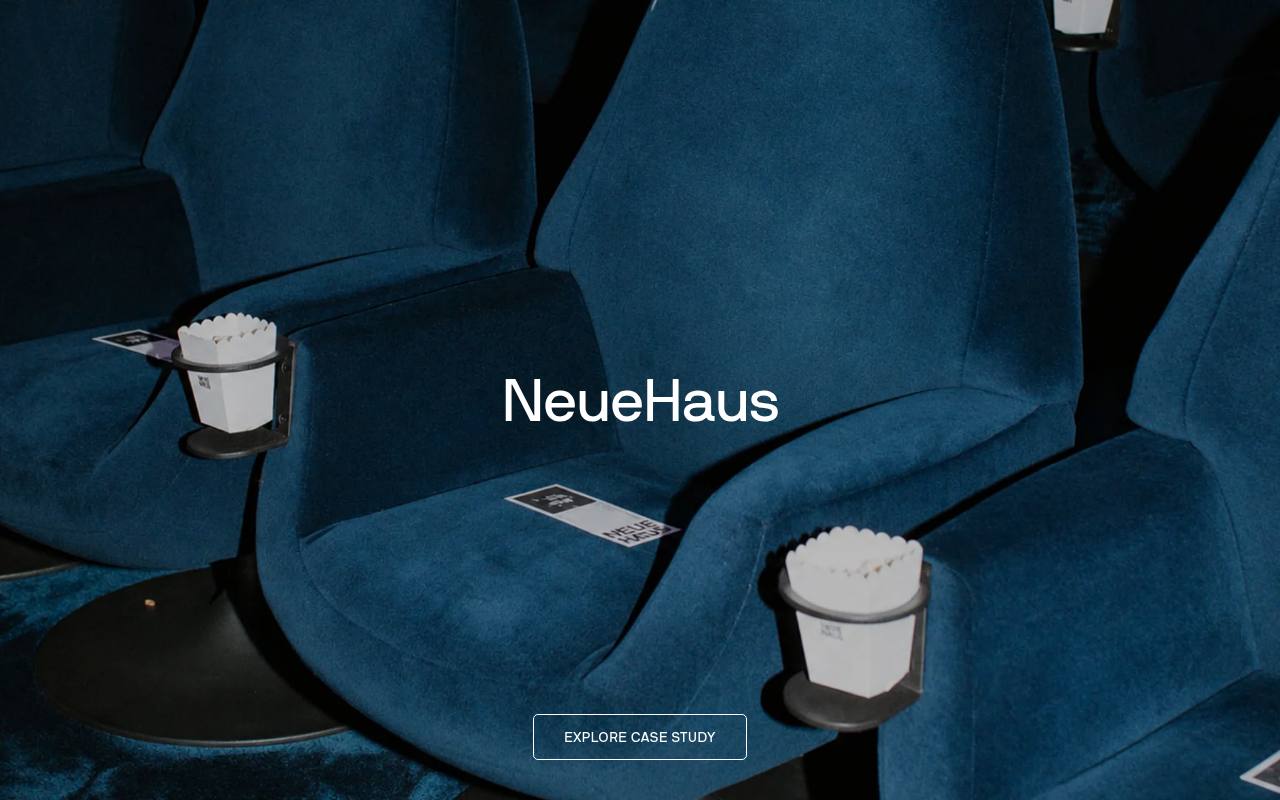
The Brand Identity mixes contemporary identity projects with interviews and other design features, offering a broader frame for logo research than a thumbnail-only catalog. Project headlines identify studios and brands, helping you follow an interesting mark into the reasoning and visual system around it.
The homepage also promotes a store, so distinguish its free editorial content from paid mockups, templates, and publications. Use the project features to compare positioning and execution across current work; the site's image ownership notice makes clear that featured visuals remain with their respective owners.
- Type
- Editorial project gallery
- Best for
- Finding contemporary identities with studio commentary attached
- License
- Free to browse; artwork rights remain with owners
- Price
- Free browsing
Choose galleries around the question you need to answer
Start with a specific research question: do you need a stronger silhouette, more distinctive lettering, or evidence that a playful identity can feel credible? Logobook supports formal comparisons; Logggos and Logosystem help narrow contemporary styles.
Identity Designed, Pentagram, and The Brand Identity show applications. Matching the source to the question prevents a beautiful but irrelevant reference board from quietly reshaping the assignment.
Build a small board with useful annotations
Keep your logo inspiration board selective and write one observation beneath each reference. Describe a decision, such as an unusually open counter or a symbol that balances dense typography.
Include the source URL, designer credit where available, and access date. These notes turn the collection into an explanation of possible directions, making client conversations more productive than presenting a wall of unexplained favorites.
Separate free viewing from permission to reuse
A free logo gallery usually offers access to examples, not a commercial artwork license. Copyright and trademark interests can both matter, and giving credit does not automatically authorize copying.
Do not extract a featured symbol for a new identity or assume that changing its color makes it original. If a source advertises a mark for sale, confirm the seller's rights and the precise agreement independently.
Research beyond your immediate business category
Use cross-category research to avoid recycling the same visual shorthand as every competitor. A hospitality brief might benefit from studying cultural wordmarks for typographic confidence, while a technology brief might learn from transport symbols about clarity.
Keep a separate competitor comparison so you can still recognize accidental similarities. Borrow the underlying lesson about hierarchy or rhythm, not a distinctive arrangement that belongs to another organization.
Move from browsing to original sketches
Give logo design research a stopping point. After collecting a few contrasting approaches, close the browser and sketch from the written brief rather than from a reference image. Develop several structural ideas before refining one.
Returning to the galleries later can help identify an uncomfortable resemblance, but constant side-by-side drawing encourages imitation and makes it harder to establish a clear rationale for your own decisions.
Judge a mark outside its polished presentation
A glossy mockup can disguise weak small-scale legibility. When evaluating your original concepts, test them in one color, at modest screen sizes, and against light and dark backgrounds.
Inspect whether tight spaces collapse or thin strokes disappear. For animated references, consider what remains understandable when motion stops. The goal is a resilient mark, not a presentation effect that depends on ideal viewing conditions to communicate.
Do these galleries provide editable logo files?
These selections primarily provide visual research references, not ready-to-use identity packages. Even when a site displays or exposes a vector file, technical availability does not establish legal permission.
Develop your own artwork in an appropriate editor and retain an editable master separately from exported previews. Choose delivery formats according to the actual production requirements rather than assuming that a gallery image will be suitable for professional output.
Can a reference search establish that a logo is unique?
Gallery browsing offers a useful similarity sanity check, but no collection covers every existing business or registered mark. Search across several sources, review competitors, and investigate relevant trademark registers before launch.
For consequential projects, obtain appropriate professional advice rather than relying on visual research alone. A thoughtful inspiration process improves your design decisions; it does not replace clearance or guarantee that a proposed identity is available.