Finding free crochet patterns is easy; finding instructions you genuinely want to follow takes more judgment. A useful source explains the project, identifies its yarn, and gives you a workable route to the directions.
These ten sites include yarn companies, designer archives, and a discovery directory, so you can compare different browsing styles without assuming the largest collection is automatically the best. Start with a clear project goal, then look for readable instructions and enough practical detail to finish confidently.
The word free describes access, not every part of the making process. Yarn, tools, and optional PDFs may still cost money, and some collections mix free entries with premium products.
A blog can publish complete directions on the page while selling a cleaner printable copy. A yarn company can offer a download beside a materials order. Distinguishing the instructions from the shopping options prevents unnecessary purchases and makes it easier to compare sources fairly.
Use this list as a set of different doorways rather than a ranking based on catalog size. Designer blogs are useful for following a consistent teaching voice, while larger libraries help compare many shapes and yarn families.
Directories can uncover unfamiliar makers but may send you elsewhere for the actual pattern. Bookmark the specific project page after browsing, and read its materials and abbreviations before deciding whether it belongs in your queue.
Quick picks at a glance
| # | Resource | License | Best for |
|---|---|---|---|
| 1 | Yarnspirations | Free instructions; pattern copyright remains with the publisher; check individual terms before selling finished items | Browsing brand-backed projects with clear supply lists |
| 2 | Lion Brand | Free instructions; pattern copyright remains with the publisher; check individual terms before selling finished items | Finding downloadable crochet instructions alongside matching yarn |
| 3 | LoveCrafts | Free instructions; pattern copyright remains with the publisher; check individual terms before selling finished items | Searching a broad mix of designers and printable PDFs |
| 4 | Hobbii | Free instructions; pattern copyright remains with the publisher; check individual terms before selling finished items | Separating free designs from premium yarn-store patterns |
| 5 | DROPS Design | Free instructions; pattern copyright remains with the publisher; check individual terms before selling finished items | Exploring a large international knitting and crochet archive |
| 6 | AllFreeCrochet | Free instructions; pattern copyright remains with the publisher; check individual terms before selling finished items | Discovering project categories and following credited pattern links |
| 7 | Moogly | Free instructions; pattern copyright remains with the publisher; check individual terms before selling finished items | Following a designer archive instead of marketplace listings |
| 8 | Daisy Farm Crafts | Free instructions; pattern copyright remains with the publisher; check individual terms before selling finished items | Choosing blankets by visual stitch style |
| 9 | Hooked by Robin | Free instructions; pattern copyright remains with the publisher; check individual terms before selling finished items | Combining written patterns with video demonstrations |
| 10 | Fiber Flux | Free instructions; pattern copyright remains with the publisher; check individual terms before selling finished items | Browsing named projects before choosing a tutorial format |
Yarnspirations
Crochet pattern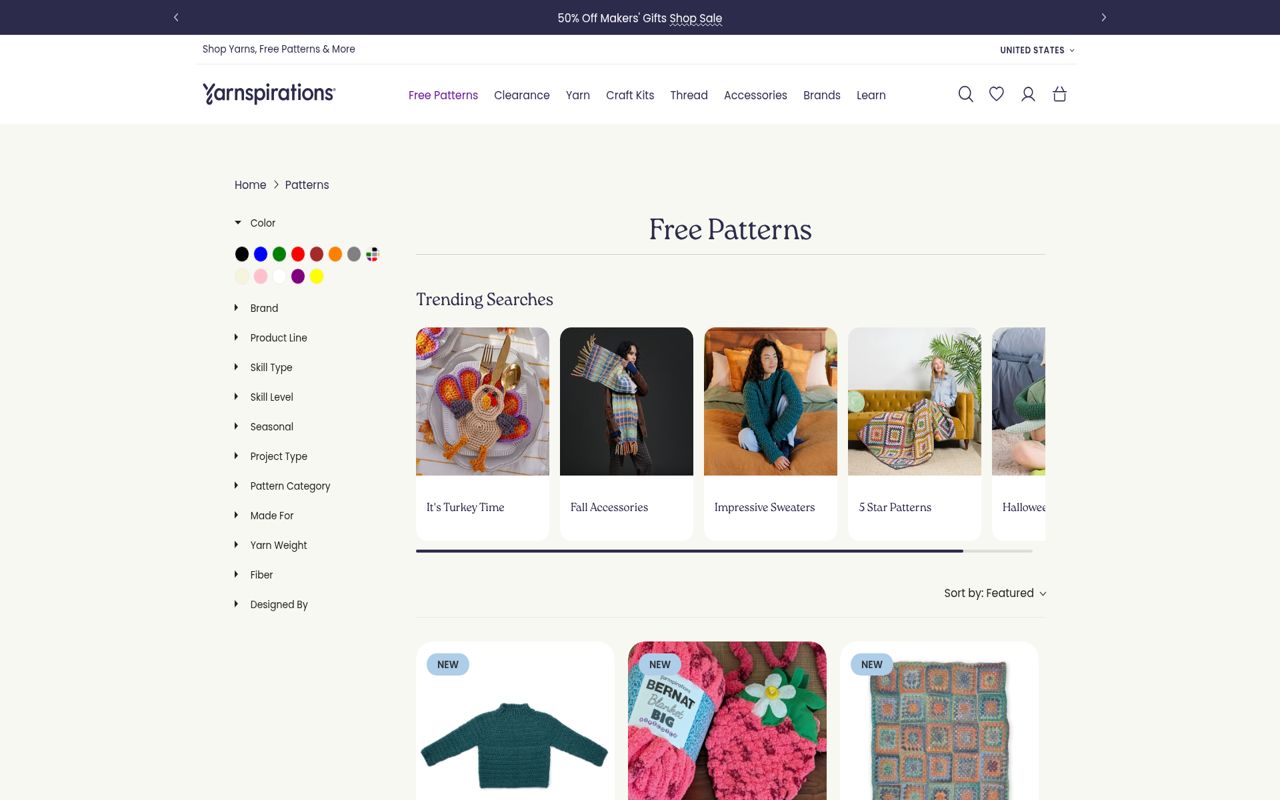
Yarnspirations brings several familiar yarn labels into one free pattern library, rather than limiting browsing to a single designer’s archive. Its project collections include blankets, garments, accessories, and toys, with knitting and crochet sharing the wider catalog.
Open a crochet listing to compare the recommended yarn and materials before committing to a project. The store also sells supplies, so a yarn purchase is separate from accessing a free pattern. This is a useful starting point when you want project instructions tied to identifiable commercial yarns.
- Type
- Crochet pattern
- Best for
- Browsing brand-backed projects with clear supply lists
- License
- Free instructions; pattern copyright remains with the publisher; check individual terms before selling finished items
- Price
- Free patterns; paid patterns optional
Lion Brand
Crochet pattern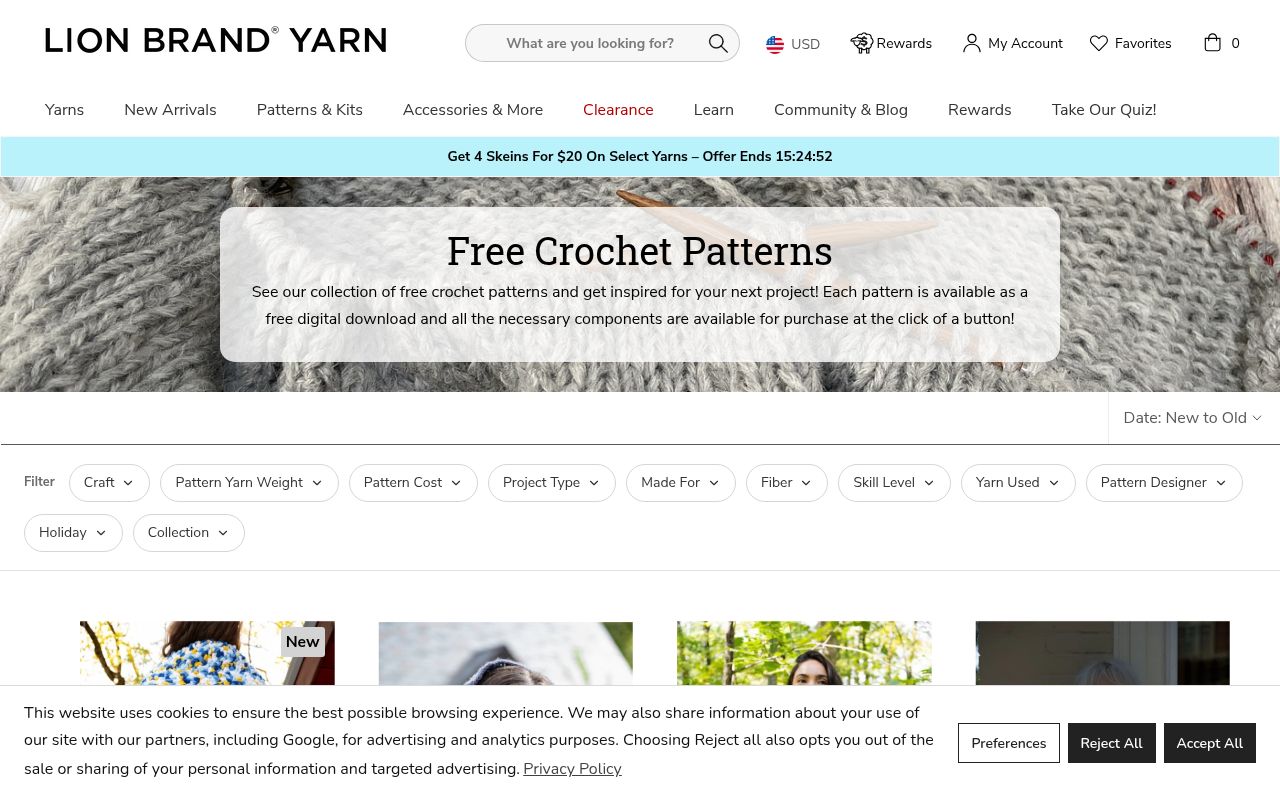
Lion Brand’s crochet collection explicitly describes its patterns as free digital downloads, while offering the necessary project components for purchase. The catalog includes garments, blankets, and smaller accessories rather than concentrating on one construction method.
Its browsing controls include sorting and a Free pattern filter, helpful when other product types appear nearby. Read the individual listing before selecting yarn, especially for an older design whose original colors may have changed. The pattern download and the optional materials order serve different purposes, so compare them separately.
- Type
- Crochet pattern
- Best for
- Finding downloadable crochet instructions alongside matching yarn
- License
- Free instructions; pattern copyright remains with the publisher; check individual terms before selling finished items
- Price
- Free patterns; paid patterns optional
LoveCrafts
Crochet pattern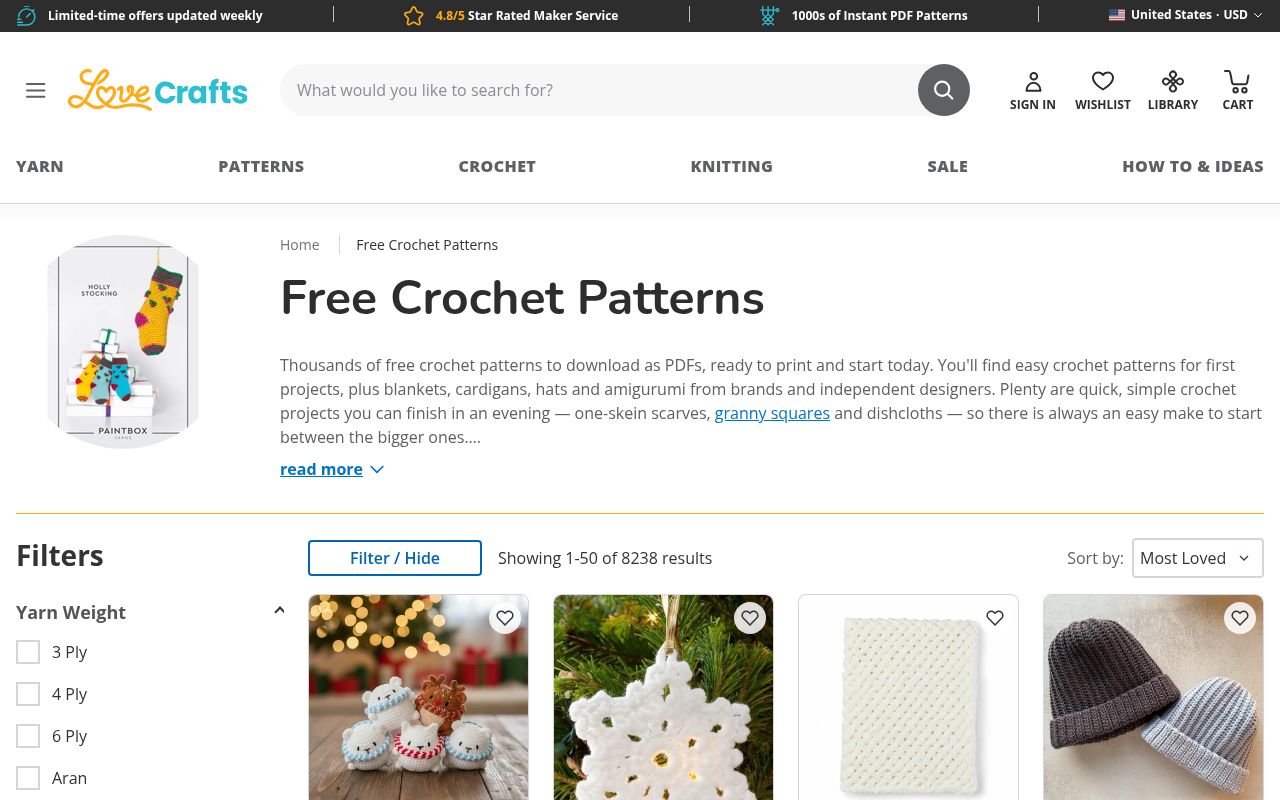
LoveCrafts organizes its free crochet collection around downloadable PDFs, with links to beginners’ designs, blankets, hats, toys, bags, and granny squares. That structure makes it easier to move from a broad idea to a manageable project category.
Listings identify details such as pattern language and format, which matter when similar photographs lead to different instructions. Both yarn brands and independent designers appear here, so do not assume a single creator’s permissions apply throughout. Review the selected product’s download process and terms rather than treating the whole marketplace as one pattern.
- Type
- Crochet pattern
- Best for
- Searching a broad mix of designers and printable PDFs
- License
- Free instructions; pattern copyright remains with the publisher; check individual terms before selling finished items
- Price
- Free patterns; paid patterns optional
Hobbii
Crochet pattern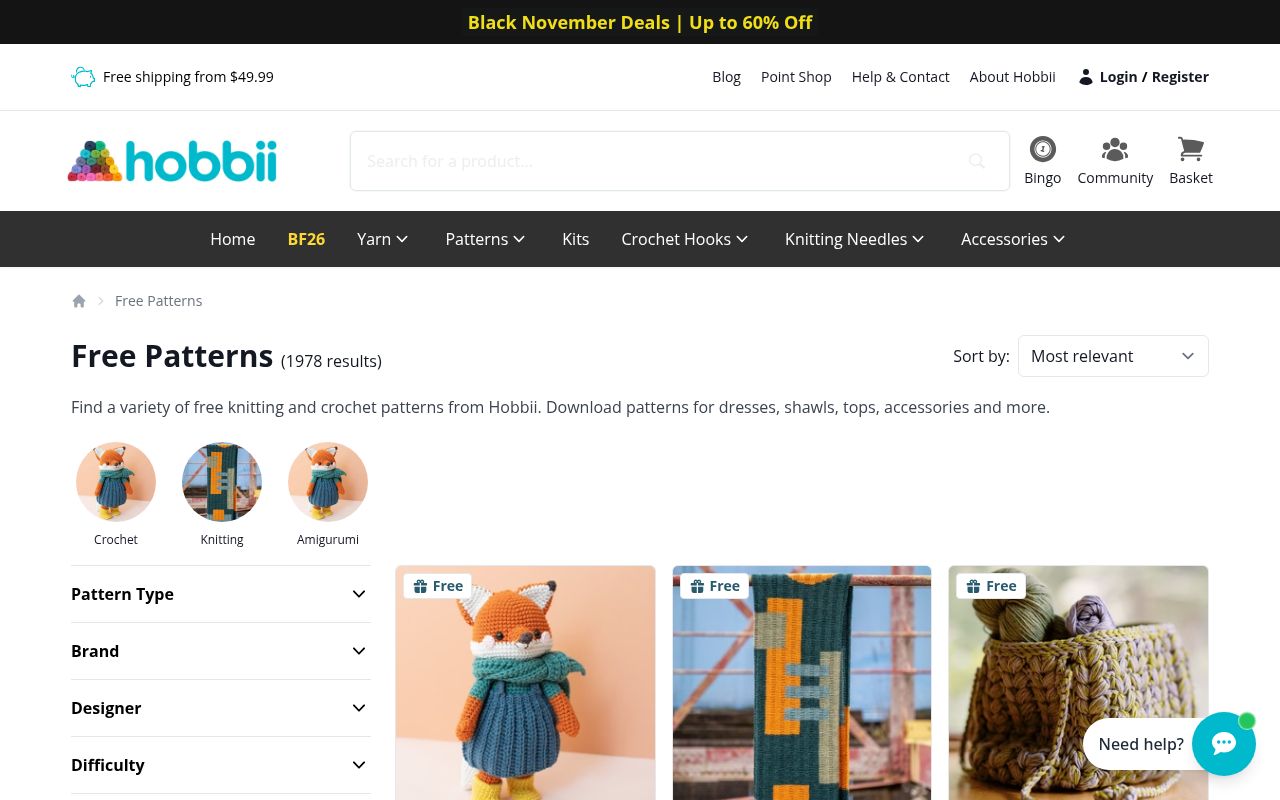
Hobbii provides a dedicated Free Patterns collection alongside its broader knitting and crochet pattern catalog. The distinction matters because the store also displays premium offerings elsewhere. Its pattern browsing includes project imagery and named designs, allowing you to investigate the recommended yarn before choosing colors.
Keep the craft and price labels in view, since knitting and crochet coexist across the store. Use this collection for inspiration connected to Hobbii yarns, then open the actual pattern to check materials, available instructions, and any download requirements.
- Type
- Crochet pattern
- Best for
- Separating free designs from premium yarn-store patterns
- License
- Free instructions; pattern copyright remains with the publisher; check individual terms before selling finished items
- Price
- Free patterns; paid patterns optional
DROPS Design
Crochet pattern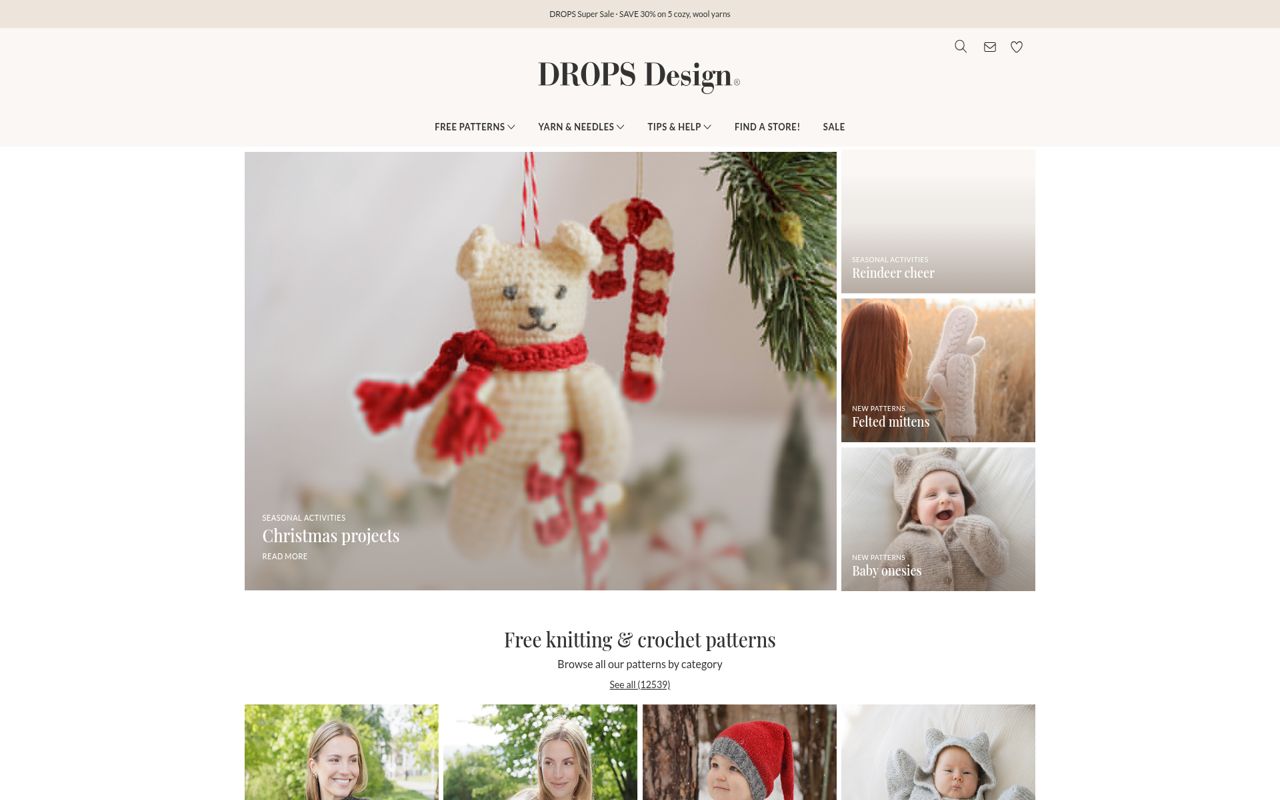
DROPS Design’s Garnstudio site introduces its archive as free knitting and crochet patterns, arranged into practical groups such as women, children, baby, men, and seasonal projects. Because both crafts are prominent, selecting crochet is essential before comparing designs.
The surrounding site also links to yarn information and current yarn offers, useful when a pattern names an unfamiliar DROPS range. Browse by the intended recipient first, then inspect the individual instructions for terminology and materials. The broad category layout rewards a focused search more than aimless scrolling.
- Type
- Crochet pattern
- Best for
- Exploring a large international knitting and crochet archive
- License
- Free instructions; pattern copyright remains with the publisher; check individual terms before selling finished items
- Price
- Free patterns; paid patterns optional
AllFreeCrochet
Crochet pattern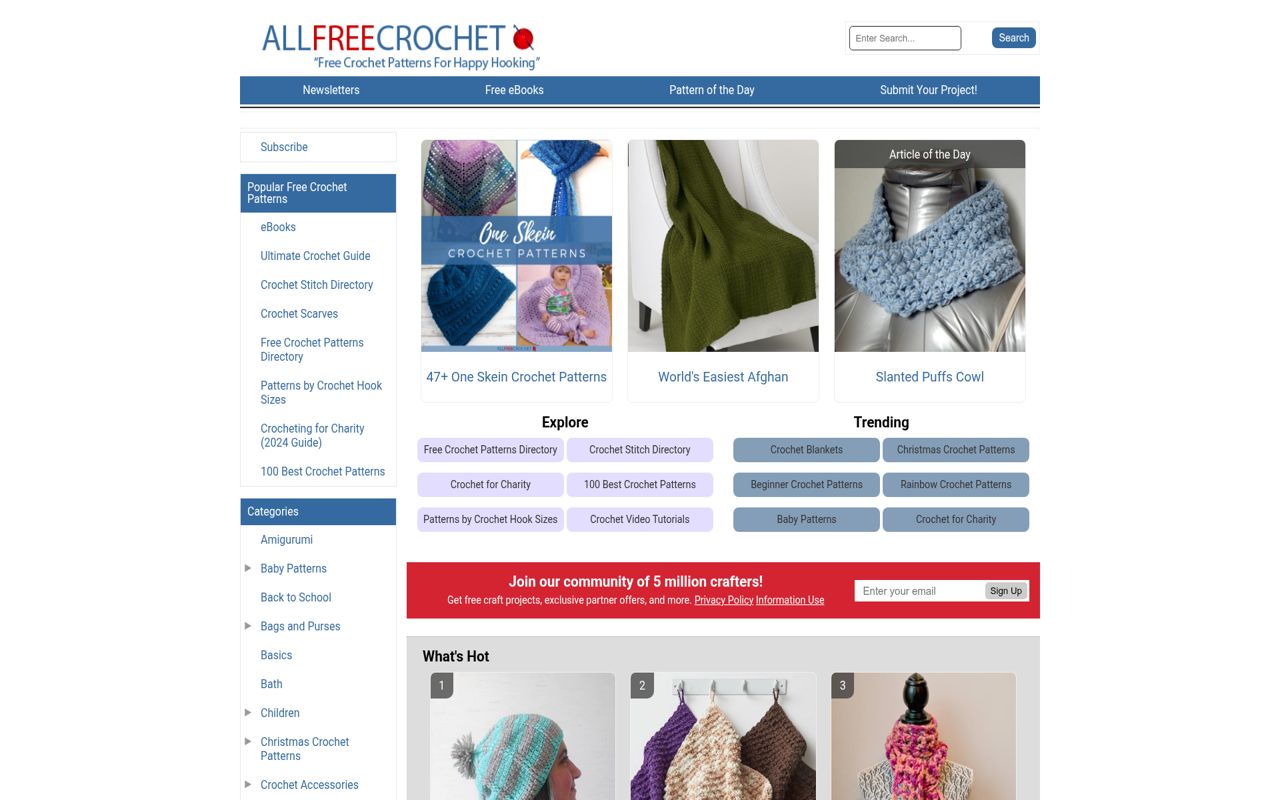
AllFreeCrochet works as a crochet discovery directory, bringing project suggestions together across subjects rather than presenting every design as its own original pattern. Its navigation and collections help readers explore familiar categories, including amigurumi and household makes.
Follow the individual project link to identify who actually wrote the instructions and where the full tutorial lives. This extra step is important for checking materials, access conditions, and copyright. Use the directory to find possibilities, but keep the original designer’s page as your working reference while crocheting.
- Type
- Crochet pattern
- Best for
- Discovering project categories and following credited pattern links
- License
- Free instructions; pattern copyright remains with the publisher; check individual terms before selling finished items
- Price
- Free patterns; paid patterns optional
Moogly
Crochet pattern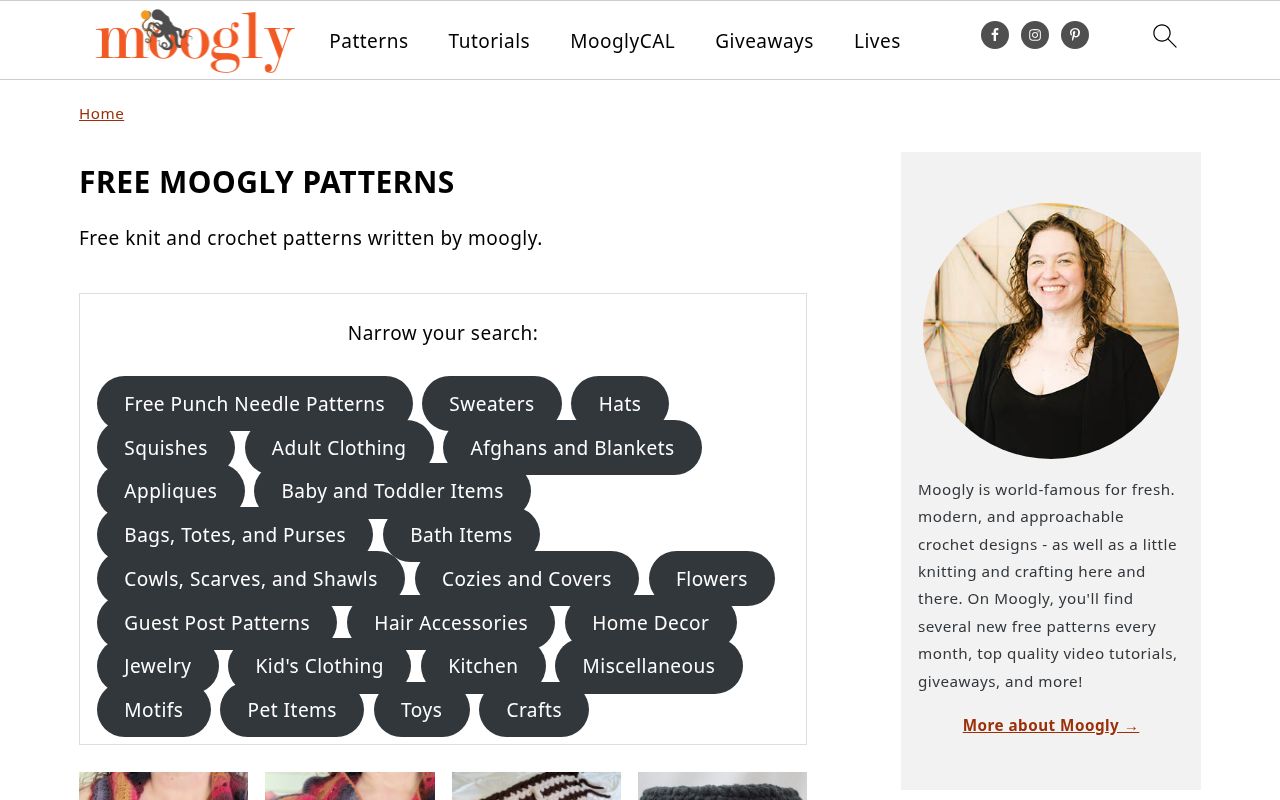
Moogly maintains a dedicated Free Moogly Patterns archive, giving readers a route into the blog’s own project posts. It is a useful contrast to multi-designer marketplaces because the browsing experience revolves around named tutorials and related blog categories.
Individual entries supply the detail that a category thumbnail cannot, so inspect the project instructions and supply notes before gathering yarn. The wider website includes more than free pattern cards, making this archive a sensible bookmark. Save the specific tutorial once you choose a design rather than returning through unrelated posts.
- Type
- Crochet pattern
- Best for
- Following a designer archive instead of marketplace listings
- License
- Free instructions; pattern copyright remains with the publisher; check individual terms before selling finished items
- Price
- Free patterns; paid patterns optional
Daisy Farm Crafts
Crochet pattern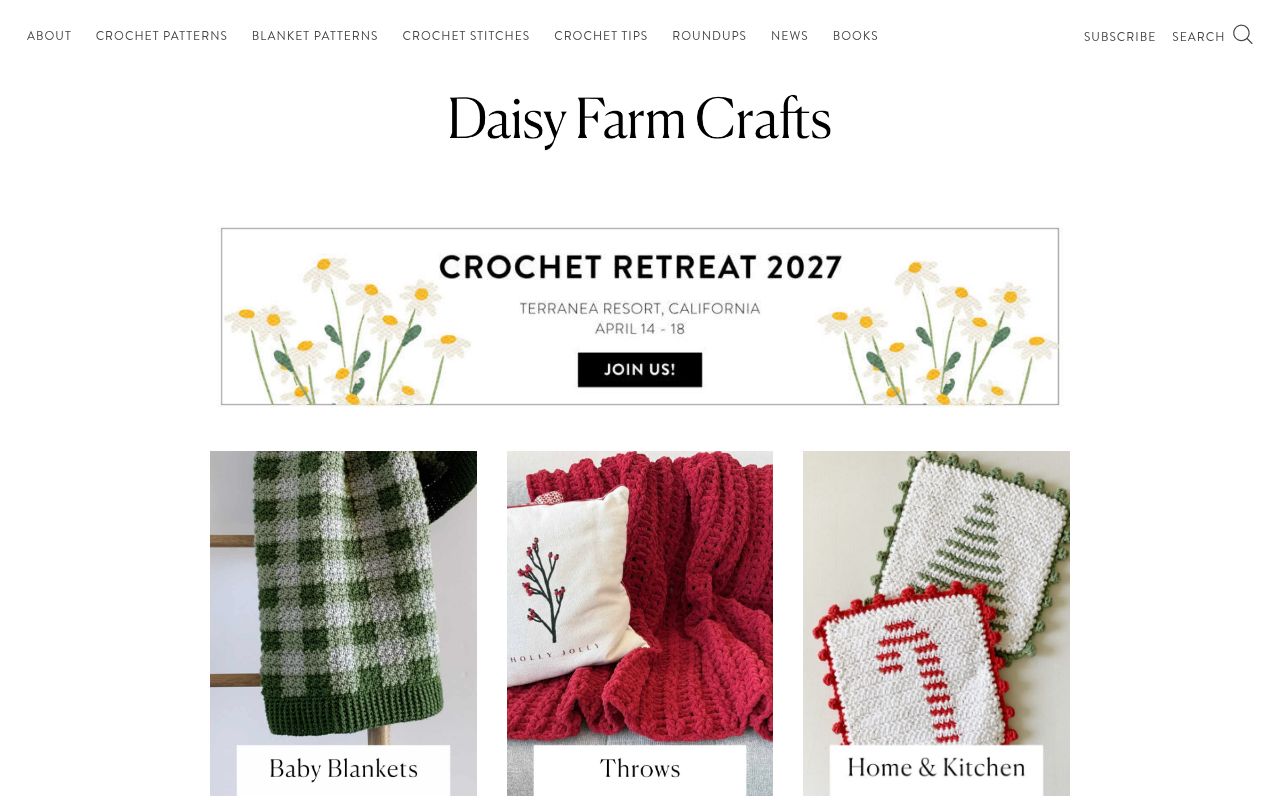
Daisy Farm Crafts makes blanket browsing unusually approachable through style-based categories including stripes, textures, chevron, gingham, classic designs, and shapes. Its homepage also separates baby blankets and throws from smaller projects such as hot pads and hats.
Those visual entry points help when you know the fabric you want but not its stitch name. Follow a design through to its individual pattern for the actual yarn and row instructions. The site also advertises books, so distinguish the freely readable tutorials from optional published collections and other purchases.
- Type
- Crochet pattern
- Best for
- Choosing blankets by visual stitch style
- License
- Free instructions; pattern copyright remains with the publisher; check individual terms before selling finished items
- Price
- Free patterns; paid patterns optional
Hooked by Robin
Crochet pattern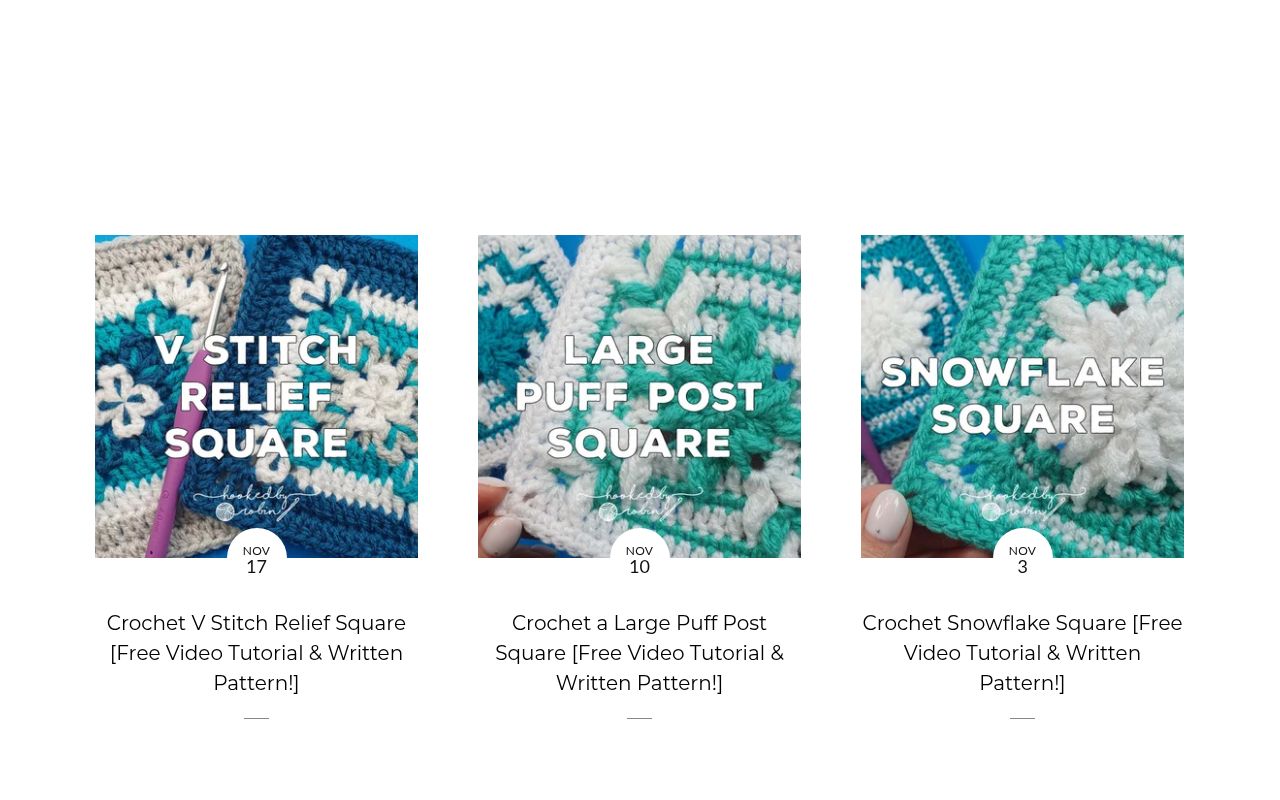
Hooked by Robin’s homepage explicitly welcomes readers to free crochet patterns and tutorials, with posts labeled by project and stitch categories. Examples include squares and motifs, quick projects, and stitch lessons, so the archive can support both a finished make and a new technique.
Many visible project titles advertise written instructions and video tutorials together. That combination is helpful when the movement of a hook is harder to understand than the abbreviation. Choose a complete project post when you need quantities, rather than assuming a stitch demonstration includes blanket sizing.
- Type
- Crochet pattern
- Best for
- Combining written patterns with video demonstrations
- License
- Free instructions; pattern copyright remains with the publisher; check individual terms before selling finished items
- Price
- Free patterns; paid patterns optional
Fiber Flux
Crochet pattern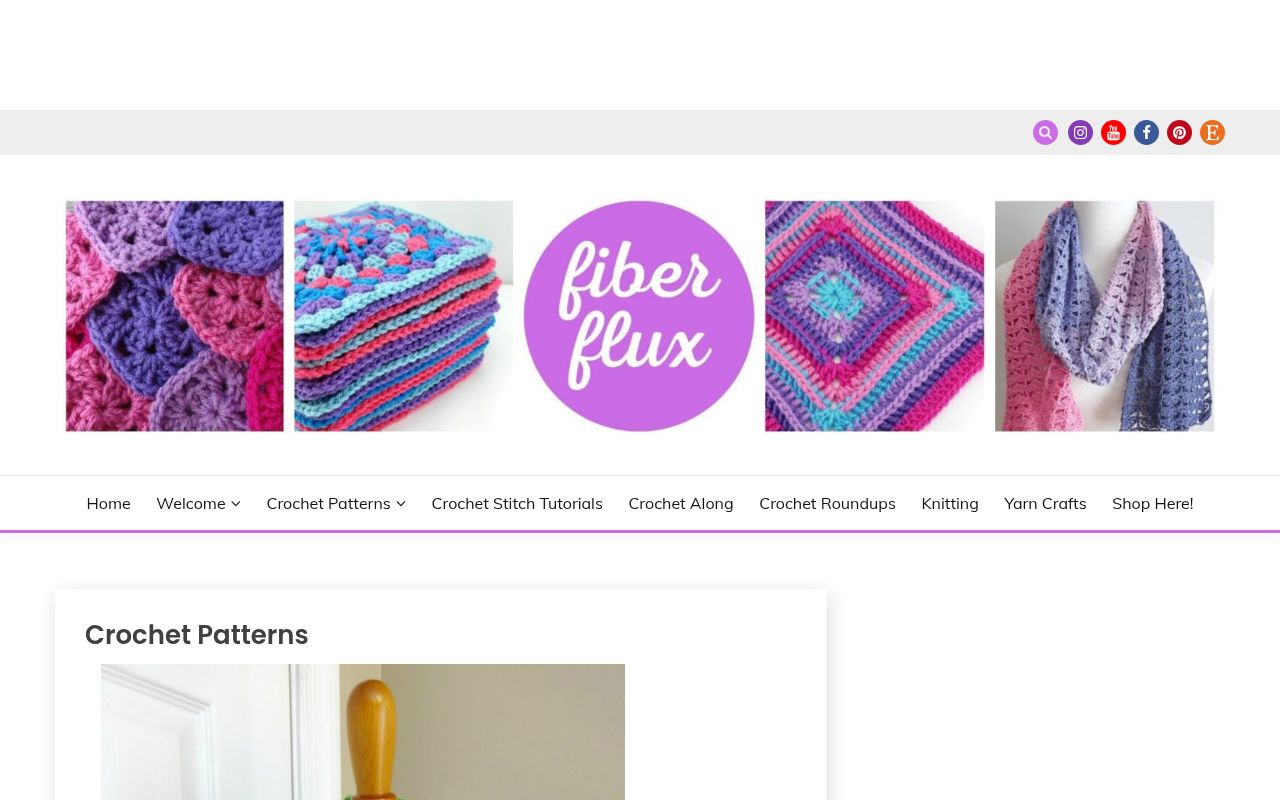
Fiber Flux’s free-pattern index links to a varied selection of named crochet projects, including the Family Room Throw and Alpine Steps Square. It is an index rather than one continuous set of instructions, so each project opens its own tutorial.
The Family Room Throw illustrates the site’s written pattern plus video approach, with an optional purchased PDF offered separately. This arrangement suits readers who want to try the on-page directions before paying for a cleaner printout. Verify the chosen tutorial’s own materials instead of borrowing quantities from a neighboring project.
- Type
- Crochet pattern
- Best for
- Browsing named projects before choosing a tutorial format
- License
- Free instructions; pattern copyright remains with the publisher; check individual terms before selling finished items
- Price
- Free patterns; paid patterns optional
Choose yarn for the finished job
Yarn weight and fiber influence the fabric more than the photograph suggests. Compare the recommended yarn’s length per ball, composition, and structure before substituting. Two yarns carrying the same broad weight label can behave differently.
Make a sample with the intended stitch rather than assuming an appealing color is enough to guarantee the right result. Keep the ball band and your substitution notes together for later reference.
Buy with total yardage and care needs in mind, not just a rough number of balls. Check whether the maker gives quantities per color or a combined total.
Purchase matching dye lots where consistency matters, and allow a sensible margin for swatching and finishing. If the item will be washed often, test your chosen yarn and any contrasting colors before investing the time required for the full project.
Match the hook to a measured sample
Use the listed hook size as a starting point, then check the resulting fabric against the pattern’s requirements. Your tension may differ from the designer’s even when the yarn appears similar.
Record the hook in millimeters because letter and number systems can be ambiguous across brands. A comfortable grip matters too, especially when a project involves many hours of repeated stitches and long periods of holding the same position.
Wash and dry a representative gauge swatch in the way you expect to care for the finished object. Measure it after the fabric has settled, and compare both stitch and row counts when dimensions matter.
Changing only the starting chain will not necessarily correct a mismatch in height. Keep the sample until finishing so you have a reliable record of the fabric and can check changes in tension.
Read terminology before the first row
Confirm whether the instructions use US or UK crochet terms before interpreting abbreviations. A US single crochet corresponds to a UK double crochet, while a US double crochet corresponds to a UK treble.
The same letters can therefore describe different stitch heights. Read the designer’s abbreviation key and special-stitch notes rather than translating from memory halfway through the project, when a mistaken assumption is harder to undo.
Treat charts and written directions as complementary tools when both are supplied. Check the symbol legend, where the round or row begins, and which direction the diagram is meant to be followed.
Mark repeats in a way that does not obscure the source. If something looks inconsistent, compare the stitch count and surrounding instructions before deciding that the chart or your own interpretation must be wrong.
Plan the work and keep useful notes
Before making a large commitment, read the entire construction sequence, including assembly and edging. List unfamiliar techniques and try them in a small sample.
Separate mandatory steps from optional embellishments so a deadline does not depend on a decorative detail you have not practiced. Save the source URL and project name with your notes; a screenshot of a finished photograph is not enough to reconstruct the instructions later.
Keep a short progress record showing yarn colors, hook size, completed sections, and any deliberate changes. Use removable markers to identify important positions rather than relying on visual memory after a break.
Count at the points specified by the designer and resolve discrepancies immediately. Small differences are easier to investigate while the relevant stitches are still accessible than after they have been buried under several additional rounds or rows.
Finish carefully and respect the designer
Allow time for ends, joining, and final inspection, not just the visible crocheting. Secure ends using a method appropriate to the yarn and avoid assuming a tight knot will solve every problem.
Follow blocking guidance cautiously, considering how the fiber responds to water and heat. Examine joins and attachments before gifting. If your sample behaved unexpectedly during washing, resolve that issue before applying the same treatment to the complete item.
Free access is not a blanket copyright license. Keep the pattern text, charts, and photographs with their creator instead of reposting them as your own tutorial. Permission to sell finished crochet is a separate question from permission to distribute instructions.
Read the specific designer’s current terms and ask when the wording is unclear. Where credit is requested, provide it accurately, and use your own photographs when presenting work for sale.
Build a small, useful pattern collection
Bookmark sources according to what they help you do, rather than saving dozens of indistinguishable homepages. One folder might hold beginner lessons, another dependable accessories, and another more ambitious projects.
Add a brief note about why a tutorial appealed to you. This makes your collection searchable by purpose and helps prevent repeatedly browsing the same large library without actually choosing something to make.
Revisit access conditions and current instructions when starting an older bookmark. Websites move, yarns disappear, and designers sometimes publish corrections or improved explanations. Check for a notes section before relying on an old printout.
If a page is unavailable, look for an official replacement from the creator rather than a copied version that may omit important details. A smaller collection of reliable links is more useful than a large unverified archive.