
Good free amigurumi patterns do more than promise a cute animal. They explain shaping, show how separate parts fit together, and help you judge how much finishing the project involves.
The sources below range from miniature snakes to fantasy creatures, with several larger libraries for exploring beyond one toy. Choose a manageable construction method first; a small project with many tiny pieces can be more fiddly than a larger animal with a straightforward body.
You will find both individual projects and collections here, so the entries serve different purposes. A dedicated tutorial is useful when you already know which creature you want. A free toy-pattern archive helps compare silhouettes, sewing requirements, and themes before choosing.
Some designers offer optional printables, and selected downloads may involve signup. Treat the live project instructions as your reference for current supplies, rather than copying requirements from a visually similar animal elsewhere.
Toy making also asks you to consider the recipient before the first stitch. Decorative amigurumi and children’s toys do not necessarily need the same finishing choices, and a published pattern is not a safety certification.
Think about washable fibers, secure embroidery, attached parts, and stuffing containment. Keep stitch counts and placement notes as you work, especially when paired limbs or carefully positioned facial features determine whether the finished character looks balanced.
Quick picks at a glance
| # | Resource | License | Best for |
|---|---|---|---|
| 1 | PlanetJune | Free instructions; pattern copyright remains with the publisher; check individual terms before selling finished items | Trying small sculptural toys with an ad-free reading experience |
| 2 | Jess Huff | Free instructions; pattern copyright remains with the publisher; check individual terms before selling finished items | Browsing coordinated animal designs and low-sew options |
| 3 | StringyDingDing | Free instructions; pattern copyright remains with the publisher; check individual terms before selling finished items | Finding playful food, animal, and seasonal softies |
| 4 | A Menagerie of Stitches | Free instructions; pattern copyright remains with the publisher; check individual terms before selling finished items | Making miniature seasonal characters in themed groups |
| 5 | Crochet Jellyfish by One Dog Woof | Free instructions; pattern copyright remains with the publisher; check individual terms before selling finished items | Crocheting a jellyfish with curly tentacles |
| 6 | All About Ami | Free instructions; pattern copyright remains with the publisher; check individual terms before selling finished items | Exploring characterful crochet through a designer’s project index |
| 7 | Esther the Elephant by Jess Huff | Free instructions; pattern copyright remains with the publisher; check individual terms before selling finished items | Making Esther the Elephant from detailed online instructions |
| 8 | Dante the Dragon by Jess Huff | Free instructions; pattern copyright remains with the publisher; check individual terms before selling finished items | Trying a fantasy creature after simpler animal toys |
| 9 | Crochet Cat by Jess Huff | Free instructions; pattern copyright remains with the publisher; check individual terms before selling finished items | Comparing calico, tabby, and Siamese toy-cat looks |
| 10 | Baby Snake by PlanetJune | Free instructions; pattern copyright remains with the publisher; check individual terms before selling finished items | Practicing a long narrow shape without sewing limbs |
PlanetJune
Crochet pattern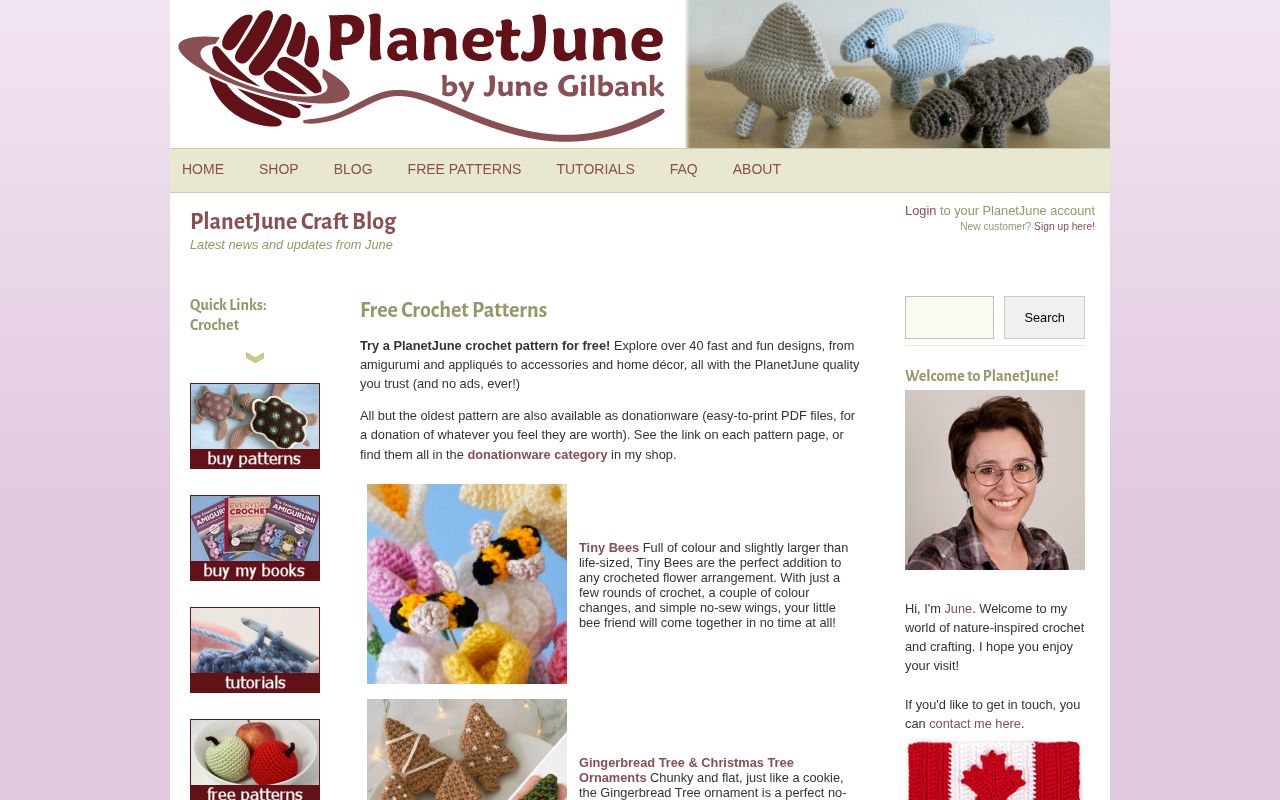
PlanetJune’s free collection spans amigurumi, appliqués, accessories, and home décor, with photographs and descriptions explaining what makes each design different. Toy options include Tiny Bees, Baby Snake, and an Amigurumi Beach Ball, offering alternatives to the familiar seated teddy.
The collection expressly promises no ads, a practical benefit when following short rounds on a small screen. Select the actual project page to see its construction and donation information. This archive is especially appealing when a compact, distinctive shape matters more than an enormous list of similar animals.
- Type
- Crochet pattern
- Best for
- Trying small sculptural toys with an ad-free reading experience
- License
- Free instructions; pattern copyright remains with the publisher; check individual terms before selling finished items
- Price
- Free patterns; paid patterns optional
Jess Huff
Crochet pattern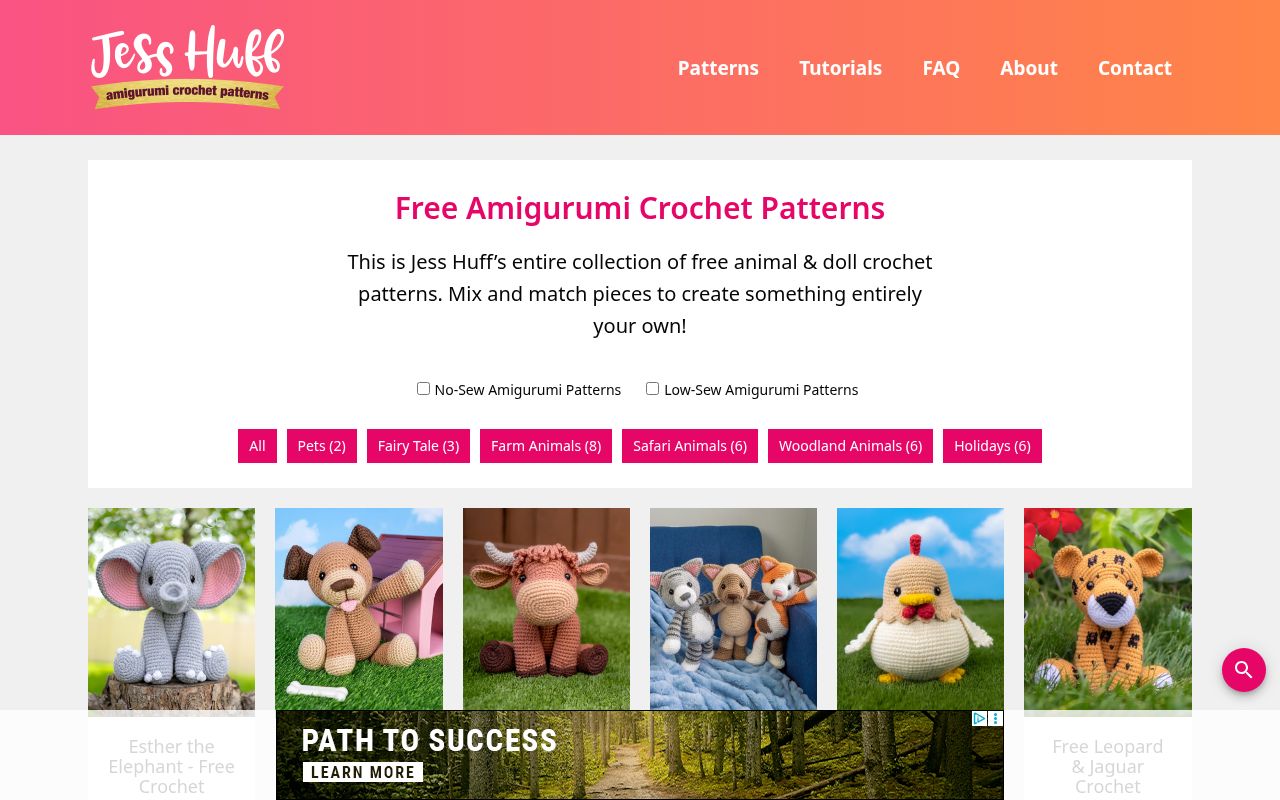
Jess Huff organizes her free animal and doll collection with no-sew and low-sew categories, plus subjects such as farm animals, woodland creatures, safari animals, and holidays. Named designs include Esther the Elephant, Dante the Dragon, and Ginnie the Giraffe, making it easy to compare related toy shapes.
The page also displays email signup offers for selected printable PDFs, separate from its browsing cards. Open a chosen animal to check the actual instructions and finishing steps. This is a strong source when assembly preferences matter as much as the animal itself.
- Type
- Crochet pattern
- Best for
- Browsing coordinated animal designs and low-sew options
- License
- Free instructions; pattern copyright remains with the publisher; check individual terms before selling finished items
- Price
- Free patterns; paid patterns optional
StringyDingDing
Crochet pattern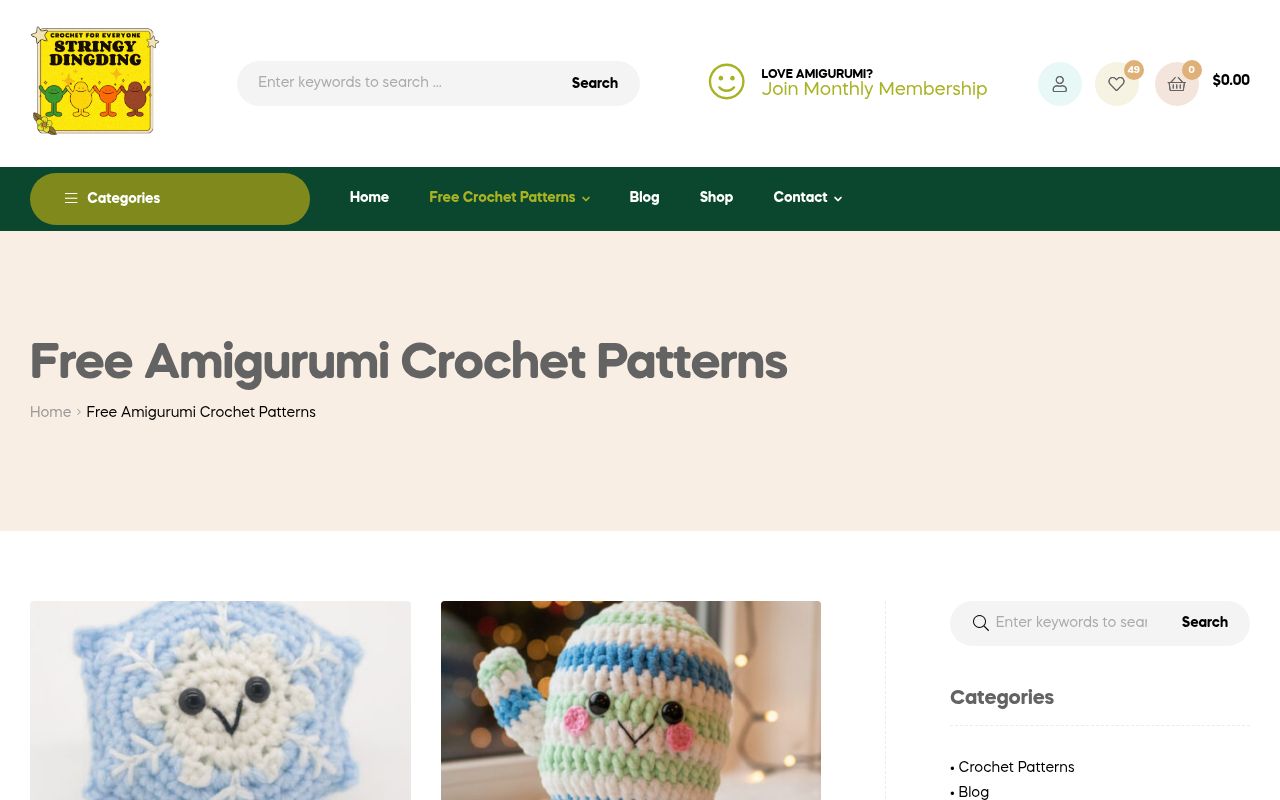
StringyDingDing’s free-amigurumi archive features an eclectic mix of animals, food characters, and seasonal designs, rather than only traditional nursery toys. The linked site highlights projects such as a caterpillar, milk and cereal bundle, and a no-sew black cat.
Those varied subjects make the collection useful for small themed gifts and imaginative display pieces. Follow the individual post to establish materials and construction, since an archive preview is not the complete pattern. Books and shop products are promoted separately, so stay with posts explicitly labeled as free patterns.
- Type
- Crochet pattern
- Best for
- Finding playful food, animal, and seasonal softies
- License
- Free instructions; pattern copyright remains with the publisher; check individual terms before selling finished items
- Price
- Free patterns; paid patterns optional
A Menagerie of Stitches
Crochet pattern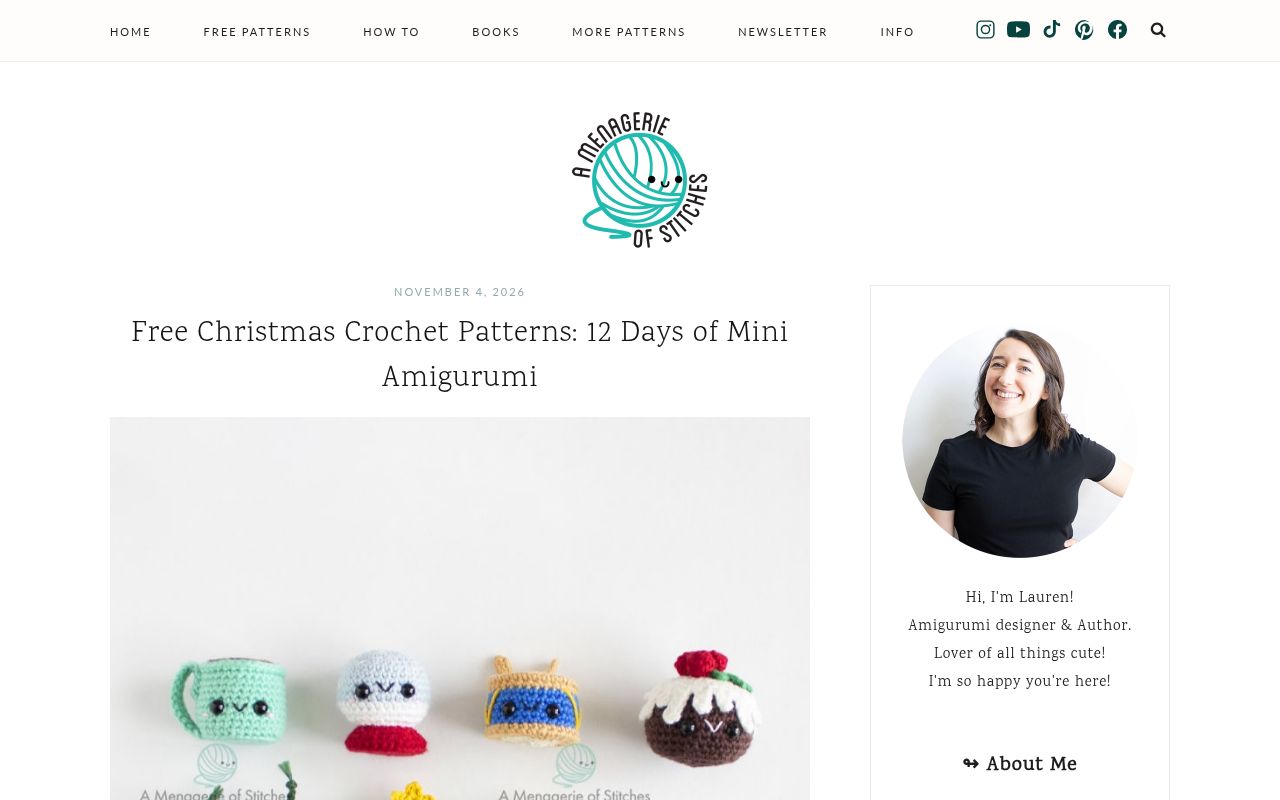
A Menagerie of Stitches presents its free designs through seasonal mini-amigurumi collections, including spring projects and Christmas crochet-alongs. Its free-pattern archive links to individual subjects such as a gnome, carrot, sun, and sprouted plant.
That gives readers a choice between one small make and a coordinated set of miniatures with a shared mood. The archive is paginated, so older designs require moving beyond the first screen. Open each tutorial for construction details rather than assuming every miniature uses the same yarn, hook, or assembly method.
- Type
- Crochet pattern
- Best for
- Making miniature seasonal characters in themed groups
- License
- Free instructions; pattern copyright remains with the publisher; check individual terms before selling finished items
- Price
- Free patterns; paid patterns optional
Crochet Jellyfish by One Dog Woof
Crochet pattern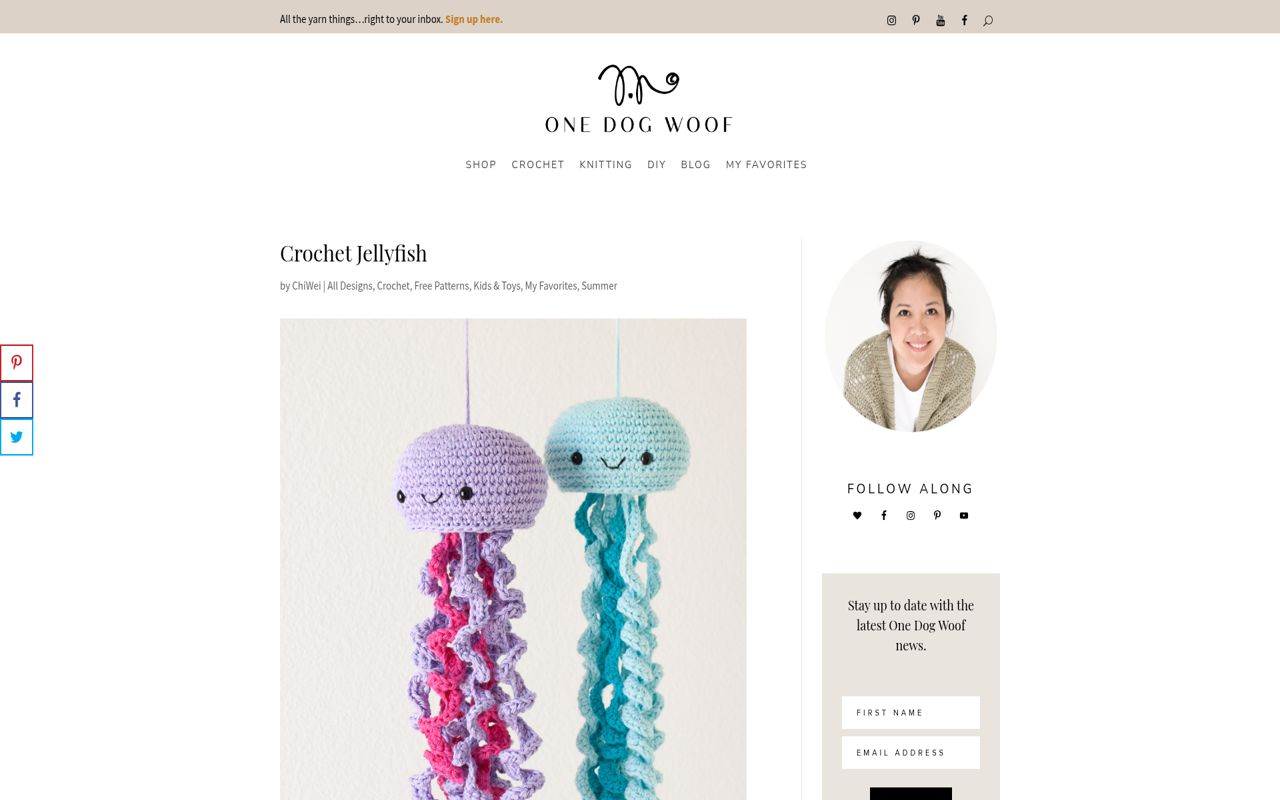
One Dog Woof’s Crochet Jellyfish page publishes the instructions online and offers an optional ad-free, comment-free PDF through Etsy or Ravelry. Its supply list names a 4 mm hook, while the tutorial separates abbreviations from the actual construction directions.
The distinctive tentacles give this softie a different silhouette from a conventional animal doll. In a response to a reader, the designer welcomes sales of finished makes and appreciates credit. For young recipients, independently assess eye attachments and dangling parts rather than treating a cute photograph as a safety specification.
- Type
- Crochet pattern
- Best for
- Crocheting a jellyfish with curly tentacles
- License
- Free instructions; pattern copyright remains with the publisher; check individual terms before selling finished items
- Price
- Free patterns; paid patterns optional
All About Ami
Crochet pattern
All About Ami’s pattern index offers a route into Stephanie Lau’s crochet projects rather than a marketplace of unrelated pattern sellers. Use it to locate an individual toy tutorial and inspect the original post before choosing yarn.
The site also publishes other kinds of crochet, including the Summer Days Daisy Bag, so the index should not be mistaken for an exclusively amigurumi catalog. This broader context suits makers who enjoy a designer’s aesthetic across different projects. Check each selected entry’s access and format instead of assuming everything linked is an identical download.
- Type
- Crochet pattern
- Best for
- Exploring characterful crochet through a designer’s project index
- License
- Free instructions; pattern copyright remains with the publisher; check individual terms before selling finished items
- Price
- Free patterns; paid patterns optional
Esther the Elephant by Jess Huff
Crochet pattern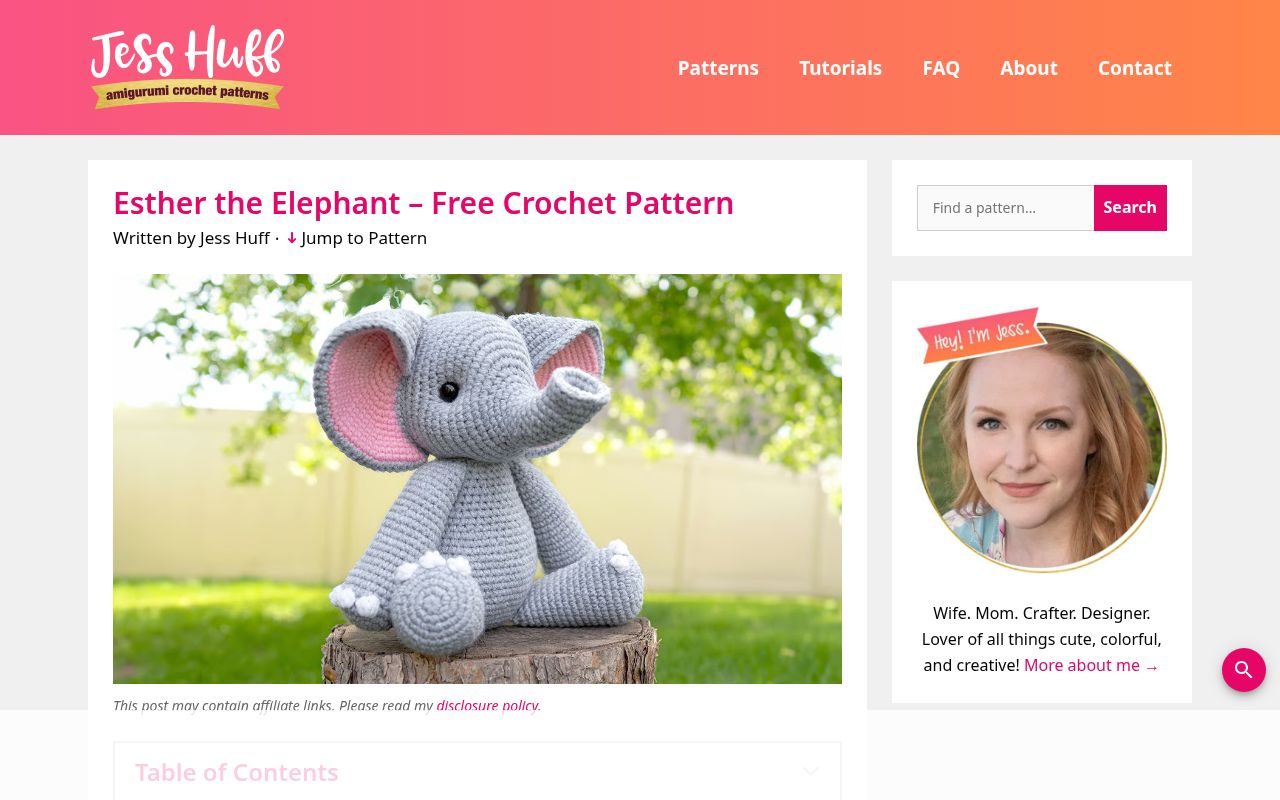
Esther the Elephant is one of Jess Huff’s free animal patterns, with a dedicated page rather than only an inspirational photograph. Its instructions and project information make it possible to plan the toy before starting the first round.
The elephant’s trunk, ears, and separate features offer a useful study in how shaped components create a recognizable character. Read the assembly directions alongside the crocheting sections, because placement affects the expression. Consult the current page for supplies and any printable-copy options instead of guessing quantities from another Huff animal.
- Type
- Crochet pattern
- Best for
- Making Esther the Elephant from detailed online instructions
- License
- Free instructions; pattern copyright remains with the publisher; check individual terms before selling finished items
- Price
- Free patterns; paid patterns optional
Dante the Dragon by Jess Huff
Crochet pattern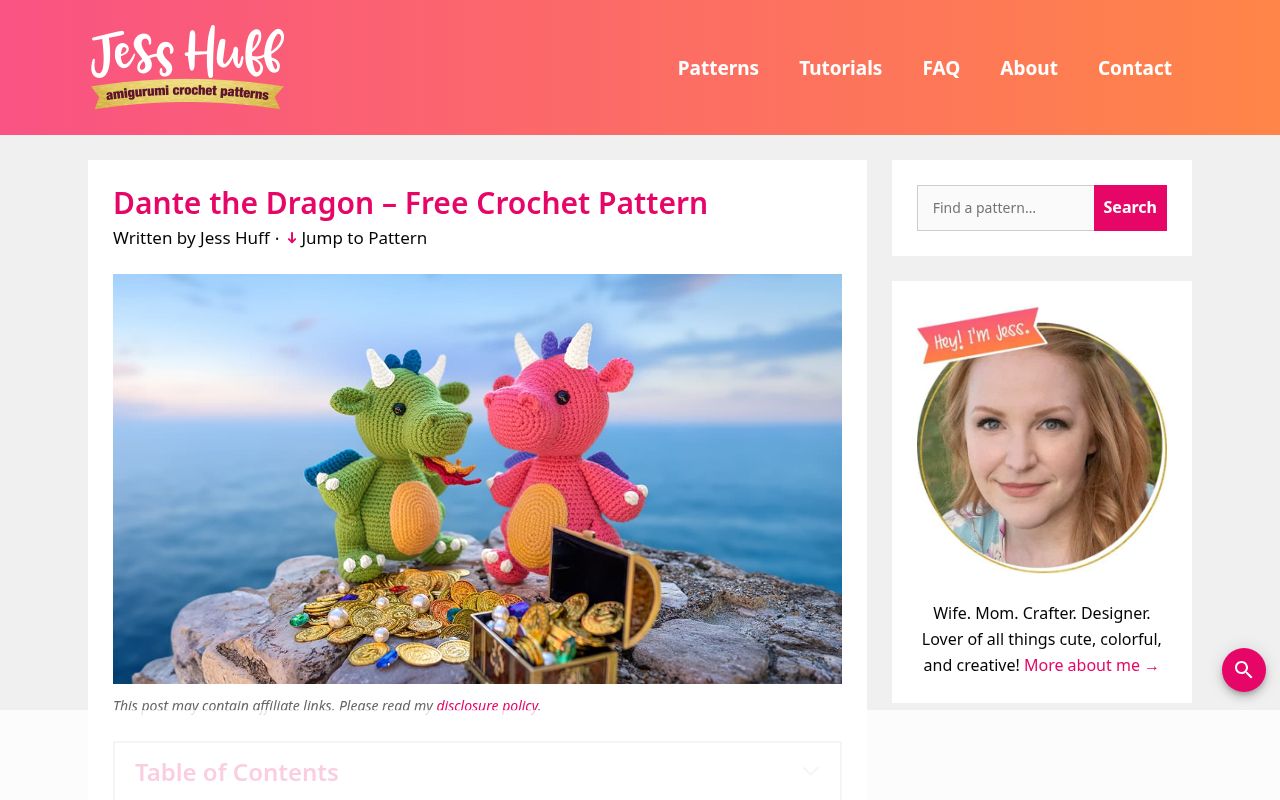
Dante the Dragon extends Jess Huff’s animal collection into fantasy amigurumi, with the full project presented on its own free-pattern page. The recognizable dragon shape makes this a more varied undertaking than repeating a round head and plain limbs.
Study the component instructions and assembly sequence before selecting a deadline, especially if sewing is not your favorite stage. This is a project to approach section by section, keeping matching pieces together as they are finished. Use the pattern’s own materials guidance rather than scaling supplies directly from Esther or another animal.
- Type
- Crochet pattern
- Best for
- Trying a fantasy creature after simpler animal toys
- License
- Free instructions; pattern copyright remains with the publisher; check individual terms before selling finished items
- Price
- Free patterns; paid patterns optional
Crochet Cat by Jess Huff
Crochet pattern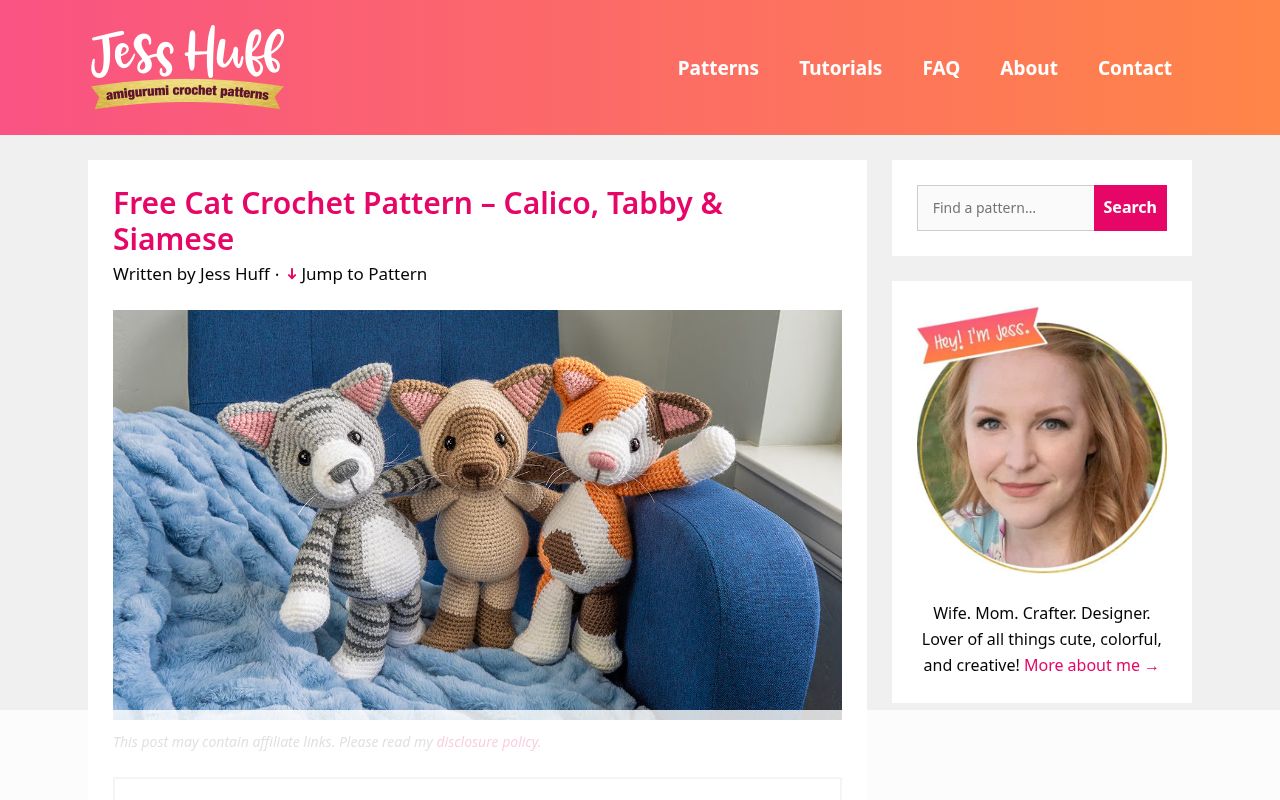
Jess Huff’s cat tutorial specifically presents calico, tabby, and Siamese variations, making color arrangement a central reason to choose this page. Instead of hunting for three unrelated silhouettes, you can examine how different markings change the impression of a crocheted cat.
Read the variation-specific directions carefully before winding smaller yarn amounts or beginning paired parts. This page is particularly useful for a pet-inspired gift, although matching a real animal may still require your own color decisions. Keep notes on the chosen version so details from different cats do not become accidentally mixed.
- Type
- Crochet pattern
- Best for
- Comparing calico, tabby, and Siamese toy-cat looks
- License
- Free instructions; pattern copyright remains with the publisher; check individual terms before selling finished items
- Price
- Free patterns; paid patterns optional
Baby Snake by PlanetJune
Crochet pattern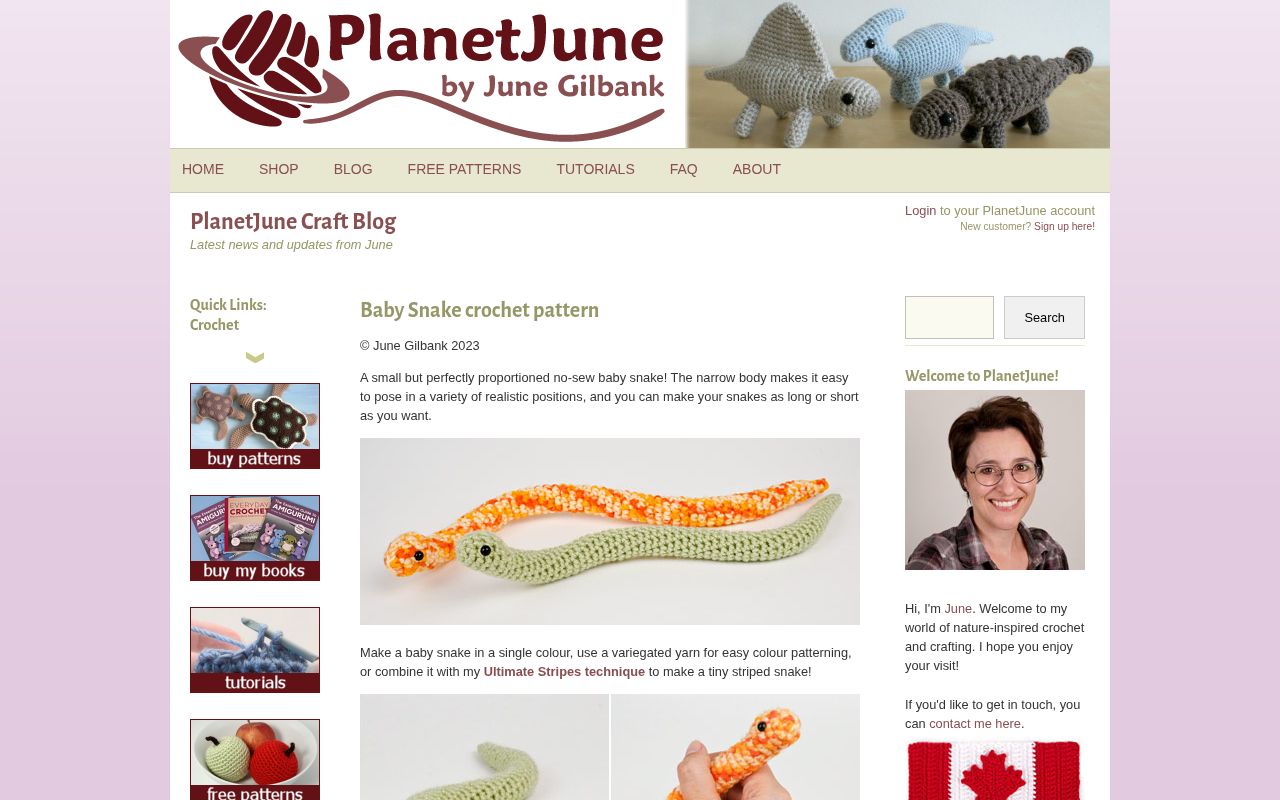
PlanetJune describes Baby Snake as a small, proportioned, no-sew snake whose length can be adjusted. That makes it a useful departure from toys assembled from numerous limbs and accessories. The narrow poseable body puts attention on consistent stitches and gradual shaping rather than facial complexity.
Read the dedicated tutorial before deciding how long your snake should become, and record any changes as you work. Its adaptable length is convenient for using yarn thoughtfully, but a change in size should still be checked against the recipient and intended use.
- Type
- Crochet pattern
- Best for
- Practicing a long narrow shape without sewing limbs
- License
- Free instructions; pattern copyright remains with the publisher; check individual terms before selling finished items
- Price
- Free patterns; paid patterns optional
Work tight spirals from a neat magic ring
Most amigurumi starts with a magic ring, an adjustable loop that pulls the first round closed so no hole remains at the top of a head or body.
If the ring keeps slipping, a chain-two start works too, but tug the tail firmly before weaving it in. Practice the ring with smooth, light-colored yarn so each stitch stays visible while you learn.
Toys are usually worked in continuous spirals rather than joined rounds, which means the start of each round drifts slightly. Place a stitch marker in the first stitch of every round and move it up as you go.
Count stitches at the end of each increase round, because one missed increase makes a sphere lopsided long before you notice it by eye.
Stuff, shape and close each piece
Add polyester fiberfill in small tufts instead of one large wad, pushing each piece into the far end with a chopstick or the back of a hook.
Stop several rounds before the opening closes and stuff the final section firmly. A head that feels soft at the start will usually sag after a few weeks of handling.
When the pattern calls for decreases, try the invisible decrease, worked through front loops only, so the fabric stays smooth.
Close the last round by threading the tail through the front loops and pulling it tight like a drawstring. Then bury the tail through the stuffing and out the other side, so it cannot work loose.
Join limbs and heads so they stay put
Pin every limb in place with long sewing pins and look at the toy from the front, side and back before stitching. Small differences in placement change the whole expression. Sew with the same yarn as the piece, using a tapestry needle, and pass through both the limb and the body several times.
Some designers in this list publish no-sew or low-sew versions that crochet arms and ears directly onto the body. They take longer to understand the first time but save a lot of finishing work later. If you dislike sewing parts together, filter for those patterns first and keep traditional sewn designs for later.
Selling amigurumi and respecting the pattern
Many amigurumi designers allow you to sell finished toys made from their free patterns, often with a request for credit in the listing.
Others reserve that right or ask you to buy a licence. Read the note on each pattern page, save a copy of the terms with your project notes, and follow the wording exactly.
Whatever the selling rules say, the pattern text and photos remain the designer's work. Photograph your own finished toy, link to the original page when people ask how you made it, and never share the PDF itself. That small courtesy keeps free patterns coming from the people who write them.
Make toy finishing appropriate to the recipient
For amigurumi fabric, inspect the spaces between stitches before adding stuffing. If filling is visible or can easily escape, reassess the yarn and hook combination using a sample.
Stuff gradually to preserve the intended shape instead of forcing in a large amount at the end. Mark facial positions before attaching features permanently, and compare paired parts side by side while there is still time to adjust them.
Think carefully about eyes, embellishments, and dangling pieces for any toy intended for a child. Products sold as safety eyes are not a universal guarantee of suitability.
Consider securely worked embroidered features and consult applicable toy-safety guidance for the recipient’s age and your location. Do not improvise weighted fillings or detachable decorations without understanding the consequences. A decorative shelf creature and a frequently handled plaything call for different decisions.