
A skirt is a useful starting point for learning garment construction without tackling collars or sleeves. These free skirt sewing patterns range from easygoing elastic waists to tailored bands and invisible zippers. Choose between circles, wraps, pencil shapes and longer silhouettes according to what you actually enjoy wearing.
The collection includes official pattern downloads and measurement-based tutorials, not copies uploaded by other sewists. Fabric choice matters as much as silhouette: fluid viscose, crisp suiting and stretchy jersey behave very differently. Read the original materials list before buying yardage, especially when a design relies on stretch or a particular fabric width.
Use the construction details below to pick a manageable challenge rather than judging difficulty from the photograph alone. A plain skirt can require patient bias handling, while a dramatic circle might have relatively few seams. After the sources, you will find practical guidance on measurements, waistbands, printing, hems and selling your finished work.
Quick picks at a glance
| # | Resource | License | Best for |
|---|---|---|---|
| 1 | Elastic Waist Circle Skirt by So Sew Easy | Free pattern; commercial-use permission not established on the project page | Fullness with a pull-on waist |
| 2 | Easy Adjustable Wrap Skirt by So Sew Easy | Free pattern; commercial-use permission not established on the project page | Adjustability without side seams |
| 3 | Flouncy Bouncy Skirt by So Sew Easy | Free pattern; commercial-use permission not established on the project page | Fitted hips with a swinging hem |
| 4 | Indigo Bias Skirt by Mood Sewciety | Free pattern; commercial-use permission not established on the project page | Soft movement with elastic support |
| 5 | Fiera Maxi Skirt by Mood Sewciety | Free pattern; commercial-use permission not established on the project page | Long skirts with a polished waistband |
| 6 | Made-to-Measure Button Skirt by Sew Magazine | Free tutorial; commercial-use permission not established on the source page | A gathered skirt with a button front |
| 7 | Ruffled Linen Wrap Skirt by Makyla Creates | Free tutorial; commercial-use permission not established on the source page | Tie closures and an optional ruffled hem |
| 8 | Layla Midi Pencil Skirt by Tiana’s Closet | Free pattern; commercial-use permission not established on the project page | An understated fitted midi |
| 9 | Lana Flared Midi Skirt by Tiana’s Closet | Free pattern; commercial-use permission not established on the project page | A simple alternative to narrow skirts |
| 10 | Simple Gathered Skirt by Made Everyday | Free tutorial; commercial-use permission not established on the source page | First skirts and lightweight layered versions |
Elastic Waist Circle Skirt by So Sew Easy
Circle skirt tutorial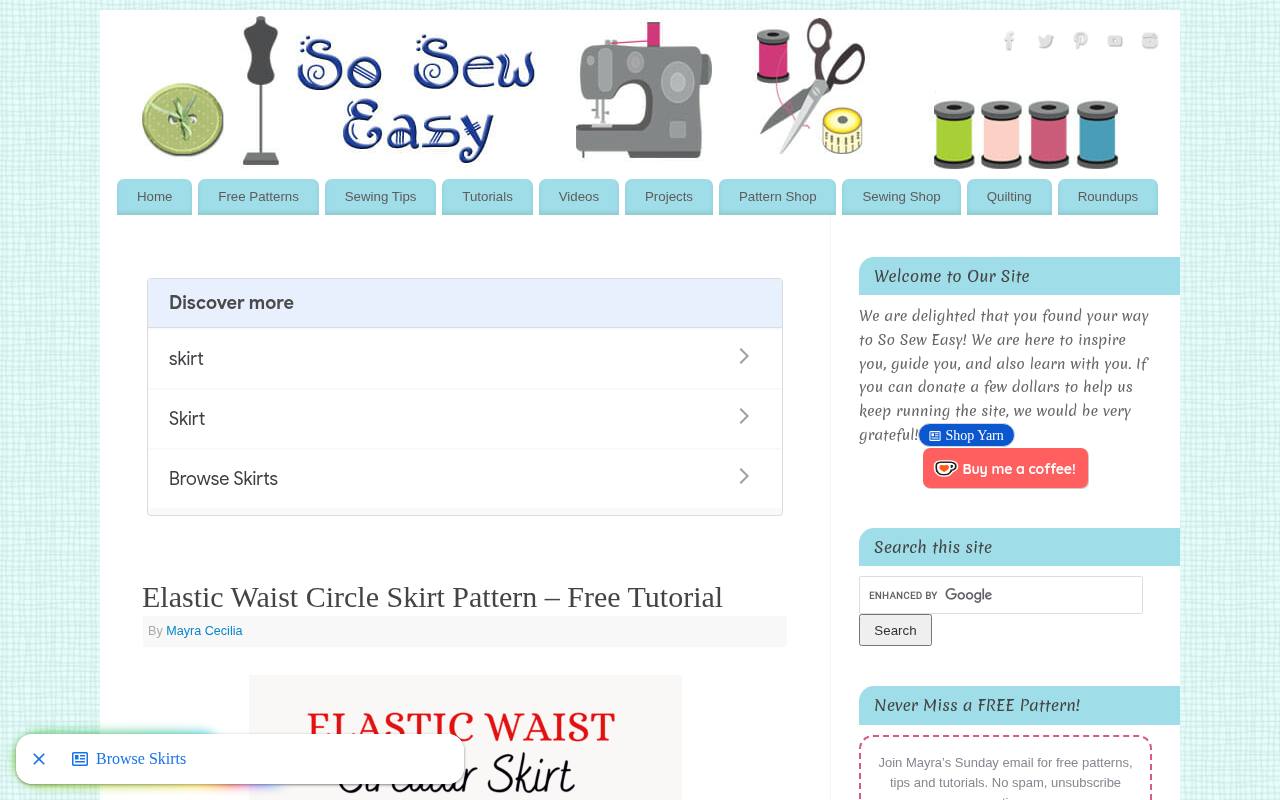
This full-circle skirt uses two side seams and elastic that expands over the hips. So Sew Easy rates the project advanced beginner and lists linen, cotton batiste, viscose and silk-backed crepe among suitable materials.
The supply list specifies one-and-a-half-inch elastic and wide fabric, while the tutorial discusses shortening or lengthening the skirt. Its large curved hem deserves attention before you choose a slippery material. The page links additional narrow-hem guidance, making this a useful project for practicing a flowing silhouette without inserting a fitted zipper closure.
- Type
- Circle skirt tutorial
- Best for
- Fullness with a pull-on waist
- License
- Free pattern; commercial-use permission not established on the project page
- Price
- Free
Easy Adjustable Wrap Skirt by So Sew Easy
Wrap skirt tutorial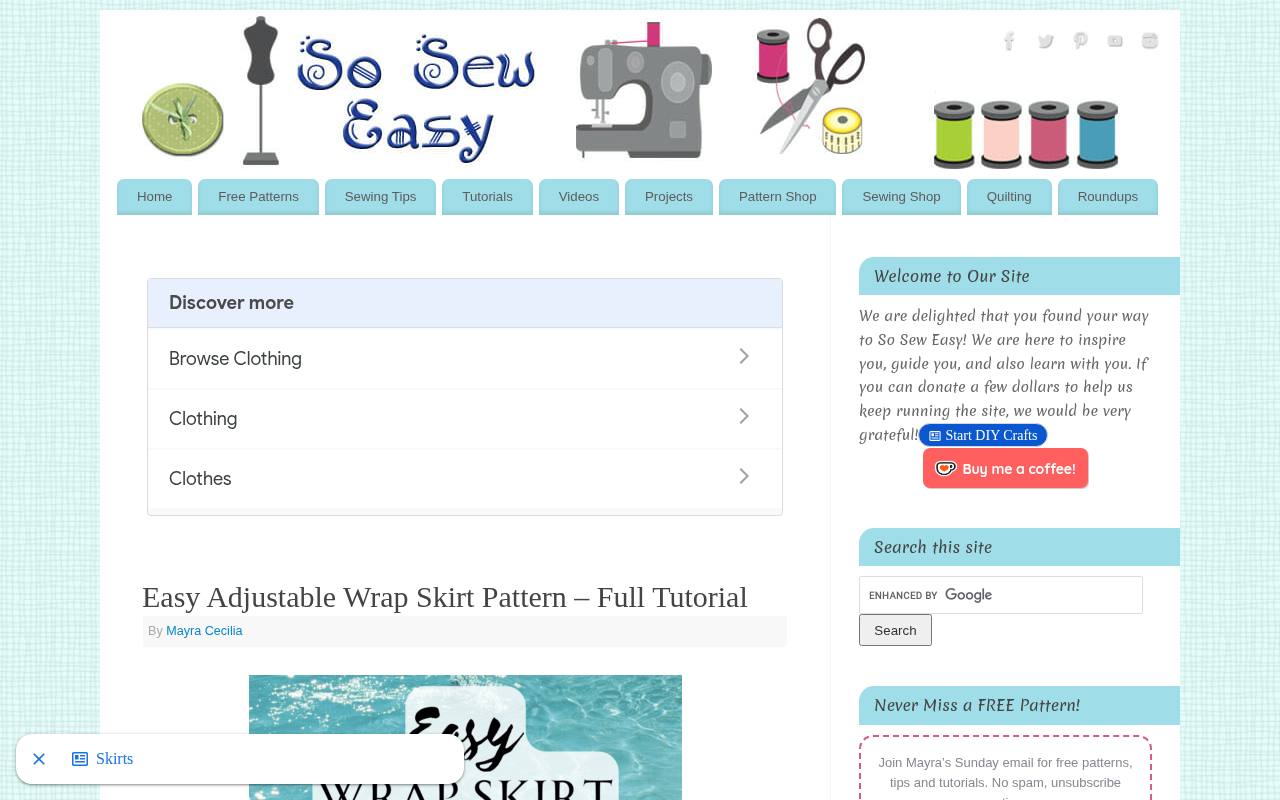
The adjustable wrap skirt avoids side seams and uses an extended waistband with a buttonhole to accommodate different waist measurements. Fabric needs to be at least 54 inches wide, and the tutorial explains that its width influences the available skirt length.
Recommended materials include satin silk, georgette and silk-backed crepe, emphasizing fluid drape rather than a rigid utility shape. The page labels the project advanced beginner and lists a buttonhole foot among the tools. Consider both the waistband adjustment and front overlap when deciding how the finished skirt should fit.
- Type
- Wrap skirt tutorial
- Best for
- Adjustability without side seams
- License
- Free pattern; commercial-use permission not established on the project page
- Price
- Free
Flouncy Bouncy Skirt by So Sew Easy
Stretch-knit skirt PDF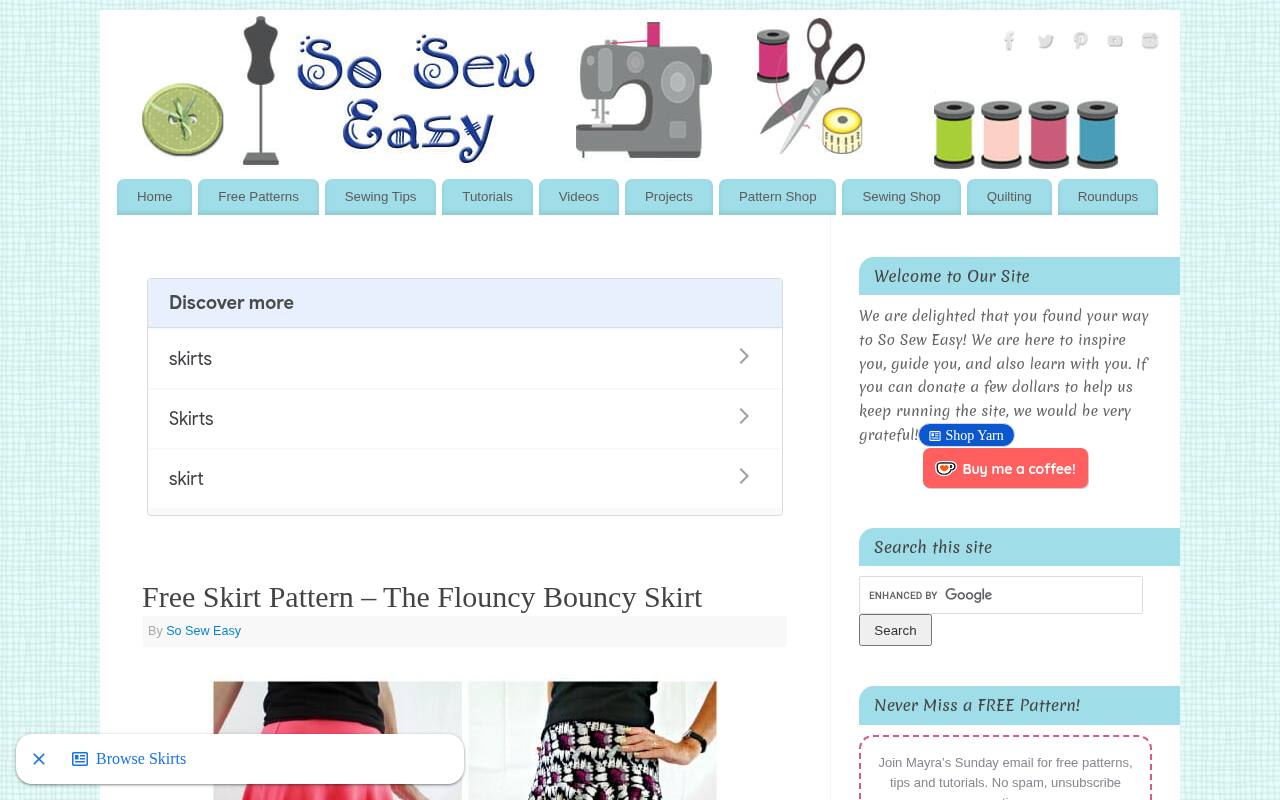
The Flouncy Bouncy Skirt fits through the waist and hips before flaring into a lively hem. Its sizes cover 34–50-inch hips, and the materials include drapey stretch knit plus three-quarter-inch elastic. The designer compares cotton jersey with ITY and prefers the softer curves of the latter.
A free A4 and US Letter PDF is linked through the pattern store, with an optional contribution rather than mandatory payment. The yardage estimate assumes 54-inch-wide fabric and a 20-inch finished length, so changing those dimensions also changes your shopping requirements.
- Type
- Stretch-knit skirt PDF
- Best for
- Fitted hips with a swinging hem
- License
- Free pattern; commercial-use permission not established on the project page
- Price
- Free
Indigo Bias Skirt by Mood Sewciety
Bias skirt PDF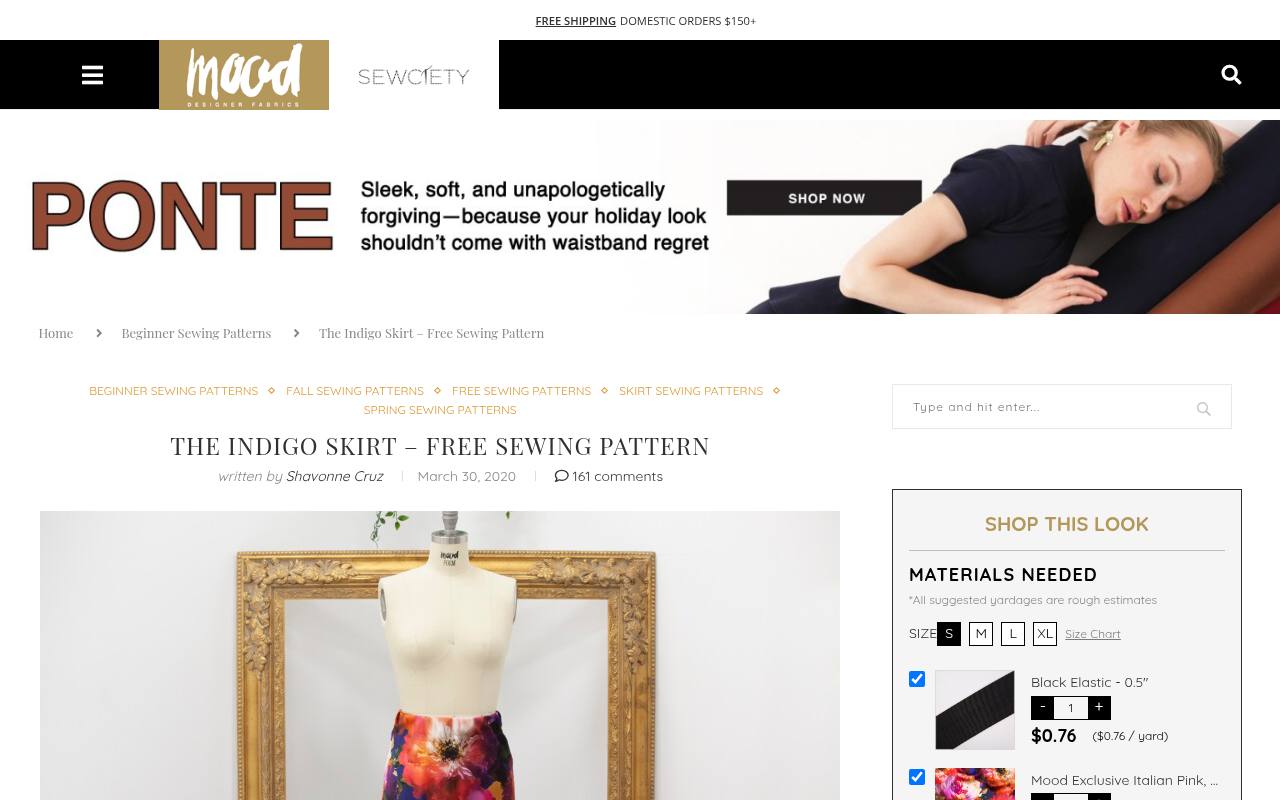
Mood’s Indigo Skirt relies on bias cutting to create movement, demonstrated in printed silk charmeuse. The free pattern extends through size 30, and the supply list calls for one-inch elastic. Illustrated construction covers grainline placement and French seams, including an optional center-back seam used to conserve fabric.
If you adopt that option, add the necessary seam allowance rather than cutting a fold piece unchanged. Directional prints and sizes above ten may require extra yardage. This is a strong choice for learning why cutting direction matters even in a relatively simple silhouette.
- Type
- Bias skirt PDF
- Best for
- Soft movement with elastic support
- License
- Free pattern; commercial-use permission not established on the project page
- Price
- Free
Fiera Maxi Skirt by Mood Sewciety
Tailored maxi skirt PDF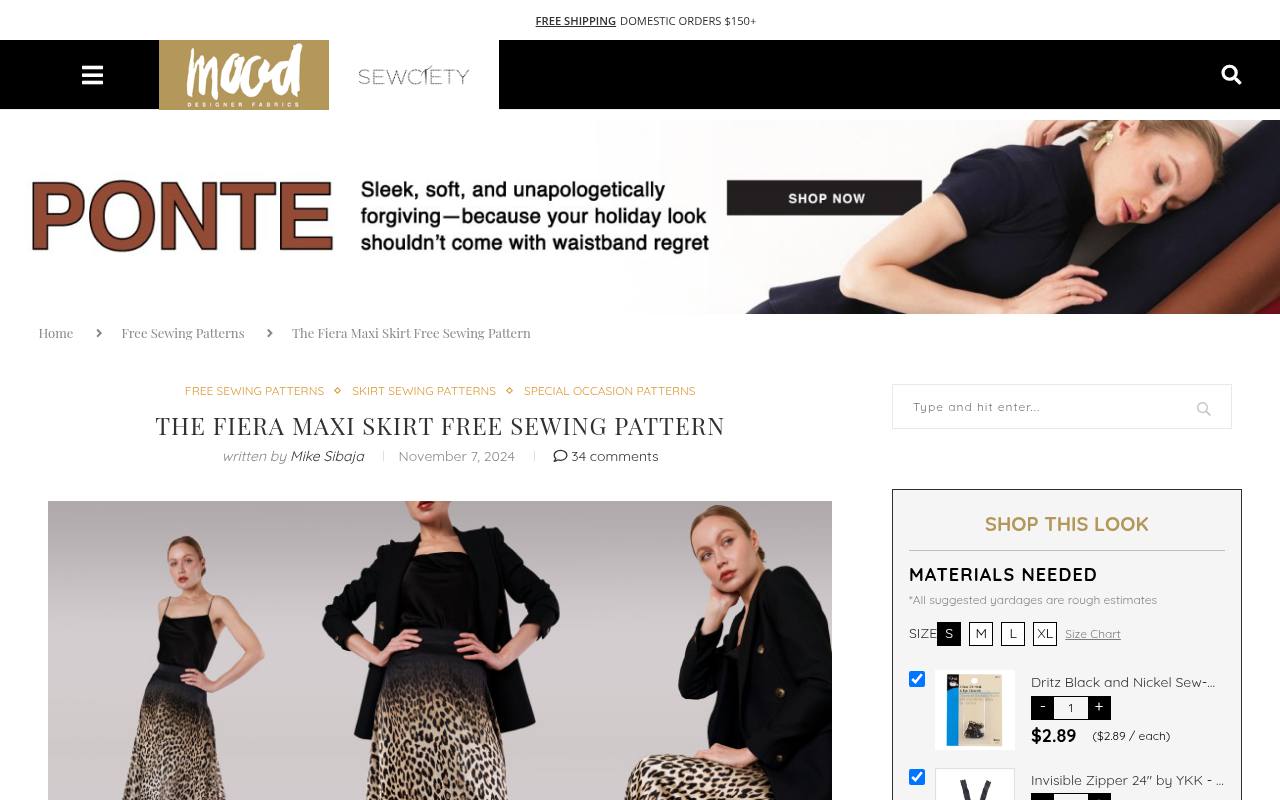
The Fiera Maxi Skirt features a tailored waistband and invisible side zipper, offering a different finish from pull-on elastic designs. Mood shows a leopard-print silk version with separate cutting layouts for panels and continuous yardage. The panel arrangement covers sizes 00–22, while the yardage layout addresses sizes 24–32.
Construction begins with a French seam, and the accompanying silk advice discusses fine needles, thread and stitch length. Choose this pattern for its clean waist treatment and long line, allowing time to handle a slippery fabric carefully rather than rushing the seams.
- Type
- Tailored maxi skirt PDF
- Best for
- Long skirts with a polished waistband
- License
- Free pattern; commercial-use permission not established on the project page
- Price
- Free
Made-to-Measure Button Skirt by Sew Magazine
Measured cutting tutorial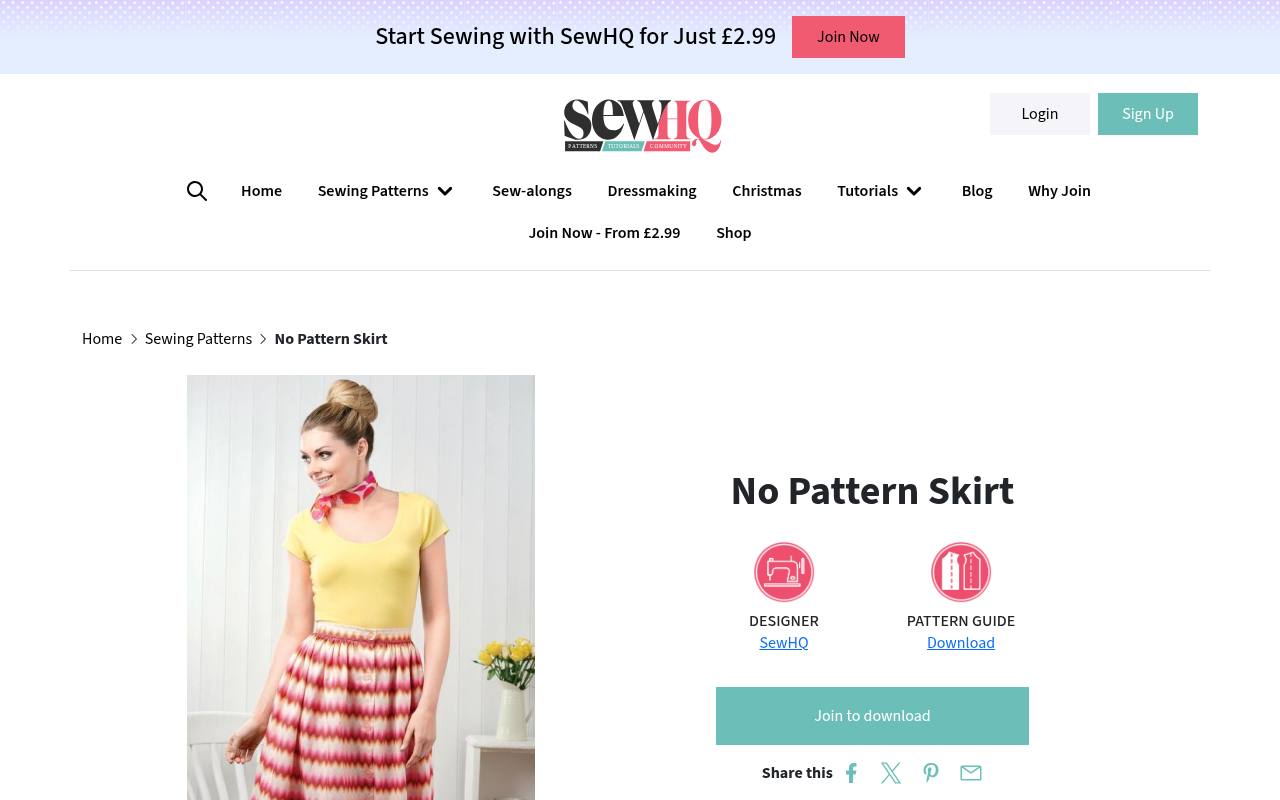
Sew Magazine’s No Pattern Skirt builds a gathered silhouette from rectangles rather than a tiled PDF. The free instructions explain how to measure the skirt length and construct a waistband using your waist measurement, ease and front overlap.
Supplies include four buttons and lightweight interfacing, with 140-centimeter-wide fabric specified in the materials list. You can read the cutting and sewing steps directly on the page without obtaining a download. This is useful for learning waistband calculations, although you should plan extra fabric when increasing either fullness or length.
- Type
- Measured cutting tutorial
- Best for
- A gathered skirt with a button front
- License
- Free tutorial; commercial-use permission not established on the source page
- Price
- Free
Ruffled Linen Wrap Skirt by Makyla Creates
Self-drafted wrap skirt tutorial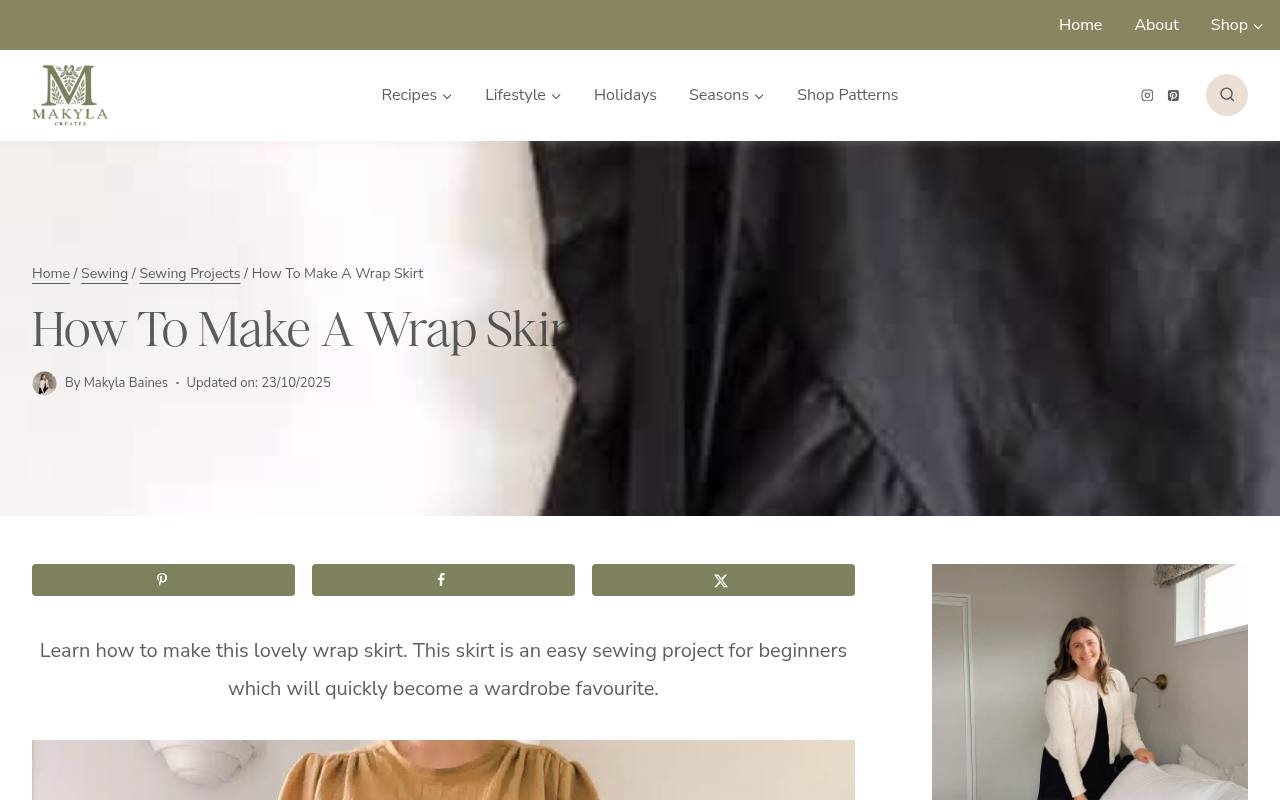
Makyla Baines demonstrates a linen wrap skirt with ties and a ruffled lower edge in this free online tutorial. The cutting list separates the two fronts, back cut on the fold, four waistband pieces and two ruffles.
It is a self-drafted project, so you work through the measurements instead of selecting a graded PDF size. The materials list suggests two to two-and-a-half yards or meters of fabric. For a plainer result, the designer explains that you can omit the ruffle, extend the skirt and turn up the hem instead.
- Type
- Self-drafted wrap skirt tutorial
- Best for
- Tie closures and an optional ruffled hem
- License
- Free tutorial; commercial-use permission not established on the source page
- Price
- Free
Layla Midi Pencil Skirt by Tiana’s Closet
Layered pencil skirt PDF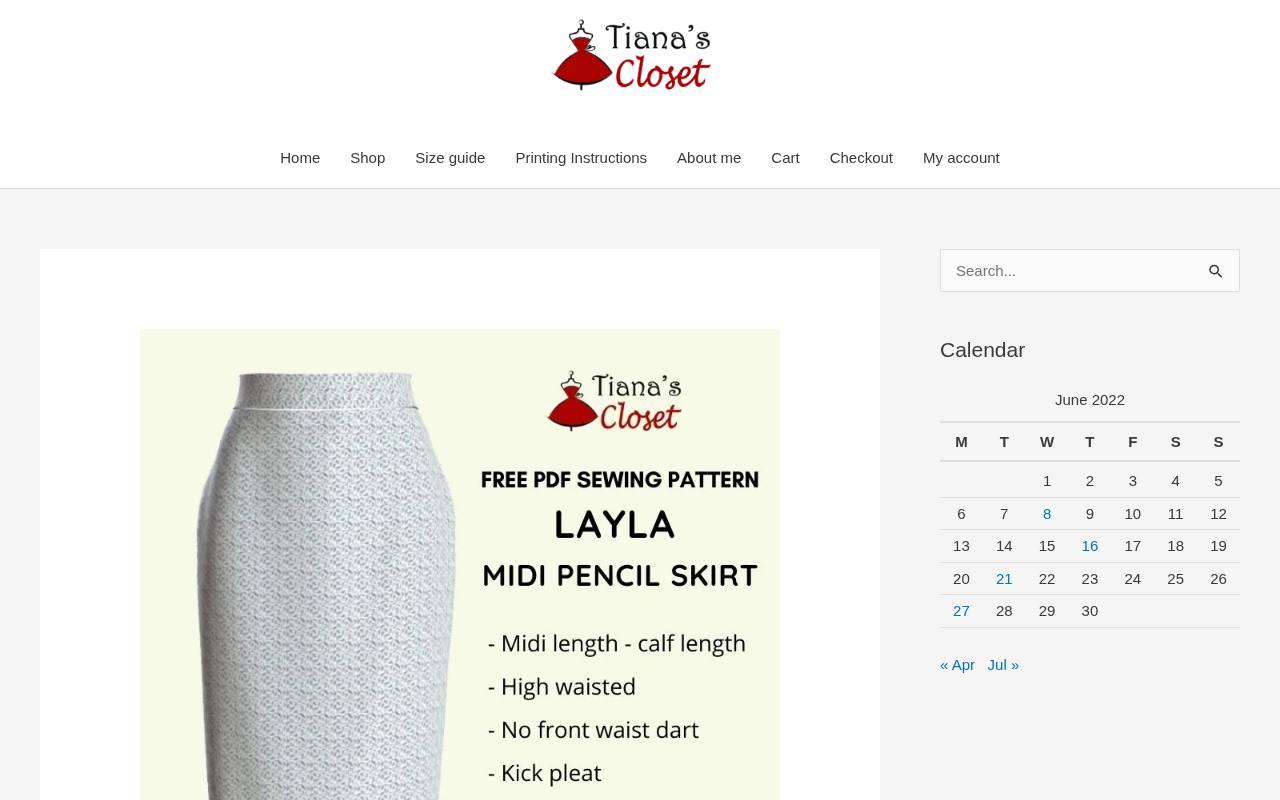
Tiana’s Layla Midi Pencil Skirt simplifies a basic skirt shape by removing the front waist darts. The designer describes a mid-calf result on someone around five feet seven inches tall, with a longer effect on petite wearers. The free layered PDF spans XXS–5XL and supports A4 or Letter home printing.
Instructions emphasize selecting the right size and checking the printed scale before assembling all the sheets. Use your own waist-to-hem measurement to decide the length, since the same pattern can land at a noticeably different position on another body.
- Type
- Layered pencil skirt PDF
- Best for
- An understated fitted midi
- License
- Free pattern; commercial-use permission not established on the project page
- Price
- Free
Lana Flared Midi Skirt by Tiana’s Closet
Flared midi skirt PDF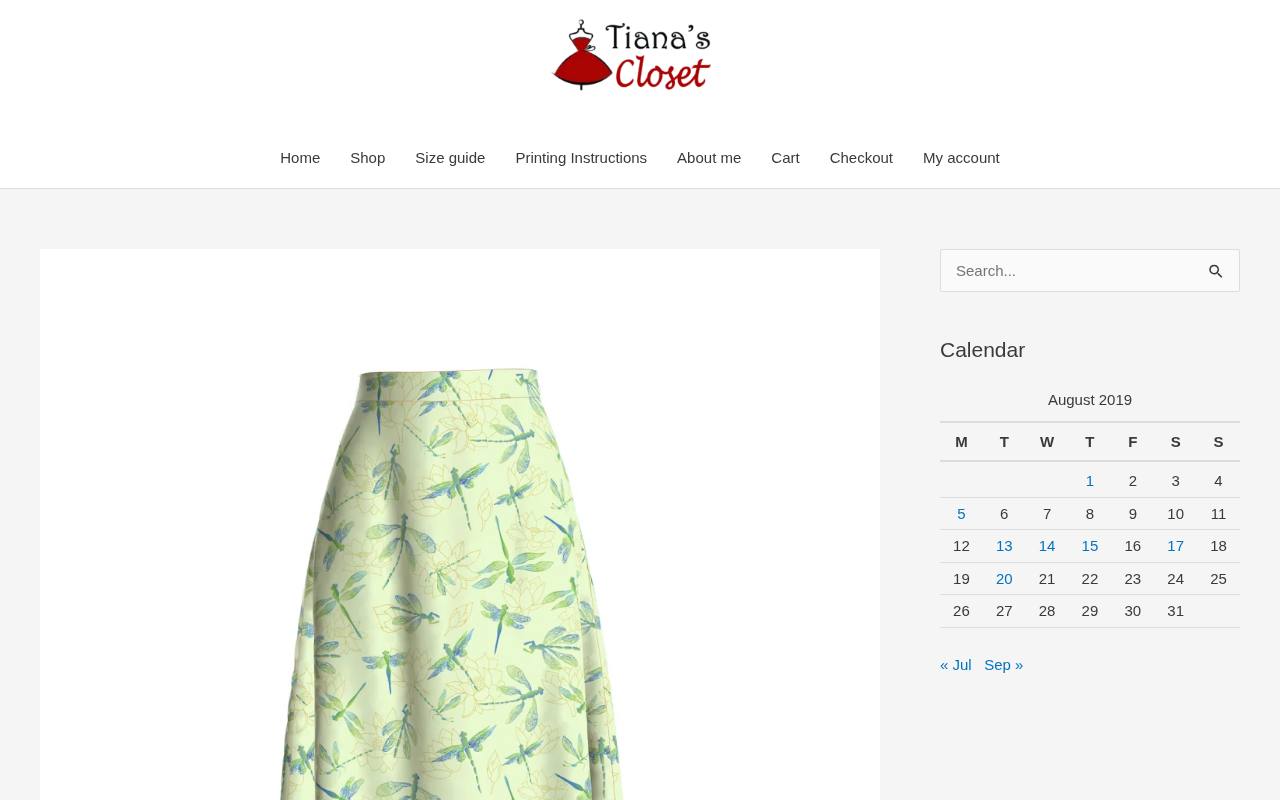
The Lana Flared Midi Skirt offers a straightforward longer silhouette with more movement than a fitted pencil shape. Tiana shows a dragonfly-print version and presents the project as an approachable confidence builder. Its layered printable PDF allows size lines to be displayed selectively, and the printing notes accommodate both A4 and Letter paper.
The page directs readers to the download and explains layer handling before printing. Choose it when you want an understated flared outline rather than elaborate pockets, multiple decorative panels or the additional volume of tiered ruffles.
- Type
- Flared midi skirt PDF
- Best for
- A simple alternative to narrow skirts
- License
- Free pattern; commercial-use permission not established on the project page
- Price
- Free
Simple Gathered Skirt by Made Everyday
Measured elastic-waist tutorial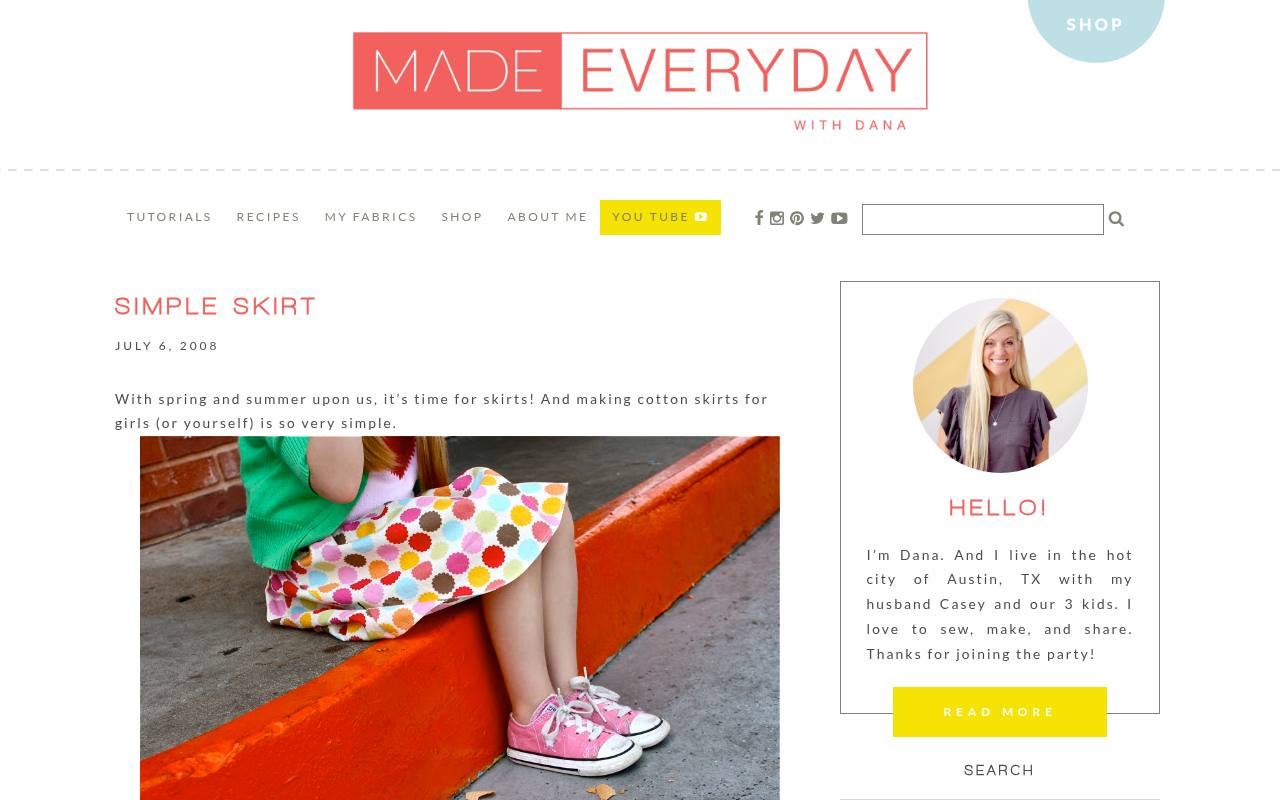
Dana’s Simple Skirt tutorial teaches an elastic-waist gathered skirt through written instructions and an accompanying video. Although the photographs feature girls, the introduction explicitly includes making one for yourself. The design can have single or double layers, with optional bias binding for a more decorative edge.
Suggested fabrics include lightweight cottons, cotton blends and jersey; the author cautions that interlock can feel heavy in a double-layer version. This is a measurement-based sewing lesson rather than a fixed adult size range, making the cutting calculations part of the learning process.
- Type
- Measured elastic-waist tutorial
- Best for
- First skirts and lightweight layered versions
- License
- Free tutorial; commercial-use permission not established on the source page
- Price
- Free
Measure the waist and full hips
Record waist and full-hip measurements with the tape level and comfortably close, not pulled tight. Match the waist position to the intended design instead of assuming every skirt sits at your natural waist. Compare both measurements with the size chart and blend sizes where needed.
A woven pull-on opening must pass over the hips even when the elastic loop is considerably smaller. For a fitted pencil skirt, make a trial version and check sitting, walking and climbing a step before accepting the fit.
Choose fabric for the movement you want
Assess fabric drape and bulk by hanging the material vertically and gathering a section in your hand. Crisp cotton gives a circle skirt a more pronounced outline, while viscose falls into softer folds. Neither effect is automatically better, but each changes the result.
Respect the grain markings on bias pieces instead of rotating them to squeeze the pattern onto insufficient yardage. Prewash washable fabrics using the intended care routine, and consider a lining if the chosen material clings, scratches or becomes too transparent in daylight.
Fit the waistband before finishing it
Test elastic length and recovery around the body before closing the loop, remembering to allow for the joining method specified in the instructions. Keep the elastic flat when threading a casing and avoid catching it while closing the insertion gap.
A fitted waistband needs the recommended interfacing to support its shape without unnecessary stiffness. Try the interfacing on a scrap first. Baste the band to the skirt and assess comfort before completing the inner finish, when small fitting corrections are still easier to make.
Give curved hems time to settle
Allow circle and bias skirts to hang before leveling the hem, because different grain directions can relax unevenly after assembly. Try the garment on with the waistband secured in its intended position, then mark a consistent distance from the floor with help if available.
A narrow turned hem often handles a generous curve more neatly than a deep fold. Test your hem on an offcut to establish the needle, stitch and pressing temperature. Do not stretch the edge while guiding it through the machine.
Print one test page before the full file
Measure the printed test square in both directions before assembling a tiled PDF. Start with actual size and the correct paper setting, avoiding fit-to-page scaling. If the dimensions are wrong, resolve the print settings before using more paper.
Display only the required size layers when the file supports them, retaining common markings and registration information. Follow the designer’s assembly diagram rather than guessing the page arrangement. Confirm whether seam allowances are included, and preserve notches, grainlines and cutting instructions when tracing your selected size.
Clarify terms before selling finished skirts
Look for commercial sewing permissions in the current designer terms and inside the pattern file before planning a product range. A free download does not automatically authorize all business uses, and permission to sew garments is distinct from permission to redistribute instructions.
Ask the rights holder for written clarification when handmade sales are not clearly addressed. Keep that reply with your project records, use your own photographs, and never offer the PDF as part of a customer purchase. Price the garment to include materials, construction time and accurate care information.