
An apron is a useful way to practice everyday sewing skills without tackling the precise fit of a garment. Straight ties, curved edges, patch pockets, and sturdy topstitching all have a purpose, and the finished project can go straight into service in a kitchen, garden, or craft room.
These free apron sewing patterns include cross-back shapes, traditional bibs, a waist apron, and child-sized designs. Some supply printable pieces; others give cutting measurements with photographed construction steps. Optional paid printables appear on several blogs, but they are separate from the free instructions described here.
Start by deciding where protection is needed. A half apron keeps tools close and shields your lap, while a bib protects the shirt front and a cobbler shape extends coverage around the back. Compare the actual dimensions with the wearer, especially when making an apron for someone else.
Quick picks at a glance
| # | Resource | License | Best for |
|---|---|---|---|
| 1 | Felicity Mothers and Daughters Cross-Back Apron | Free download with email-list enrollment; commercial permission not stated | Matching adult and child cross-back aprons |
| 2 | Pompom du Monde Toddler Cross-Back Apron | Free pattern; consult the publisher before commercial use | Toddlers learning to dress themselves |
| 3 | Farmhouse on Boone Simple Half Apron | Free pattern; consult the publisher before commercial use | Long waist aprons with a roomy pocket |
| 4 | Polka Dot Chair Child’s Pocket Apron | Free pattern; consult the publisher before commercial use | Kid-sized bib aprons with feature pockets |
| 5 | SewCanShe Full-Coverage Barbecue Apron | Free web tutorial and cutting template; confirm terms before selling | Double-layer bib aprons for grilling |
| 6 | SewCanShe One Yard Magic Apron | Free tutorial shared with Lecien’s permission; no blanket resale license stated | Making a bib apron from one yard |
| 7 | SewCanShe Mile-a-Minute Jelly Roll Apron | Free web instructions and template; commercial rights not established by the tutorial | Turning precut strips into a useful gift |
| 8 | Smock Style Cobbler’s Apron by Sew Four Home | Free pattern; consult the publisher before commercial use | Front-and-back coverage with side ties |
| 9 | Purl Soho Adjustable Canvas Apron | Free pattern; consult the publisher before commercial use | A simple adjustable shared kitchen apron |
| 10 | AppleGreen Cottage Reversible Adjustable Apron | Free blog pattern; consult site terms for finished-item sales | Reversible aprons in adult and child sizes |
Felicity Mothers and Daughters Cross-Back Apron
PDF apron pattern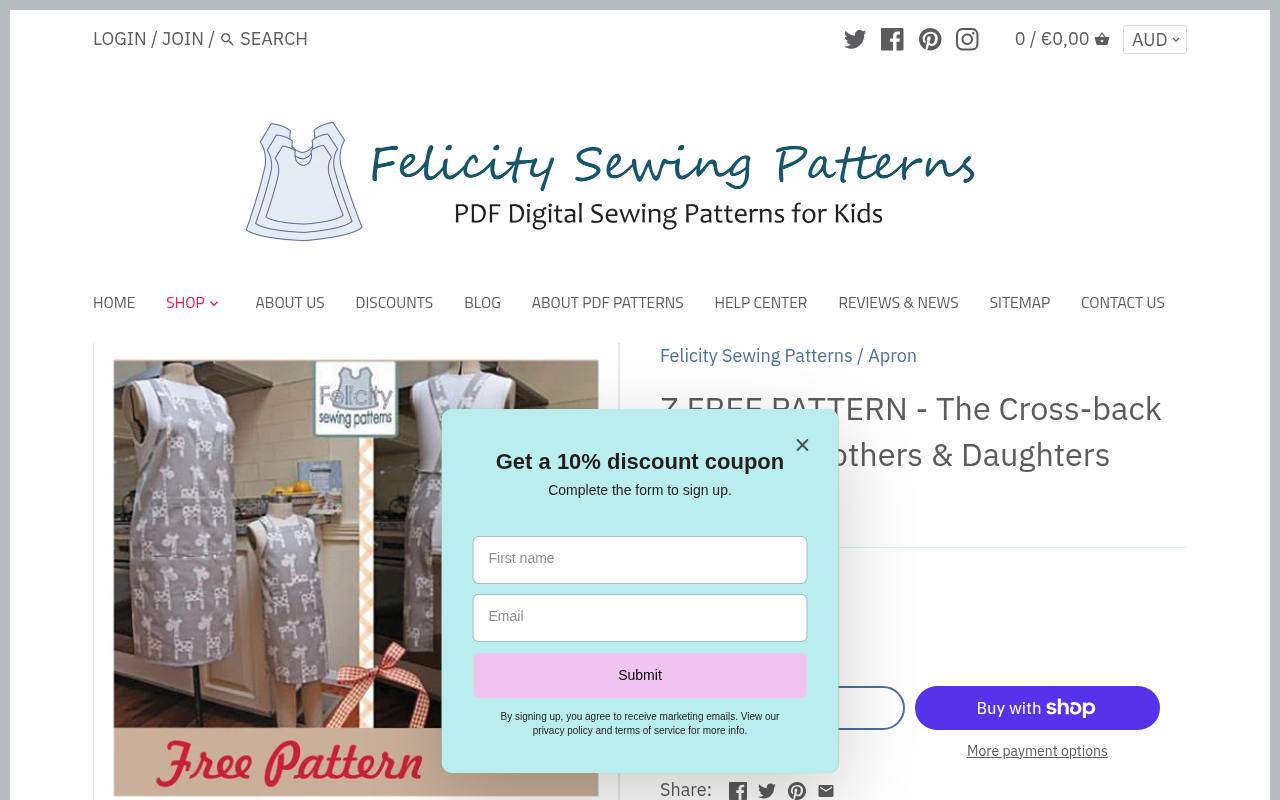
Felicity supplies separate adult and child patterns, each in small, medium, and large. The children’s version is intended for roughly ages four through ten, with fit refined by changing the finished strap length. A large front pocket reinforces a high-wear area as well as providing storage.
Add the zero-cost item to the cart to download; the listing says this also enrolls you in the email list. Follow the linked blog tutorial, and note the explicit instruction to add length at the adult hem rather than assuming the printed lower edge is finished.
- Type
- PDF apron pattern
- Best for
- Matching adult and child cross-back aprons
- License
- Free download with email-list enrollment; commercial permission not stated
- Price
- Free
Pompom du Monde Toddler Cross-Back Apron
A4 PDF apron pattern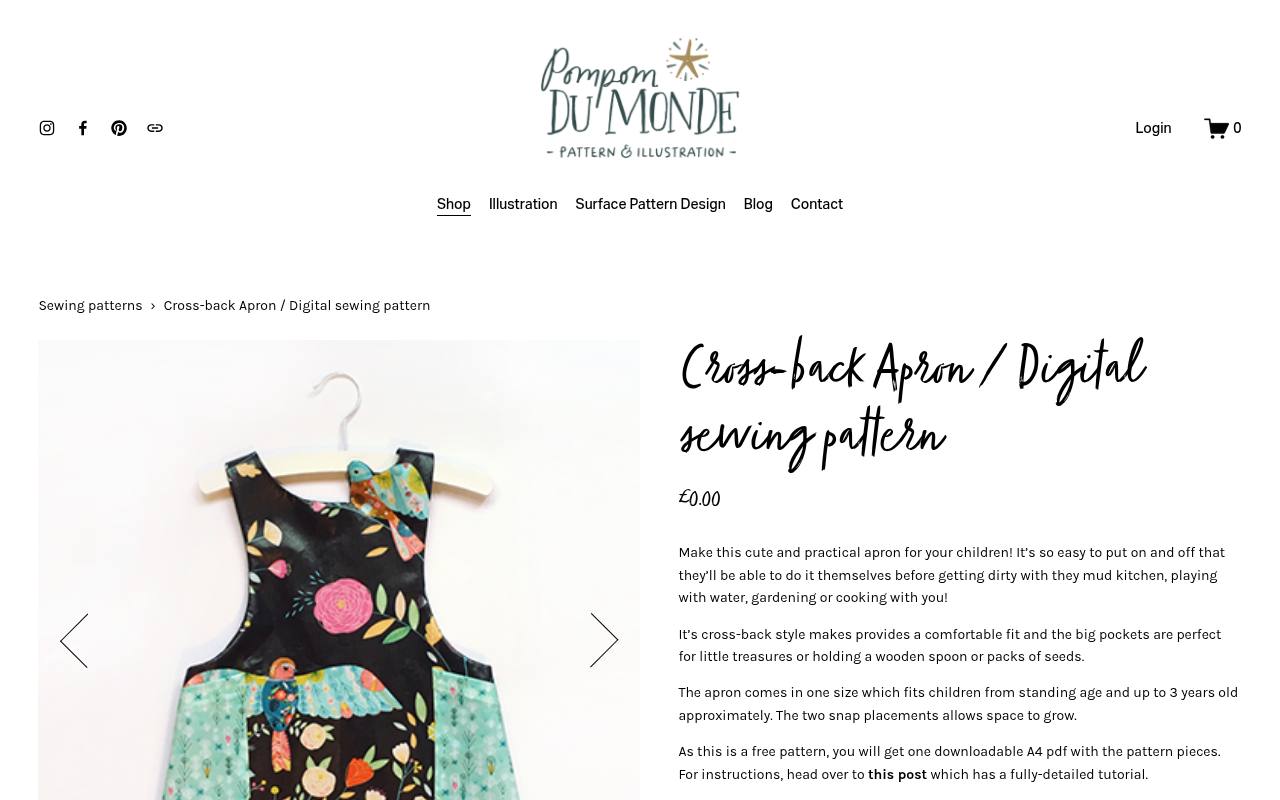
Designed for children from standing age to approximately three, Pompom du Monde’s apron uses cross-back straps and two snap positions to allow some growing room. Big pockets suit small kitchen helpers or garden play. The zero-priced listing provides A4 pattern pieces, while the sewing instructions live in a separate, linked tutorial.
This is one size rather than a graded family set, so compare its coverage with the intended child before cutting. Its easy-on design is particularly appealing when you want an apron without a bow that an adult must retie.
- Type
- A4 PDF apron pattern
- Best for
- Toddlers learning to dress themselves
- License
- Free pattern; consult the publisher before commercial use
- Price
- Free
Farmhouse on Boone Simple Half Apron
Measure-and-cut tutorial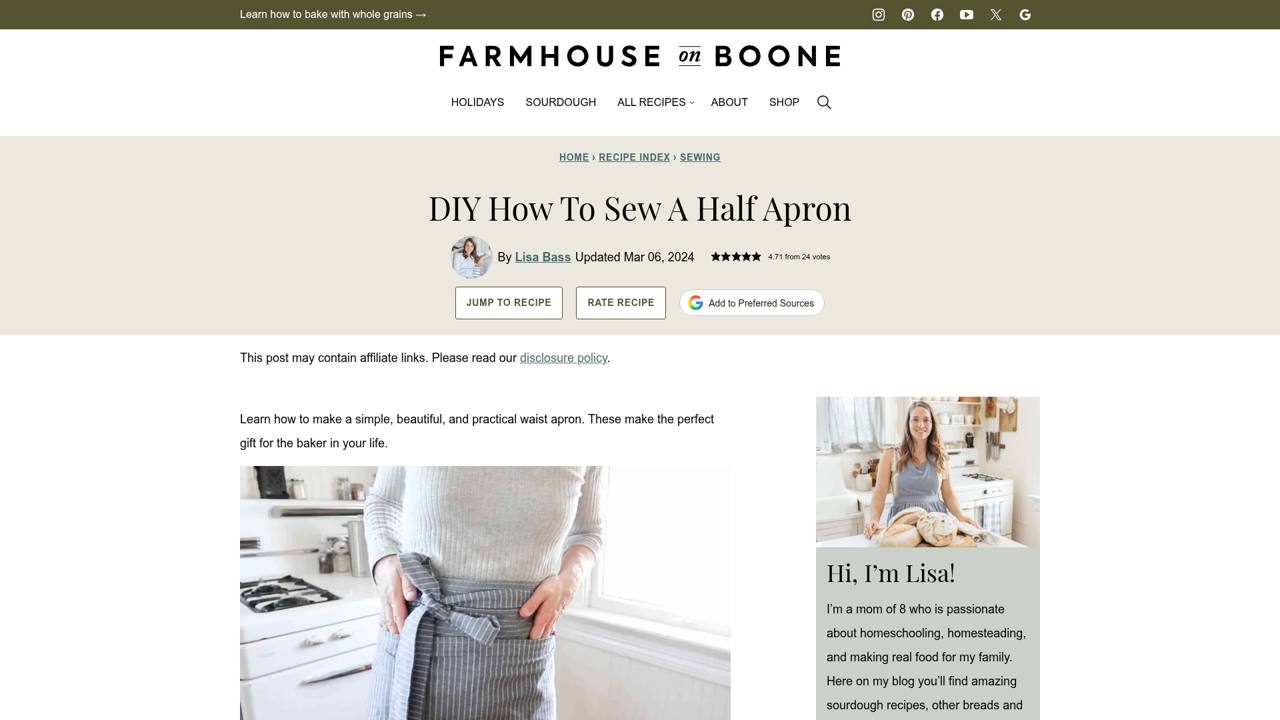
Lisa Bass’s half apron tutorial focuses on a simple waist-tied shape with a large front pocket. Cotton or linen is suggested, and the article lists one and a half yards for the project. This is a measurement-led sewing tutorial rather than a fitted bodice-style download, with a video accompanying the written instructions.
The page also discusses gift ideas and optional decorative variations. Choose it for below-the-waist coverage when you want an uncomplicated construction project; it will not protect a shirt front from splashes in the way a bib apron does.
- Type
- Measure-and-cut tutorial
- Best for
- Long waist aprons with a roomy pocket
- License
- Free pattern; consult the publisher before commercial use
- Price
- Free
Polka Dot Chair Child’s Pocket Apron
Children’s apron tutorial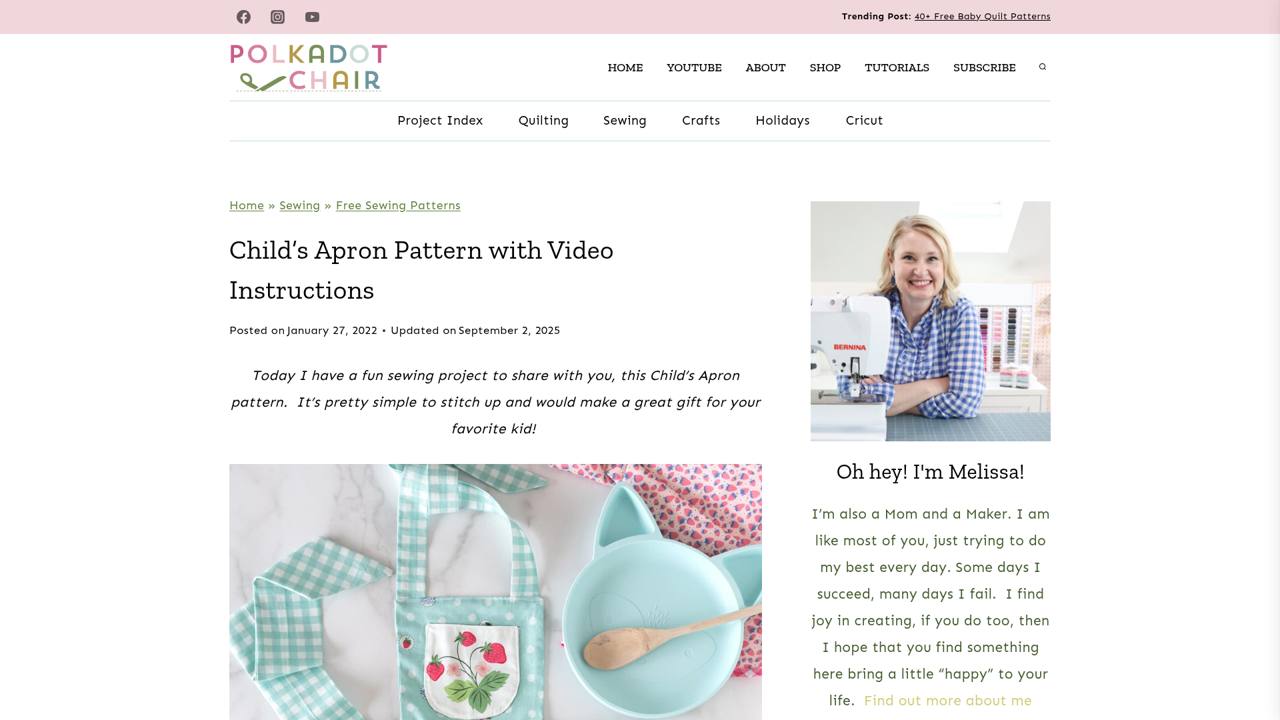
Melissa Mortenson’s child apron includes a small feature pocket suited to a carefully placed fabric motif. The original version is described as approximately size four through seven, with separate measurements supplied for children around eight through twelve. The refreshed page adds video instructions alongside the written project.
Rather than assuming those age labels guarantee fit, compare the planned length against the actual child. It is an appealing choice for using a favorite novelty cotton, especially when the pocket can frame an illustration without sacrificing the rest of the print.
- Type
- Children’s apron tutorial
- Best for
- Kid-sized bib aprons with feature pockets
- License
- Free pattern; consult the publisher before commercial use
- Price
- Free
SewCanShe Full-Coverage Barbecue Apron
Free template and web tutorial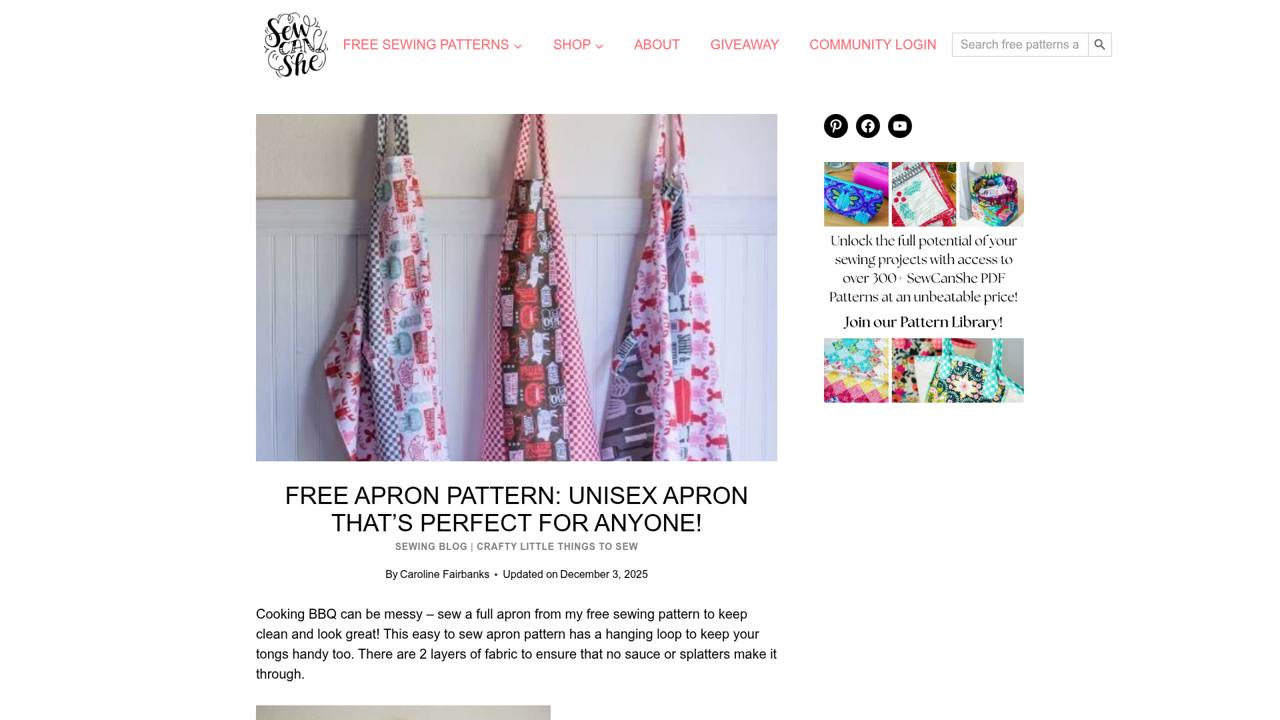
This double-layer apron finishes at approximately thirty-two inches long and thirty inches wide, excluding its ties. Caroline Fairbanks adds a hanging loop for tongs and provides cutting dimensions for two tie widths. The free project combines a cutting template with detailed online instructions; a separate printable package is optional rather than required.
Multiple coordinating fabrics create a striped front, backed with another fabric layer. Its full bib coverage makes it a more protective shape than a waist apron, although ordinary fabric is not specialist heat-resistant equipment.
- Type
- Free template and web tutorial
- Best for
- Double-layer bib aprons for grilling
- License
- Free web tutorial and cutting template; confirm terms before selling
- Price
- Free online; optional printable access costs extra
SewCanShe One Yard Magic Apron
Free template and photo tutorial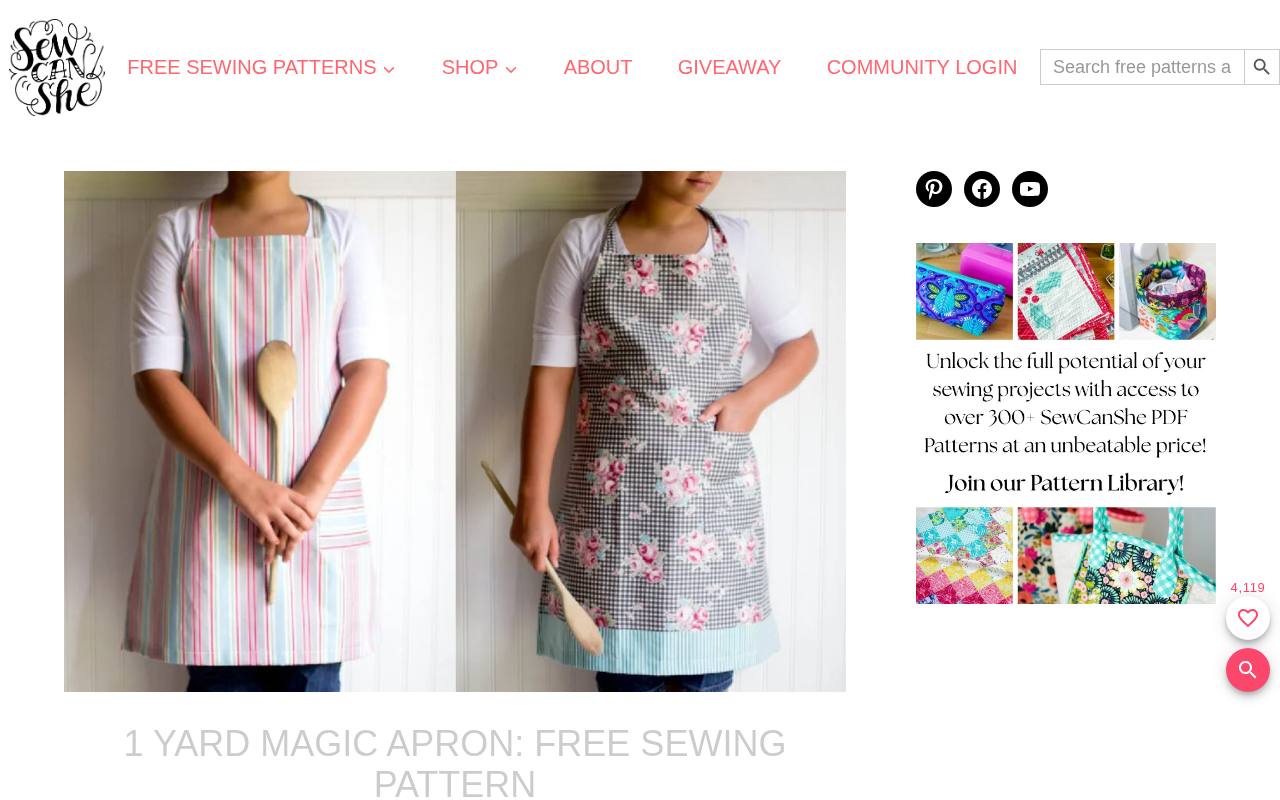
The One Yard Magic apron uses a Lecien design that SewCanShe shares with permission, together with step-by-step photographs. A free digitized template supports the online tutorial. The sample fabric is an Oxford cotton with more body than ordinary quilting cotton, although the article says quilting cotton can work too.
Some pictured fabrics place coordinating stripes near the selvages, which the layout uses decoratively. Do not mistake those special prints for a requirement. The one-yard layout is the attraction here, with an optional paid printable offered separately from the free blog version.
- Type
- Free template and photo tutorial
- Best for
- Making a bib apron from one yard
- License
- Free tutorial shared with Lecien’s permission; no blanket resale license stated
- Price
- Free online; optional printable costs extra
SewCanShe Mile-a-Minute Jelly Roll Apron
Patchwork apron tutorial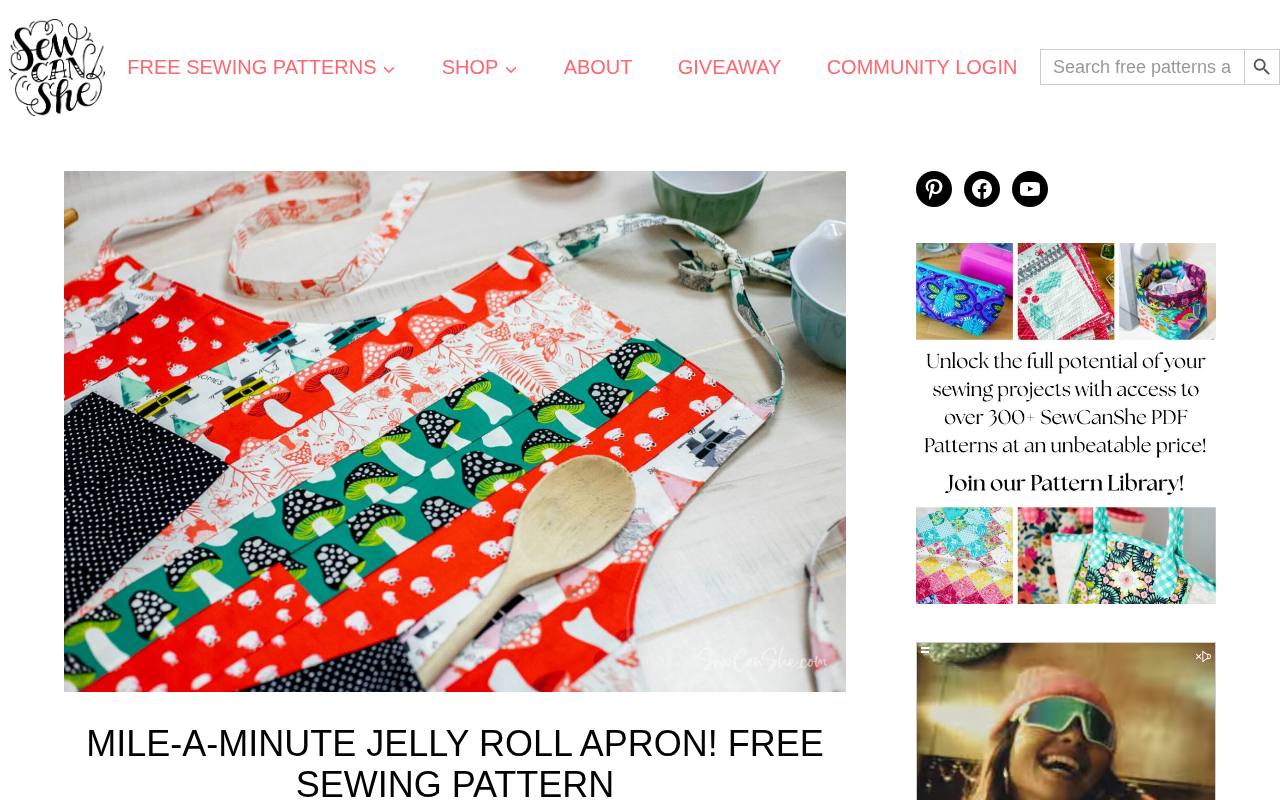
This apron turns jelly roll strips into a full-coverage patchwork front. The supply list calls for sixteen strips measuring two and a half inches wide by forty-two inches long, plus coordinating fabric for backing and pockets. A free full-coverage template shapes the apron after piecing.
The finished size is approximately thirty-three inches tall by thirty inches wide, without ties. Pockets are optional. The free online instructions explain the strip assembly, while a printable download is an extra convenience. Shorter scraps can also work, but require additional joins.
- Type
- Patchwork apron tutorial
- Best for
- Turning precut strips into a useful gift
- License
- Free web instructions and template; commercial rights not established by the tutorial
- Price
- Free online; optional printable costs extra
Smock Style Cobbler’s Apron by Sew Four Home
Downloadable smock apron pattern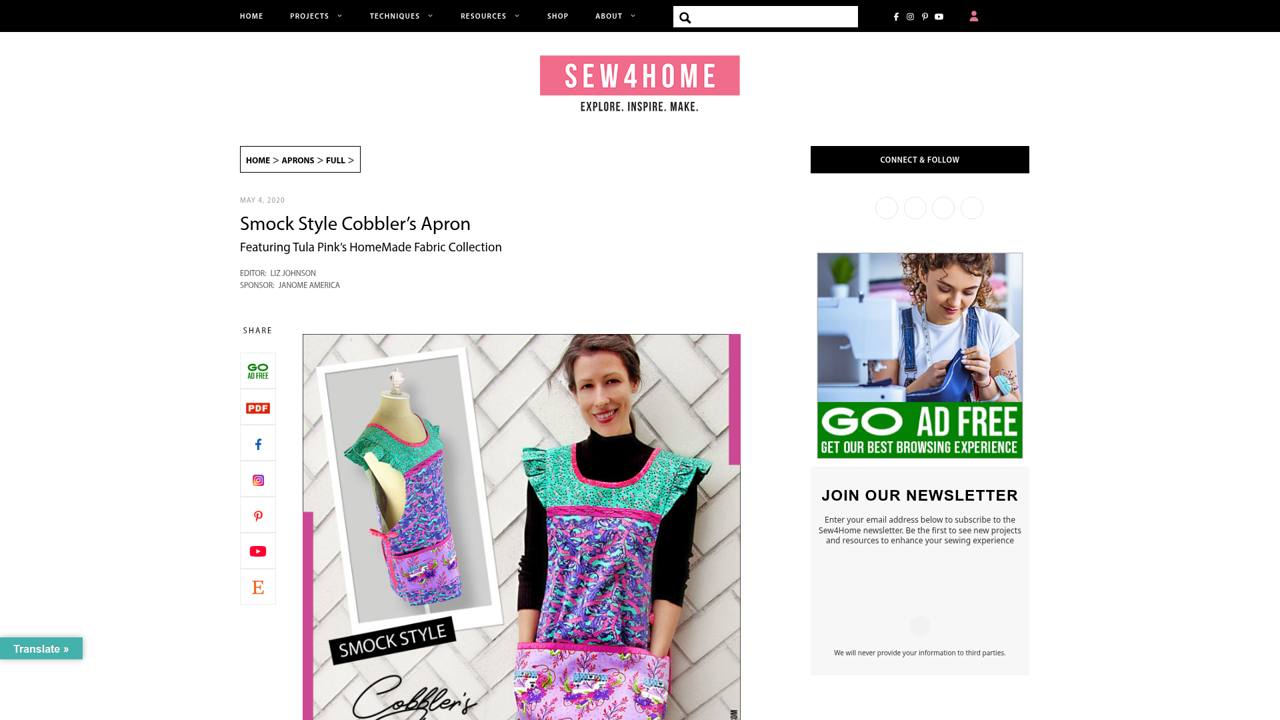
Sew4Home’s cobbler apron provides front and back panels, open sides, and a large pocket. Side ties let the wearer change the fit without relying on a single fixed waist measurement. Shoulder ruffles and ribbon accents distinguish the photographed version, but the underlying shape remains practical for messy work.
The free download supplies the principal panel pieces; the pocket and ties use straight-cut measurements. This is the pick for broader clothing coverage rather than a conventional kitchen bib, and the page explains how the open sides contribute to the adjustable fit.
- Type
- Downloadable smock apron pattern
- Best for
- Front-and-back coverage with side ties
- License
- Free pattern; consult the publisher before commercial use
- Price
- Free
Purl Soho Adjustable Canvas Apron
Online apron pattern and tutorial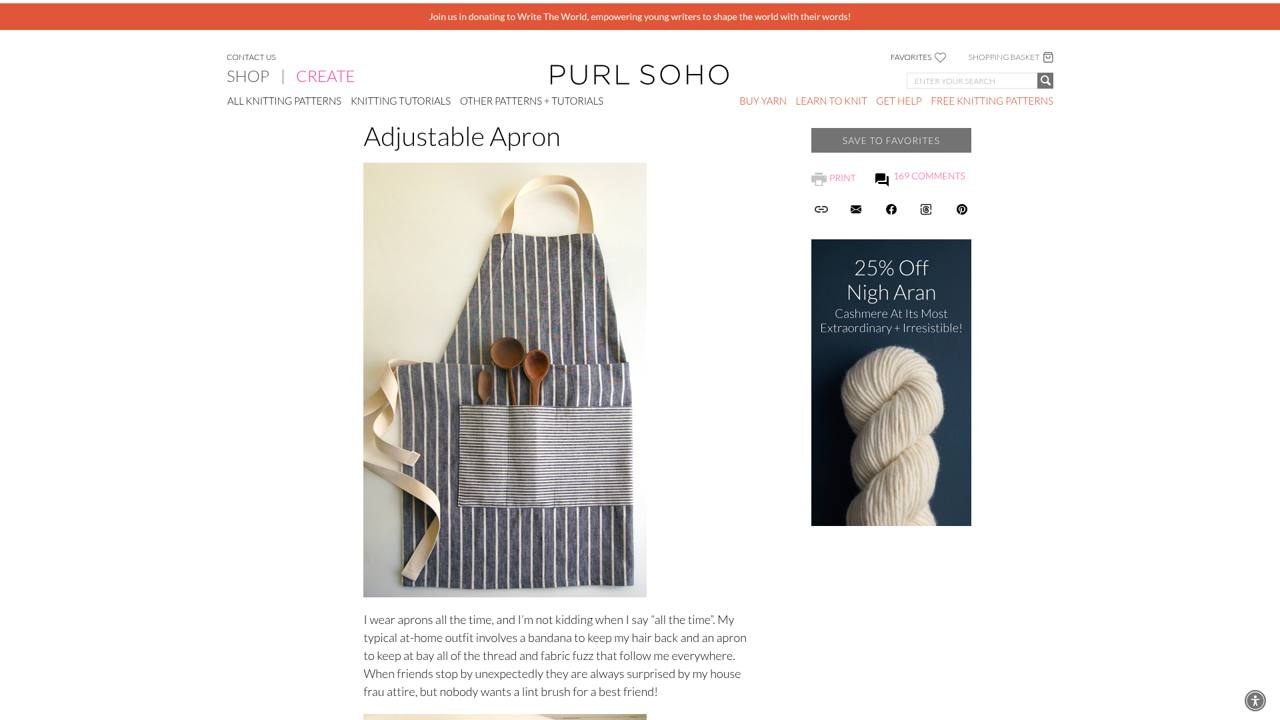
Molly Schnick’s Adjustable Apron updates an earlier Purl Soho barbecue design with pared-back styling. The article presents a sturdy canvas-ticking sample and explains that the shape can suit different heights by adjusting or folding it. It is intended as a practical shared kitchen apron rather than a decorative ruffled garment.
The free online pattern is the useful resource here, not a fabric kit purchase. Consider this one when you like strong stripes and straightforward construction, and check the resulting bib position on the wearer before fixing the final length.
- Type
- Online apron pattern and tutorial
- Best for
- A simple adjustable shared kitchen apron
- License
- Free pattern; consult the publisher before commercial use
- Price
- Free
AppleGreen Cottage Reversible Adjustable Apron
Free pattern and online tutorial
AppleGreen Cottage combines reversible construction with an adjustable neckband, divided pockets on both sides, and two sizes for adults and children. The tutorial uses a three-quarter-inch strap slider and includes a video demonstrating its adjustment.
An optional wide bottom section changes the overall length, while the strap-end method is borrowed from bagmaking for a tidy finish. The template is free through the blog; a separate printer-friendly tutorial package costs extra. This is a good choice when two coordinated fabrics are part of the appeal rather than simply a hidden lining.
- Type
- Free pattern and online tutorial
- Best for
- Reversible aprons in adult and child sizes
- License
- Free blog pattern; consult site terms for finished-item sales
- Price
- Free online; optional printable tutorial costs extra
Choose fabric for the actual job
For a kitchen apron, prioritize washable woven fabric with enough body to hang smoothly. Mediumweight cotton, linen, and cotton canvas are useful starting points, but consider the pattern’s intended construction. Two layers of heavy canvas can become uncomfortable at a turned corner or strap attachment.
Prewash fabric before measuring and cutting, particularly if the finished apron will face frequent hot laundering. Check whether dyes transfer onto a damp white scrap. A decorative apron is not protective workwear: ordinary cotton, quilting layers, and synthetic trims should never be assumed to provide protection against flame, hot grease, or hazardous materials.
Compare ties, neck straps, and cross-back designs
Strap placement changes how an apron feels over several hours. A traditional neck loop is simple and familiar, but a heavily loaded bib can pull against the neck. Cross-back straps distribute the load over the shoulders, provided they are long enough and do not slide off.
Waist ties should reach comfortably around the wearer with enough length for a secure bow. Decide whether the apron will tie at the back or wrap to the front before cutting them. For children, avoid unnecessary dangling lengths and supervise use around equipment; an easy fit should not introduce trailing straps into a work area.
Build adjustment into the first fitting
An adjustable fit is more useful than a vague one-size promise. Baste straps first, put the apron over the clothing it will actually cover, and check the bib height while sitting and reaching. If using sliders, match the hardware’s internal width to the finished strap rather than the unsewn strip.
Reinforce snap areas as the pattern directs so repeated opening does not distort lightweight cloth. On a reversible apron, confirm that the adjustment still works with either face outward. For a growing child, additional fastening positions can extend usefulness, but the neckline and hem still need checking as their proportions change.
Plan pockets around what they will hold
A well-positioned pocket should be reachable without forcing the wearer to bend sideways. Mark its position while wearing the basted apron, then consider whether the intended contents will make the panel sag. A narrow divided section can hold a pencil, while a wider compartment may suit a folded towel or gardening gloves.
Reinforce upper pocket corners with backstitching or the specified reinforcement method. Avoid locating a bulky seam exactly where your hand enters. If you add a pocket to a reversible design, plan the stitching sequence early so the attachment does not unexpectedly appear across the finished reverse side.
Make apron gifts easier to use
For handmade apron gifts, ask discreetly about the recipient’s height, preferred coverage, and usual tasks rather than choosing only a novelty print. Someone who bakes may appreciate a washable bib, while a gardener may prefer shoulder-supported straps and sturdy pockets. Use fabric that can survive the recipient’s normal laundry routine, and include a small care note.
Press the completed apron, check that every tie attachment is secure, and remove loose threads inside the pockets. If the gift is for a child, make the fit useful now instead of so oversized that the bib gaps and the hem interferes with movement.
Separate free access from selling permission
A free download is not a resale license for the pattern itself. Read the publisher’s current terms before offering finished aprons for sale, and distinguish permission to sell sewn goods from permission to distribute files, photographs, or written instructions. Where terms are unclear, ask the designer about your intended scale and retain their response.
Gift-making and a commercial product line are different situations. Work out your fabric, hardware, packaging, and labor costs before accepting orders, and sew a washed sample to assess durability. Use your own product photographs and descriptions instead of copying the tutorial’s images or text.